Discover JustBreath Oxygen for your wellness routine. Take a moment to breathe, stay focused, and support mental clarity while navigating everyday stress. Make every breath count and embrace a more mindful lifestyle.
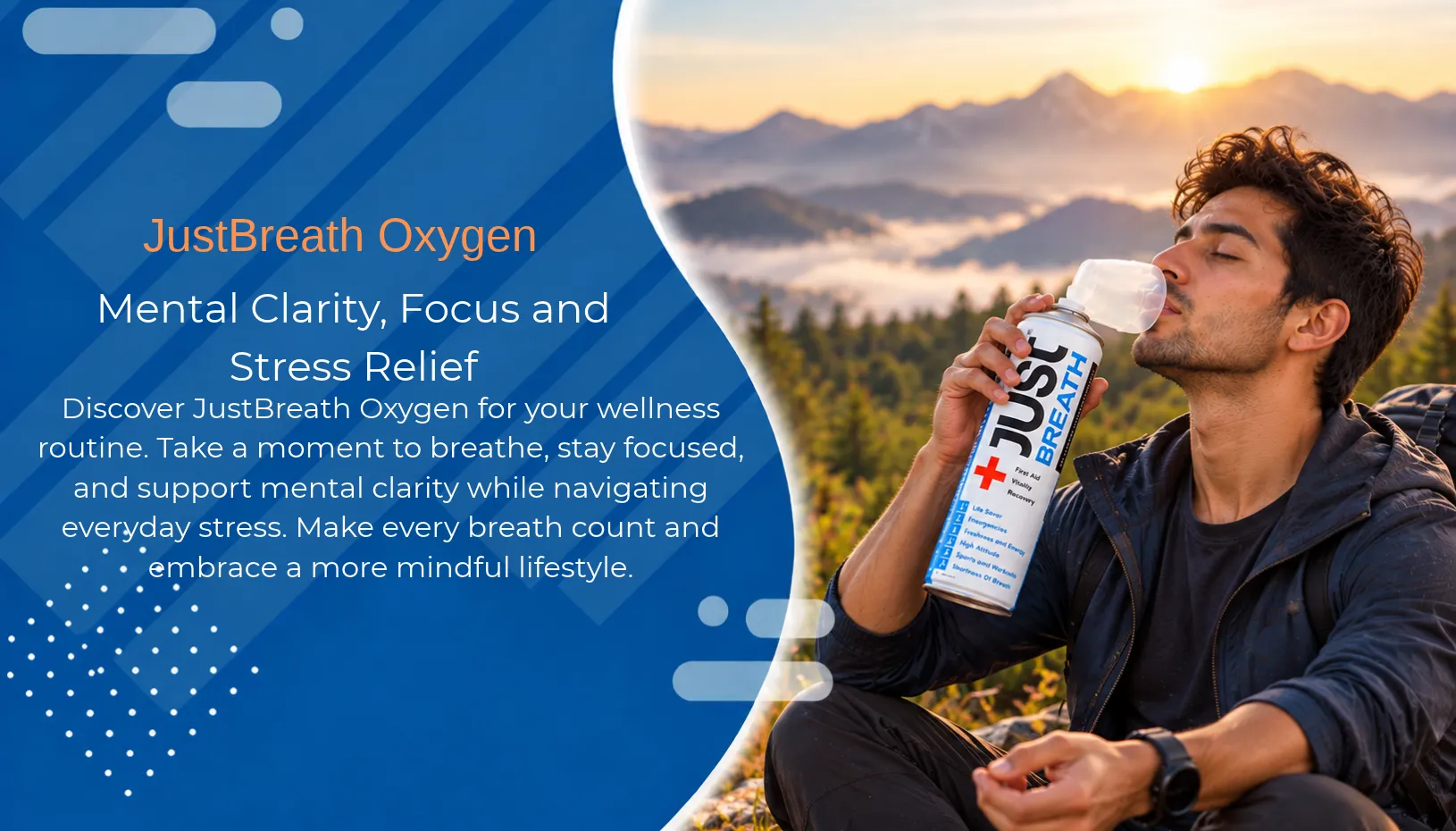
Some people use Just Breathe as an oxygen can for focus and a short reset: two or three slow breaths of oxygen during a long work session, before a presentation, or in an exam-study break, often in a stuffy room or on a smoggy day. It feels refreshing, and the slow, deep breathing it encourages is calming in itself. An oxygen can for stress breaks is not a treatment for stress, anxiety or attention problems.
A few small laboratory studies have found brief improvements in memory and reaction tasks while volunteers breathed extra oxygen. The effects were small and faded within minutes once they went back to normal air, and there is no evidence that occasional puffs improve concentration over a day. What reliably helps focus: fresh air in the room, sleep, water, short breaks and movement. Use an oxygen can for focus as part of a break, not instead of one.
For a calming technique you can use without a can, try the NHS breathing exercise for stress.
Students and parents ask whether oxygen helps study. Honest answer: a short oxygen break can feel refreshing in a hot, stuffy room, but sleep and regular breaks matter far more. If a student feels breathless, panicky or has palpitations often, talk to a doctor; that is not something an oxygen can should mask. Students under 18 should use it only with a parent’s say-so. See other portable oxygen can uses.
Closed meeting rooms and crowded offices can build up carbon dioxide, which leaves people drowsy. Opening a window or running ventilation fixes the cause; an oxygen can gives a short personal top-up. On high-AQI days in Delhi NCR the can does not filter the air you breathe the rest of the time; an N95 mask outdoors and an air purifier indoors do that. Read what pure oxygen in a can can and cannot do on high-AQI days.
When to see a doctor. Ongoing stress, anxiety, panic attacks, poor sleep or trouble concentrating deserve proper help from a doctor or counsellor. Breathlessness with chest pain needs urgent care (108).
A short break works better when it changes what your body is doing. Try the 20-20-20 rule for your eyes: every 20 minutes, look at something 20 feet away for 20 seconds. Stand up and walk for two minutes every hour. Drink a glass of water. Open a window or step outside for daylight. If you like, add two or three slow breaths from an oxygen can for focus to the end of the break.
Study in 45–50 minute blocks with 10-minute breaks. Keep the study room ventilated and not too warm. Aim for seven to eight hours of sleep, especially the night before an exam. Parents can help by keeping meals regular and screens out of the bedroom. An oxygen can is optional; it is not a study aid, and students under 18 should use it only with a parent’s say-so. If you searched for an oxygen can for students, that is the honest picture: a fresh-air break, not a shortcut to better marks.
People with panic attacks, anxiety disorders, heart conditions or lung disease should talk to a doctor before using one. Breathlessness during panic is better handled with slow breathing and professional support; extra oxygen can mask symptoms that need attention.
Keep your oxygen can for focus at your desk with the cap on, away from heaters. Use it once or twice in a long day, together with a breathing exercise, a short walk or a glass of water. If you notice you reach for it every hour, that is a sign to look at sleep, workload or air quality instead.
In a closed room full of people, carbon dioxide from breathing builds up and many people feel heavy, sleepy and less sharp. This is a ventilation problem. Open a window, switch on the fresh-air mode of the AC, or take the meeting outside for a few minutes. A short oxygen break can feel refreshing, but fresh air is what fixes the room.
Slow breathing calms the body: breathe in through the nose for four counts, hold for a moment, breathe out slowly for six counts, and repeat for two minutes. You can do this with or without an oxygen can for stress relief breaks.
At home, the same rules apply: a ventilated room, a proper chair, regular breaks and daylight. Keep the oxygen can for focus on a shelf, not next to a heater or a lit diya. A portable oxygen canister on the shelf is fine; keep the cap on between uses.
A Portable Oxygen Can offers a compact option for people exploring portable oxygen products for work, study, and travel. Pure oxygen in a can provides a convenient, portable oxygen option for suitable uses when used according to product instructions. An oxygen can for focus or an oxygen can for stress may form part of a personal wellness routine, but neither is a proven treatment for mental fatigue, poor concentration, or stress.
For lasting well-being, prioritise sleep, hydration, movement and healthy stress-management habits. If fatigue or breathing difficulties persist, consult a healthcare professional.
Explore the range at Just Breathe Oxygen to find a portable oxygen product suited to your needs.
The slow breathing it involves can feel calming, but it does not treat stress or anxiety.
As a short refresh break, yes. Better ventilation helps everyone more.
There is no good evidence it improves exam results. Sleep and breaks do. An oxygen can for students can be part of a study break, used with a parent's permission.
A few puffs a day is generally safe for healthy adults. Pure oxygen in a can is for short breaks, not continuous breathing.
The mask directs the oxygen to your nose and mouth so less is wasted. Compare oxygen can with mask vs without mask.
No. It does not treat anxiety or panic. Slow breathing, professional support and, where needed, medical treatment help.
Yes, if there are no flames, heaters or smokers nearby. Keep the cap on when you are not using it.
A few short sessions are fine. There is no benefit to frequent or constant use.
Yes, in a bag with the cap on, away from heat. An oxygen can for students should be used only during breaks and, for under-18s, with a parent's permission.
A headache from a stuffy room may ease with fresh air and a break. Frequent or severe headaches need a doctor.