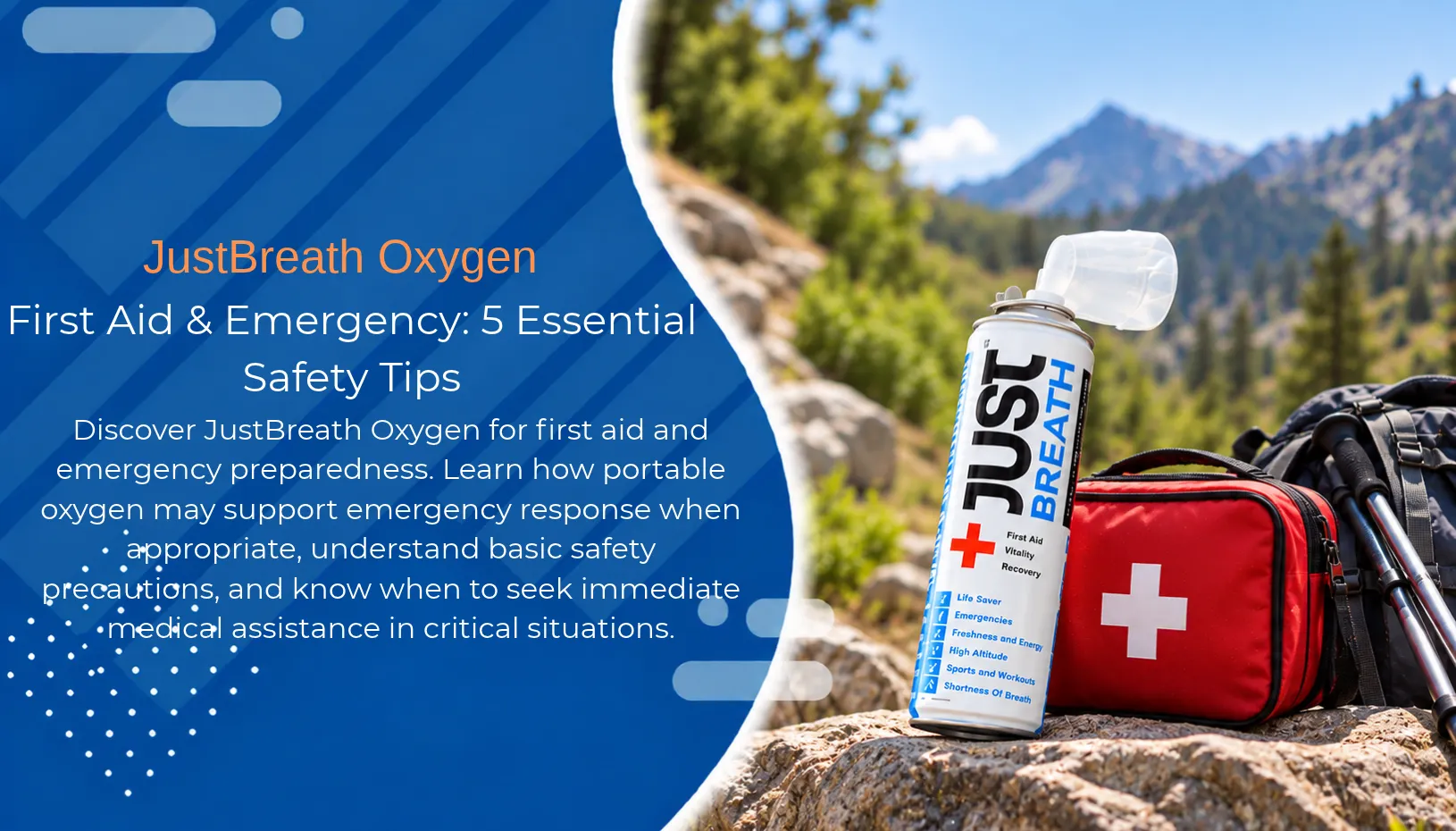
Discover JustBreath Oxygen for first aid and emergency preparedness. Learn how portable oxygen may support emergency response when appropriate, understand basic safety precautions, and know when to seek immediate medical assistance in critical situations.
An emergency oxygen kit, also called a first aid oxygen kit, is a box with a ready-to-use oxygen can with mask, so someone who feels faint or out of breath can get a few breaths of oxygen while you call for help. Homes with elderly parents, offices, schools, hotels, gyms and cars on long routes keep one. It buys comfort and a few minutes; it is not a substitute for an ambulance. Many people call it an emergency oxygen can: it is the same Just Breathe can, kept sealed in the kit until it is needed.
Unexpected breathing difficulties can be frightening at home, in the workplace or while travelling. Having an organised first-aid setup can help people respond more calmly while arranging appropriate medical assistance. A Portable Oxygen Can with a mask is a compact oxygen product that some people consider for emergency preparedness.
An emergency oxygen product should be used only for its intended purpose and according to its instructions. It does not replace professional medical care, prescribed medical oxygen or emergency services.
When researching pure oxygen in a can for emergency preparedness, check the product label, intended use and manufacturer’s safety instructions before including it in your emergency supplies.
Full checklist: emergency oxygen kit for home and car.
An emergency oxygen kit may contain a portable oxygen can, a mask or other accessories, depending on the product. Always check the product description to confirm what is included and understand its intended use.
The NHS page on shortness of breath lists the same warning signs that need urgent help.
| Use It | Do Not Rely on It – Call 108 |
|---|---|
| Feeling breathless after climbing stairs or a long walk | Breathless at rest, or symptoms getting worse |
| Feeling light-headed in a stuffy, crowded room | Chest pain or pressure, or pain spreading to the arm or jaw |
| Shortness of breath after hard effort that settles with rest | Blue or grey lips, confusion or fainting |
| Comfort while waiting for the doctor in a non-urgent case | Choking – perform appropriate choking first aid first |
| Known asthma attack – use the prescribed rescue inhaler first | Seek urgent medical help if symptoms are severe or not improving |
Keep flames, incense, cigarettes and gas stoves away while the can is in use.
Workplaces and institutions add a first aid oxygen kit to their first-aid stations alongside the AED (if they have one). Typical stock: 1 can per first-aid box, 1 box per floor. We supply in bulk with GST invoice. [Form: bulk enquiry] See our guide to first aid oxygen kits for schools, offices and hotels.
In winter, the glovebox is fine. In summer, car interiors can get far hotter than the can’s storage limit, so keep it in a bag you carry, or under a seat out of the sun. Check the expiry date before each long trip. More tips: oxygen can for drivers and riders.
Home. One can, a pulse oximeter and the family’s medicine list in a box everyone can reach, away from the kitchen. If an elderly parent lives with you, keep the box near their room. An oxygen can kit with mask suits older family members best, because there is nothing to fit in a hurry.
Office. One can per first-aid box and one box per floor, next to the fire extinguisher or AED. Name two first-aid volunteers per floor and show them the can once.
School. Keep the can with the school nurse or in the staff room, not in classrooms. Students should use it only under an adult’s supervision.
Car. A compact first aid oxygen kit with one can, water, a torch and the emergency card. Move it out of the car on very hot days.
Set a reminder every three months. Check the expiry date on the can and replace it if it is close. Test the pulse oximeter and change its battery. Make sure the emergency card still has the right numbers and the nearest hospital. Replace anything you used.
Show everyone once how the oxygen can kit with mask works: remove the cap, fit the mask, hold it over nose and mouth, press while breathing in, 2–3 breaths. Stick a label on the can: “Not better in a few minutes? Call 108.” Children should know where the kit is and that they must call an adult, not use it on their own.
An oxygen can is only one item in a first-aid plan. Every adult at home should know how to call 108 or 112 and give a clear address, how to place someone in the recovery position, and how to help with choking. Short first-aid courses are offered by organisations such as the Indian Red Cross Society and St John Ambulance. Once your family knows the basics, pure oxygen in a can becomes a useful extra, not the main plan.
Most people who buy one have had a moment where someone felt breathless and they had nothing to offer while waiting: a parent on the stairs, a guest at a wedding, a colleague in a crowded meeting room. The can gives you something calm to do in those first minutes, while you decide whether to call for help. That is the job of pure oxygen in a can inside a first-aid kit: a few calm breaths, not treatment.
An oxygen can with mask, a pulse oximeter, basic first-aid items and an emergency contact card.
It is a useful addition for homes with elderly members, offices and long road trips, as long as everyone knows to call 108 for serious symptoms.
It should not be relied on for that. In a real emergency, call 108, start first aid, and use the can only for comfort while help comes. An emergency oxygen can buys comfort, not time.
Fit the mask, press for 1–2 seconds while breathing in, take 2–3 breaths, then rest. Just Breathe comes as an oxygen can kit with mask, so the mask is already fitted.
Until the expiry date printed on the can, about 36 months from filling.
Somewhere everyone knows: a cool cupboard near the living area, away from the kitchen stove, diyas and direct sun.
No. Lay the person down, raise their legs, check breathing and call 108 if they do not recover quickly. Never put a mask on someone who is unconscious.
In cooler months, yes. In summer, take it out or keep it shaded under a seat, because a parked car can get far hotter than the can's storage limit.
It is high-purity oxygen filled into a light aluminium can with a press valve. Pure oxygen in a can is safe to store in a kit if you keep it below the label temperature and away from flames.
One can per first-aid box and one box per floor is a sensible start. Large offices and factories may need more.