Discover JustBreath Oxygen for athletes and gym users. Explore potential wellness benefits and support your fitness routine, training, and recovery goals.
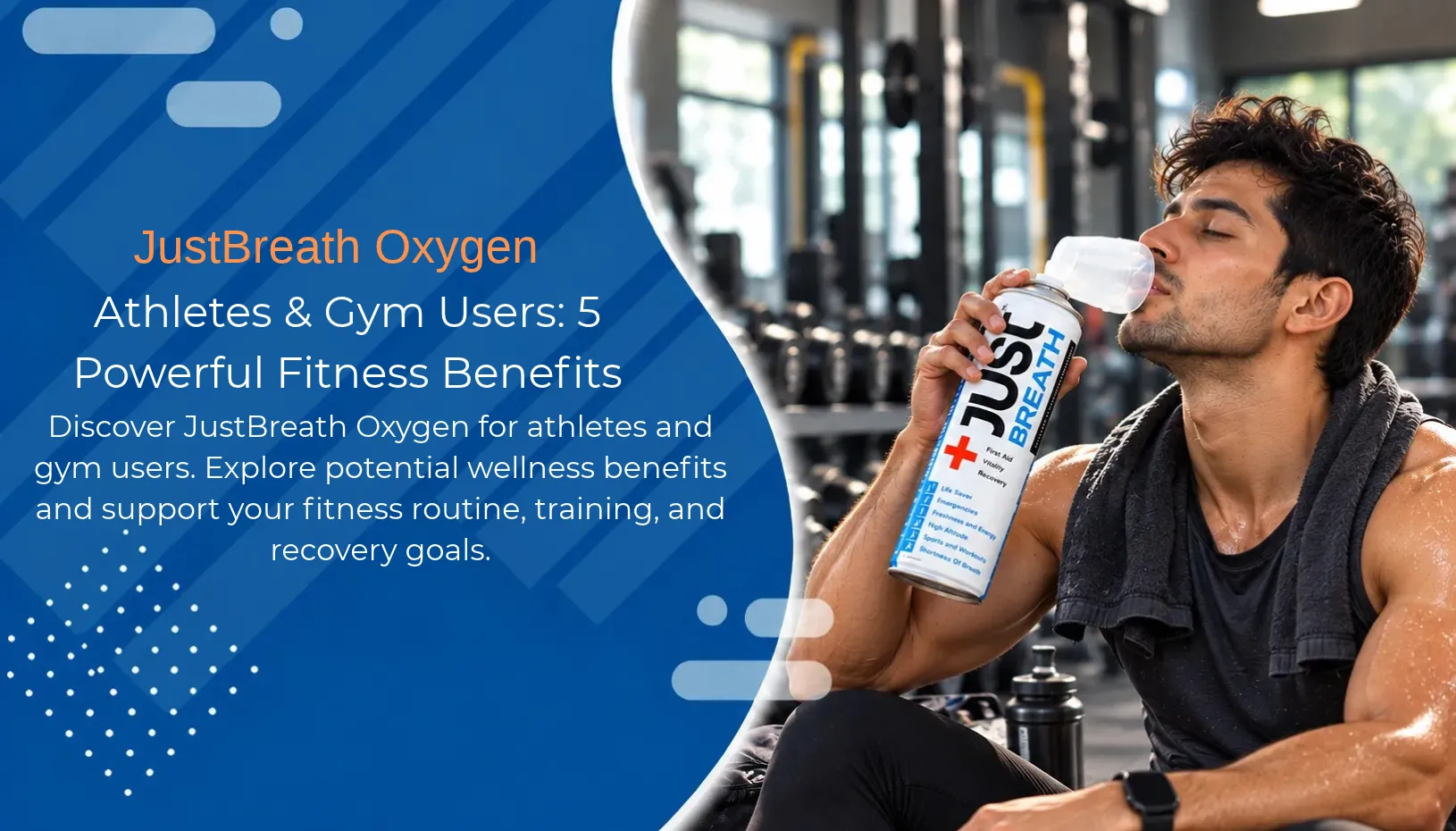
Athletes & gym users often turn to a sports oxygen can for a few breaths of concentrated oxygen when they stop to recover: between heavy sets, after a sprint session, at half-time, or at the top of a long climb on the bike. Many athletes like how it feels. The science on performance gains is mixed, so we position it as a comfort and recovery aid, not as a performance booster. Gym users also look for an oxygen can for gym breaks for the same reason: a quick breath of pure oxygen in a can between heavy sets. Whether you’re a professional athlete, fitness enthusiast, bodybuilder, runner, or cyclist, portable sports oxygen offers a convenient option for a refreshing breathing break during your workout routine.
Studies that gave athletes oxygen between bouts of exercise at sea level have generally found small or no improvements in the next bout, because healthy lungs already load the blood with oxygen almost fully. What users report is a feeling of quicker recovery and less breathlessness. At altitude, where the air holds less oxygen, the short-term effect is more noticeable. Use it for how it feels, not as a substitute for training, sleep and hydration. Read the full guide to sports oxygen.
Breathing supplemental oxygen by inhalation is excluded from the prohibited methods on the WADA Prohibited List (section M1). [Confirm against the current year’s list before publishing.] Check your own federation’s competition rules before using it at events. For healthy adults, a few puffs is safe; stop and see a doctor if you get chest pain, palpitations or dizziness during exercise.
A sports oxygen can has a portable format that can be convenient to carry in a gym bag or sports kit, subject to product specifications and transport rules.
At sea level, healthy lungs already saturate the blood with oxygen almost fully, so extra oxygen between bouts has shown little effect on the next effort in most studies. Some athletes report feeling less breathless and recovering faster, and that perceived benefit can still matter for comfort. At altitude the picture is different: the air carries less oxygen, so a short top-up during rests has a clearer short-term effect, though it is no substitute for acclimatisation. Treat pure oxygen in a can as a comfort tool, not a training shortcut.
Use the oxygen can on top of these, not instead of them.
If you are racing or riding in Leh or Spiti, arrive several days early to acclimatise. Carry a can in your support bag for rests, never during the effort itself, and stop if you develop headache, nausea or unusual breathlessness.
Gyms can keep a can at the front desk with the first-aid box. Trainers should know the warning signs and when to stop a session. Bulk pricing is available.
For your next hard session, use a sports oxygen can after two or three heavy sets or intervals, 2–3 breaths each time, and note how you feel. If you notice no difference, you have lost nothing but a few puffs; if it helps you feel ready sooner, keep it in your bag.
Indian summers add heat stress to every session. Train early in the morning or late evening, drink before you feel thirsty, and stop if you feel dizzy, confused or stop sweating. Heat illness is not a lack of oxygen; cooling down, shade and fluids treat it, and severe cases need 108.
Inhaled supplemental oxygen is excluded from WADA’s prohibited methods, but event organisers can set their own rules. Check the race or league rules before you carry a can onto the field.
A Portable Oxygen Can offers a compact option for people interested in portable oxygen products for fitness and sports settings. An oxygen can for gym use or a sports oxygen can containing pure oxygen in a can may be convenient to carry, but neither replaces proper conditioning, hydration, nutrition, or rest.
For safe training, listen to your body and follow an appropriate recovery routine. If you experience severe or unusual symptoms after exercise, seek medical assistance. Explore the range at Just Breathe Oxygen to learn more about portable oxygen products and their intended uses.
Yes, many use them during breaks and after sessions, mainly for comfort and recovery.
It can make breathing feel easier for a minute or two. Hydration, rest and cooling down matter more for recovery.
For healthy adults, yes, a few puffs at a time. Pure oxygen in a can is high-purity oxygen with a press valve; keep it away from heat and flames, and stop if you feel chest pain or dizziness.
Use it when you have stopped. Do not run or lift with the mask on.
2–3 breaths, once or twice a session, is plenty.
Yes, at the front desk alongside the first-aid box. Ask for bulk pricing on our contact page.
No. Oxygen therapy is prescribed treatment for a medical condition. A sports oxygen can gives a few short breaths for comfort and recovery.
There is little evidence of faster times at sea level. Some runners use it for comfort after hard sessions.
Only with a parent's consent and under a coach's supervision, a few puffs at a time. It is not a substitute for rest and hydration.
In your bag, cap on, out of direct sun. Never take it into a sauna or steam room.