Supporting healthcare professionals with dependable oxygen solutions designed to meet the needs of hospitals & clinics, and medical facilities.
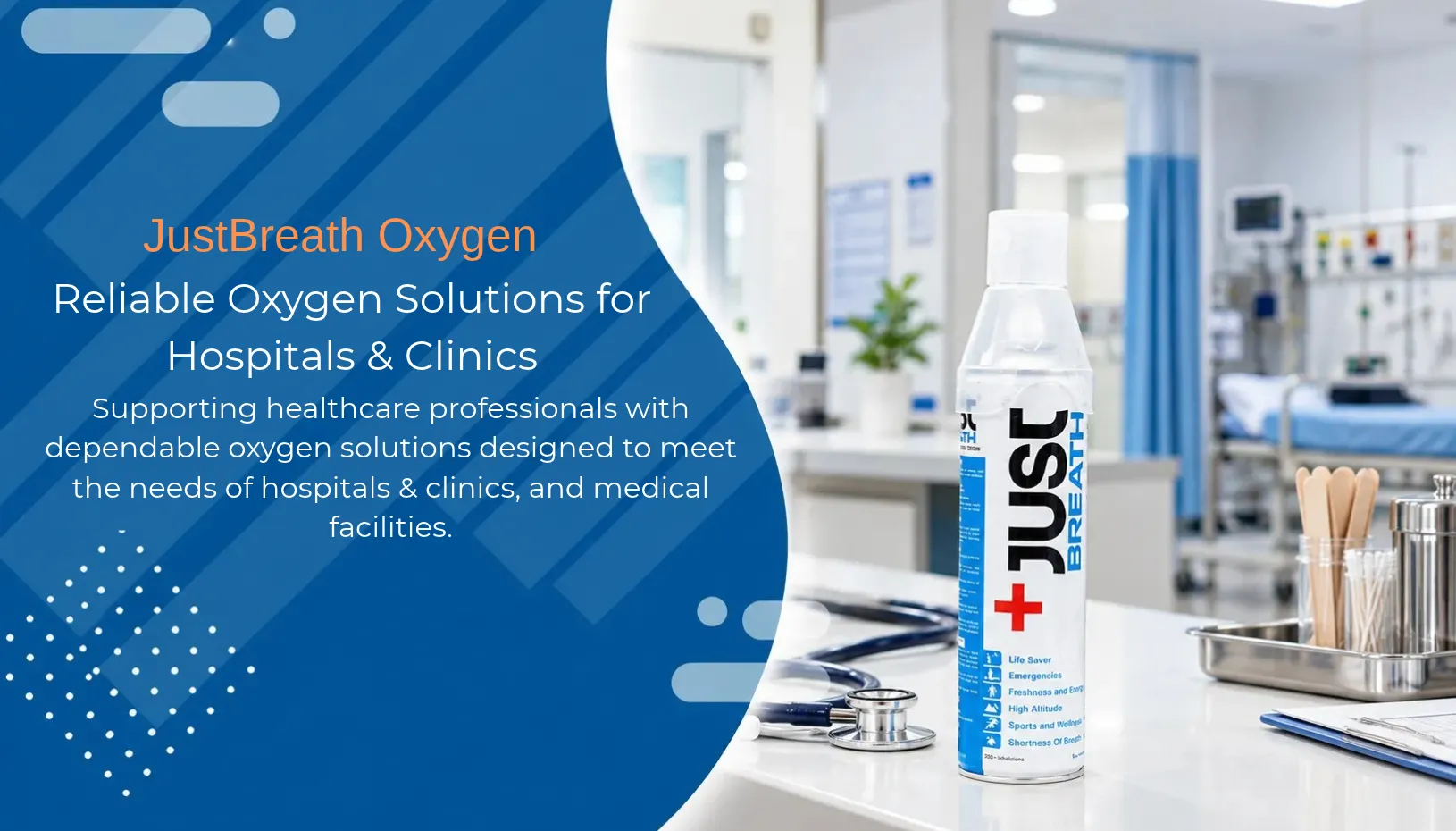
hospital and clinics , nursing homes, and diagnostic centres keep Just Breathe oxygen cans as a light, ready-to-use backup at reception, in the OPD, in sample-collection rooms, on health-camp tables, and in ambulances. A can gives a patient or visitor a few breaths of oxygen while staff assess them and bring the main oxygen supply if needed. It does not replace the hospital’s medical oxygen system. Whether you need an oxygen can for hospital wards or an oxygen can for clinic reception desks, the same 12 L can with a mask fits both hospital and clinic settings.
No. Just Breathe is a portable oxygen can with high-purity oxygen for short, occasional use. Medical oxygen given as treatment is prescribed, dosed and delivered through a regulated cylinder, concentrator or pipeline under clinical supervision. Clinics use our cans as a convenience item and first-response backup, not as therapy. See medical oxygen canister vs oxygen can.
| Facility | Suggested Stock | Where to Keep |
|---|---|---|
| Single-doctor clinic | 2–3 cans | Emergency tray |
| Dental / eye / skin clinic | 3–4 cans | Each procedure room and reception |
| Diagnostic centre | 4–6 cans | Collection rooms and reception |
| Nursing home / small hospital | 10+ cans | Each floor station, OPD and ambulance |
| Health camp (per day) | 4–6 cans | Registration and check-up desks |
Small clinics, dental practices, physiotherapy centres, and diagnostic facilities may have limited space for larger oxygen equipment. A medical oxygen canister designed for portable use offers a compact product that can be stored conveniently without occupying much room.
Clinics can include portable oxygen products in their emergency preparedness plans, subject to clinical guidance and product suitability. If a patient experiences sudden breathlessness, dizziness, or other concerning symptoms, staff should arrange prompt medical assessment rather than relying on a portable oxygen can or medical oxygen canister alone.
We supply clinics, hospitals, pharmacies and distributors across India with invoice and GST. Tell us your facility type, city and monthly quantity and we will send a quote within one working day. [Form: name · facility type · city · quantity · phone] Read our oxygen can wholesale guide.
Many clinics in India have no piped oxygen. A medical cylinder sits in a corner, needs a regulator fitted, and only one or two staff know how to set it up. In the first minute after a patient feels faint or breathless, that delay matters for comfort. Even a portable oxygen cylinder, lighter than a full-size one, still needs a regulator, a flow setting and refills.
An oxygen can sits in a drawer, needs no setup and can be used by any trained receptionist or assistant. It does not replace the cylinder; it fills the gap while the doctor arrives and decides whether medical oxygen is needed. That is also why health camps, mobile vans and corporate check-up drives like them: there is nothing heavy to carry and nothing to connect.
Bulk orders ship as sealed 12 L cans with masks fitted, batch number and expiry printed on each can, packed in cartons of [xx] [Confirm]. We supply with a GST invoice, share batch details on request, and dispatch across India in [x–y] working days [Confirm]. Distributors and hospital groups can ask for tiered pricing and scheduled deliveries.
A dental clinic in a busy market keeps two cans in its emergency tray for patients who feel faint during long procedures. A diagnostic centre keeps one in each sample-collection room for nervous patients. A nursing home keeps cans at each floor station so staff can respond while a nurse brings the cylinder. These are the patterns we hear most; your protocol should decide where cans fit
Staff should know where the cans are kept, how to fit the mask, how many breaths to give, the warning signs that need the doctor at once, and how to note use in the log. A five-minute demo at each shift change is enough.
Yes, as a first-response backup while staff assess the patient and arrange medical oxygen if needed. An oxygen can for clinic emergency trays is a common choice for dental, eye and skin clinics.
No. The can has a press valve and a fitted mask.
About [250+] one-second puffs, enough for many short uses.
Yes, as a spare alongside the vehicle's medical cylinder, stored out of direct sun.
No. It is a first-response comfort item. Clinics should still keep a medical oxygen cylinder with a regulator and follow their emergency protocol. For treatment, a portable oxygen cylinder or a medical oxygen canister with a regulator is the right equipment.
Any trained staff member can hand it to a conscious patient and guide 2–3 breaths while a doctor or nurse assesses them.
Single clinics can start with one small carton; hospitals and distributors get tiered pricing.
Upright, below 50°C, away from autoclaves, heaters, oils and open flames, with the oldest batch in front so it is used first.