We get a certain kind of phone call more often than you’d think. Someone’s father has COPD, and the doctor has put him on oxygen at home. The cylinder is heavy, the refill guy keeps turning up late, and they’ve spotted our oxygen cans on Amazon. Could a few of those do the job instead?
We always say no. Politely, but clearly.
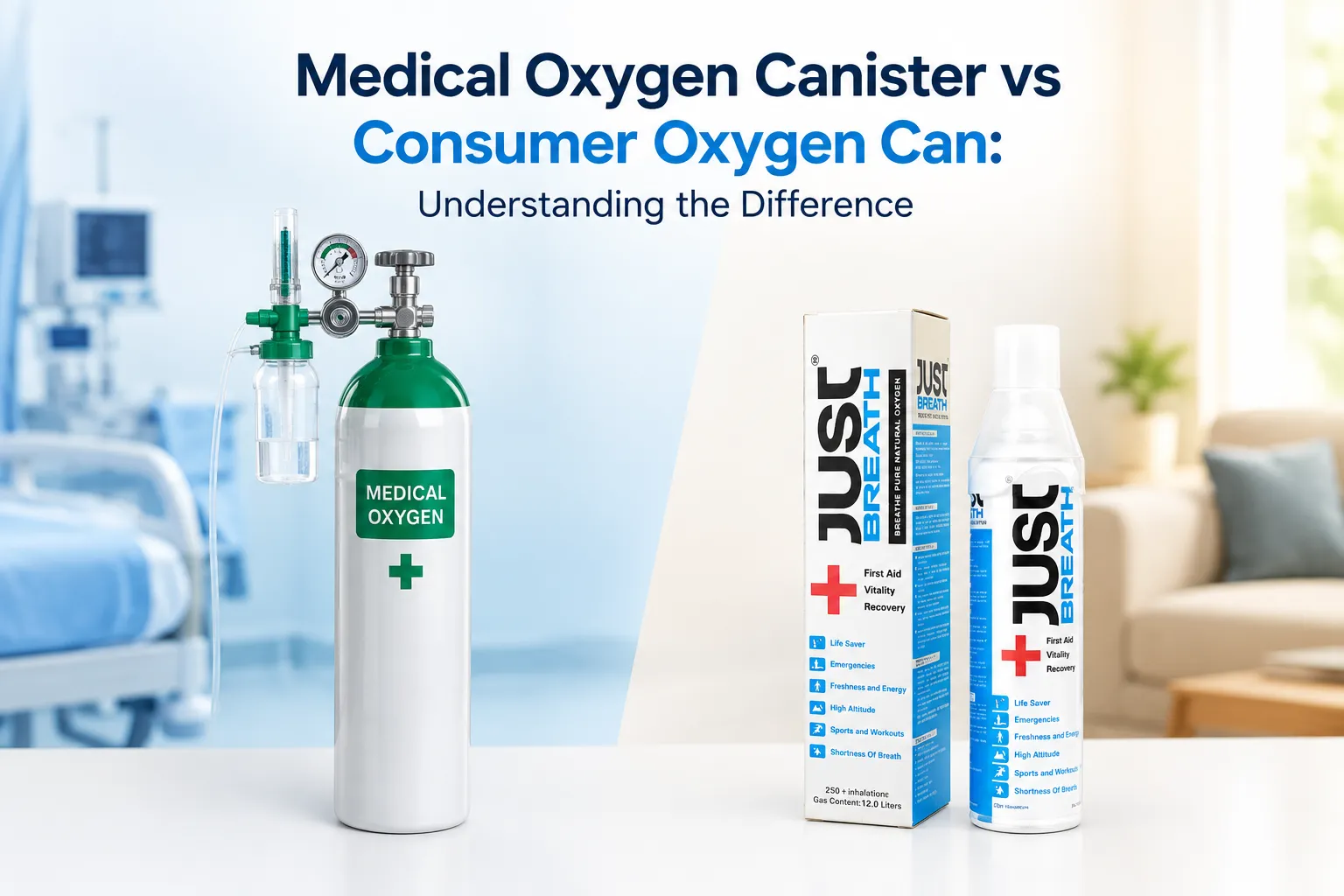
Those calls are the reason we wrote this post. Plenty of people in India don’t realise there’s a real difference between a medical oxygen canister and the consumer oxygen can you’d pick up for a trek or a smoggy week in Delhi. From the outside they look almost the same. Inside, legally and medically, they’re not. If you’ve ever searched oxygen can vs medical oxygen and come away more confused than before, stay with us for a few minutes.
What Is Medical Oxygen and Who Prescribes It?
Why Medical Oxygen Counts as a Drug in India
Medical oxygen is oxygen that’s treated as a medicine. Not in a loose, marketing way. In the legal way. Back in 2020, the Supreme Court of India held that Medical Oxygen IP counts as a drug under the Drugs and Cosmetics Act, 1940 (SCC Online). Once you know that, a lot of other things make sense. It explains why makers need a drug licence, why there’s a fixed quality standard, and why the government keeps an eye on the price.
The Indian Pharmacopoeia Standard
That quality standard comes from the Indian Pharmacopoeia, the “IP” you see printed on proper medical labels. Liquid Oxygen IP from the big gas companies is usually more than 99% pure (Linde India). There’s also a separate IP standard for 93% oxygen, which is what PSA plants and home concentrators produce (IMARC Engineering).
Who Writes the Prescription
So who decides you need it? Your doctor. Not the chemist, not a YouTube video, and not us. It could be a chest specialist looking after someone with COPD, a cardiologist handling heart failure, or the physician who discharges your mother after a bad bout of pneumonia. When they write prescribed oxygen, they’ll usually tell you how many litres per minute, for how many hours a day, and through what. That might be a nasal cannula, a mask, a concentrator or a cylinder.
They don’t pick these numbers at random. They check oxygen levels first, with a pulse oximeter and sometimes a blood gas test. Too little oxygen is dangerous, and for some lung patients too much can be risky as well. That’s the whole idea behind prescribed oxygen. It’s a dose, just like a tablet.
Where a Medical Oxygen Canister Fits In
So where does a medical oxygen canister fit into all this? Think of it as the smallest member of the family. It’s a light aluminium can filled with oxygen that meets IP standards, made by a company that holds a drug manufacturing licence. Some of these are even sold at pharmacies without a prescription (The Week). Don’t let the easy availability fool you, though. What’s inside is still a medicine.
What Is a Consumer Portable Oxygen Can Designed For?
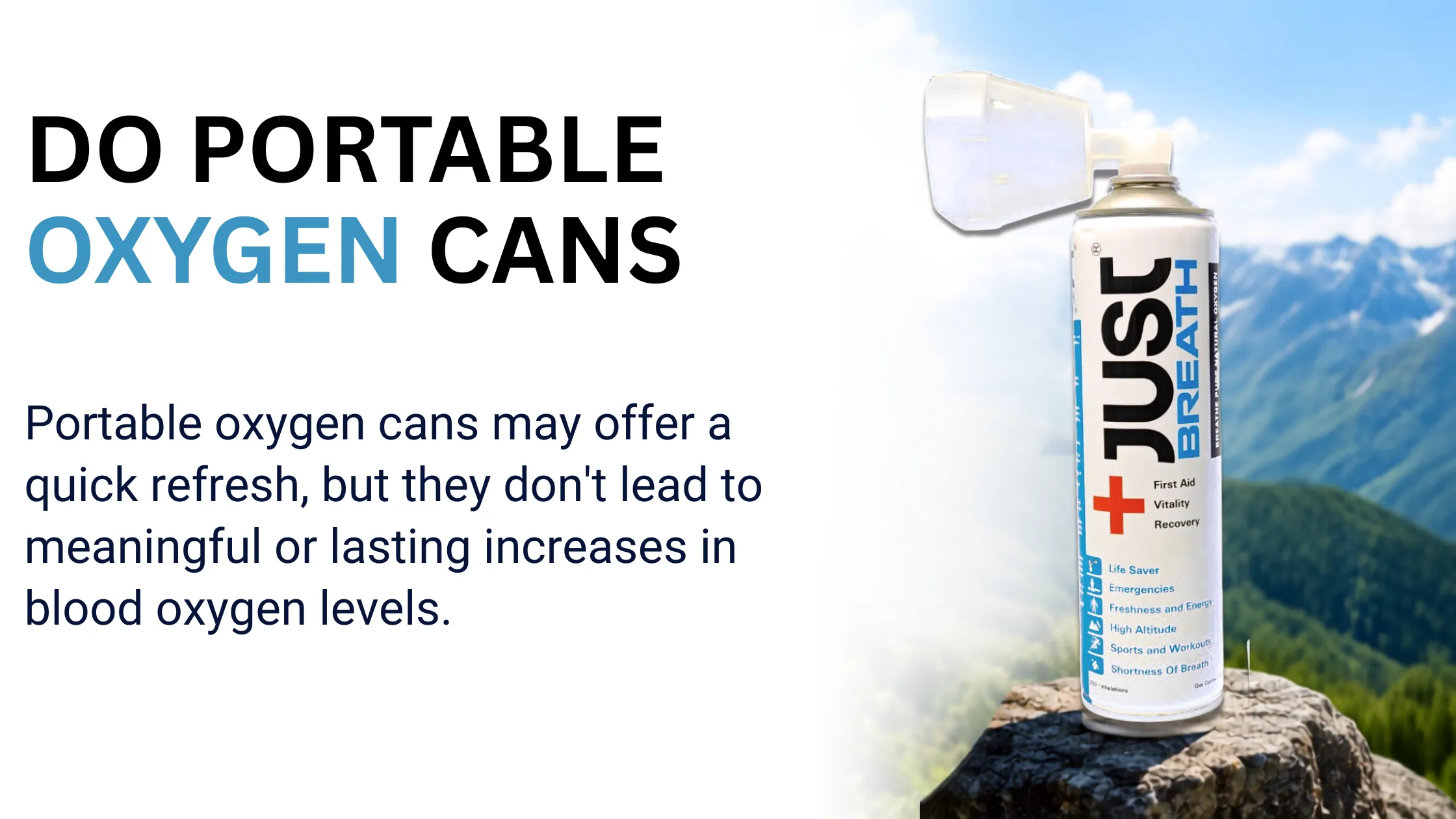
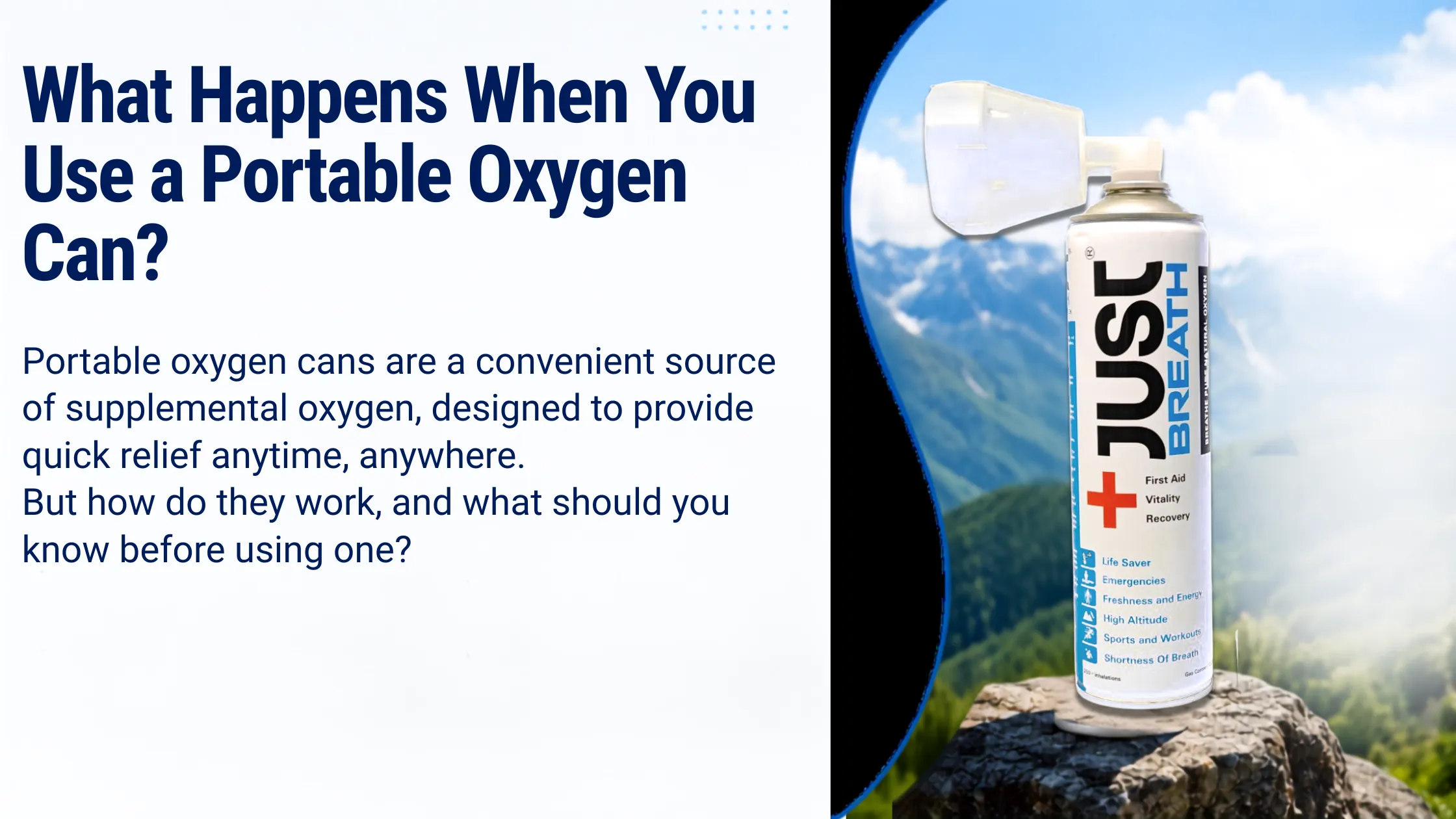
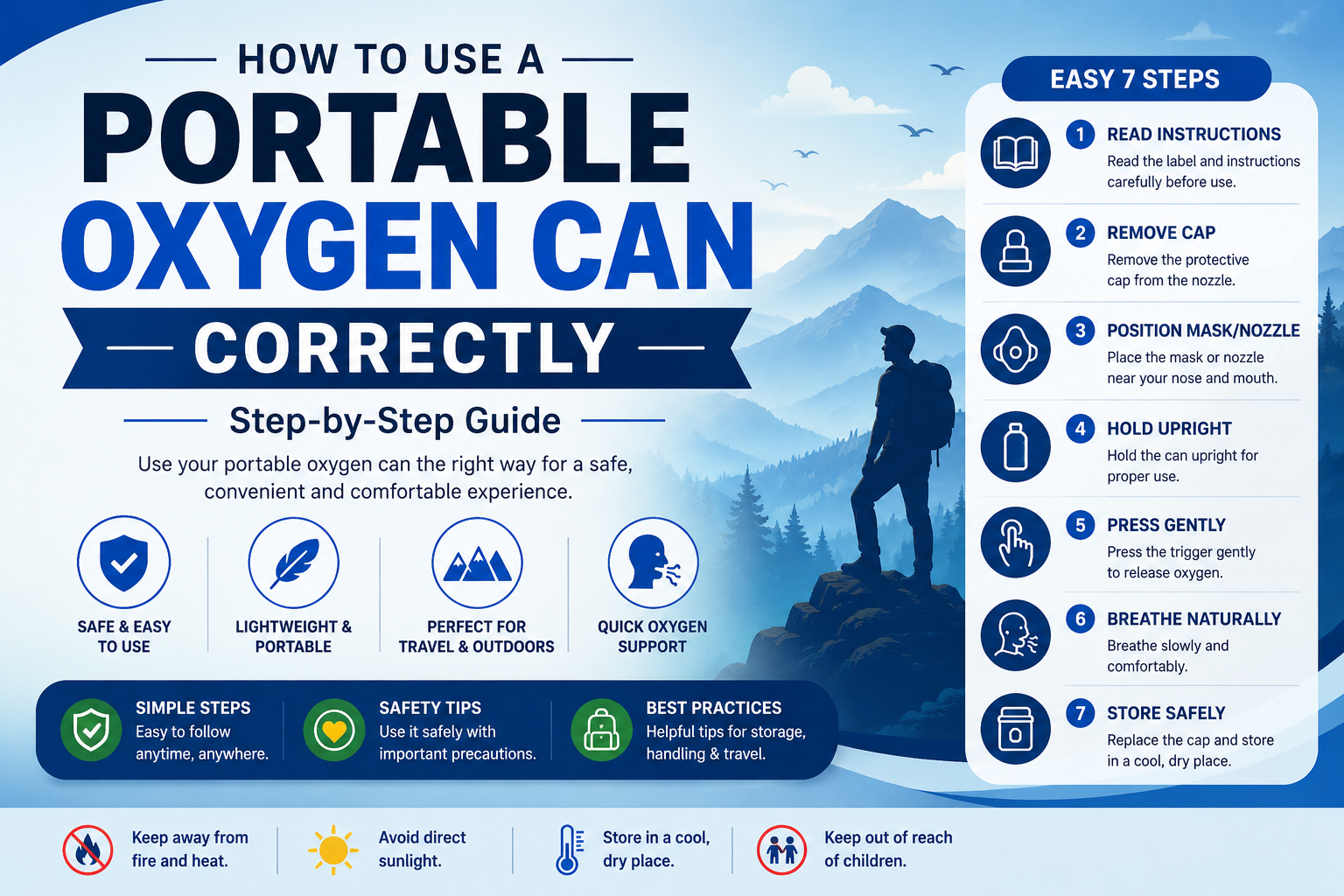
A consumer oxygen can is a convenience product. That isn’t an insult, it’s simply what it is. You press the cap, take a breath or two of concentrated oxygen, and you’re done. Looking for a convenient oxygen solution for travel, outdoor activities or general wellness? Explore our portable oxygen can for an easy-to-carry oxygen solution.
Who Usually Buys a Consumer Oxygen Can
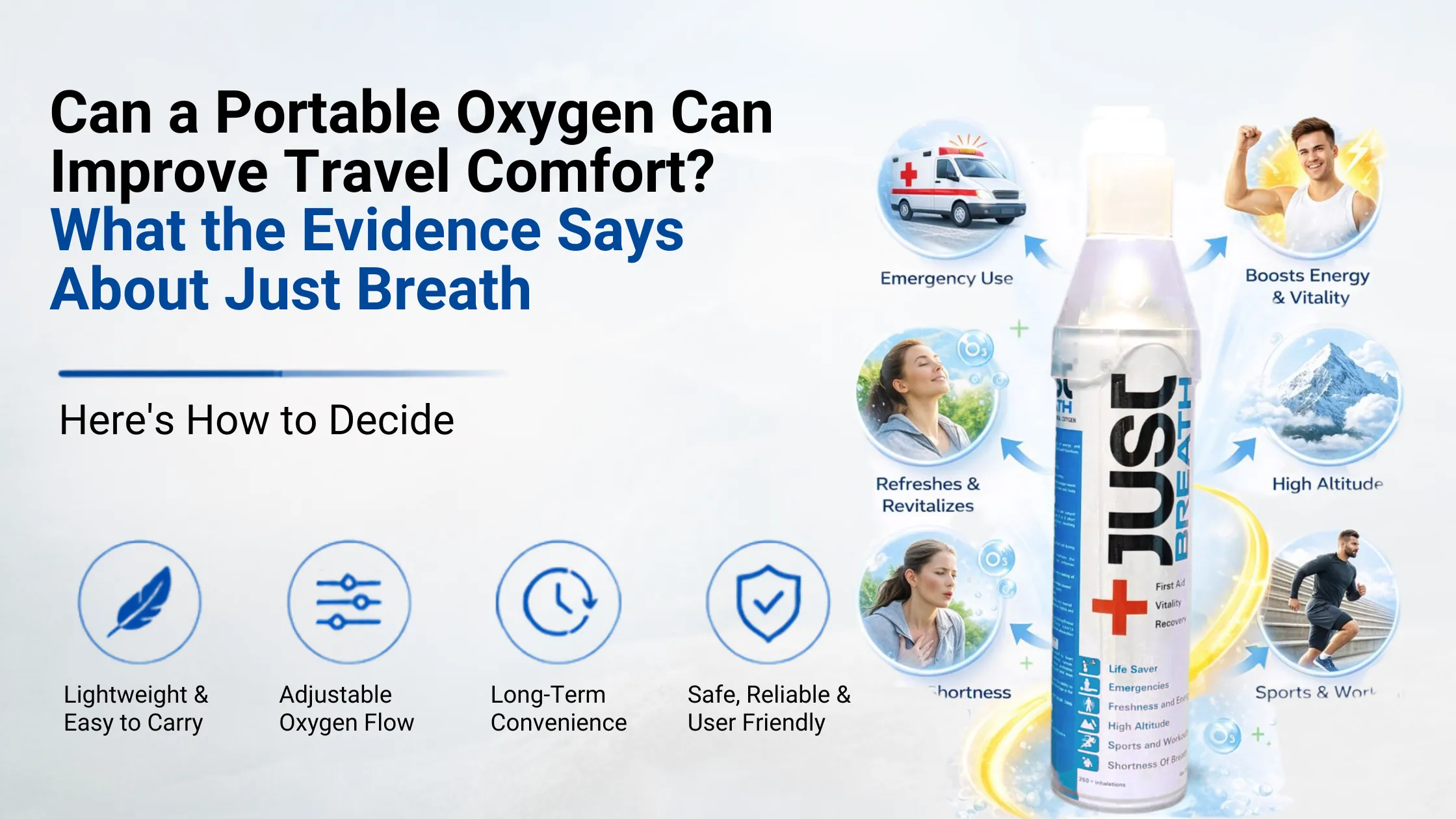
We have a fair idea of who buys these, because they write to us. There’s the group of friends from Pune heading to Leh who want something in the backpack for the first couple of days. The runner in Bengaluru who likes a few puffs after a long Sunday run. Office-goers in Gurugram during those grey November weeks when the AQI app turns maroon. Truck drivers doing the overnight Jaipur to Ahmedabad stretch. And lots of families who just want one sitting in the first-aid box, next to the Dettol and the crepe bandage. If you are looking for a convenient portable oxygen solution for travel, fitness or general wellness, explore our Portable Oxygen Can designed for easy carrying and on-the-go use.
What You Actually Get Inside the Can
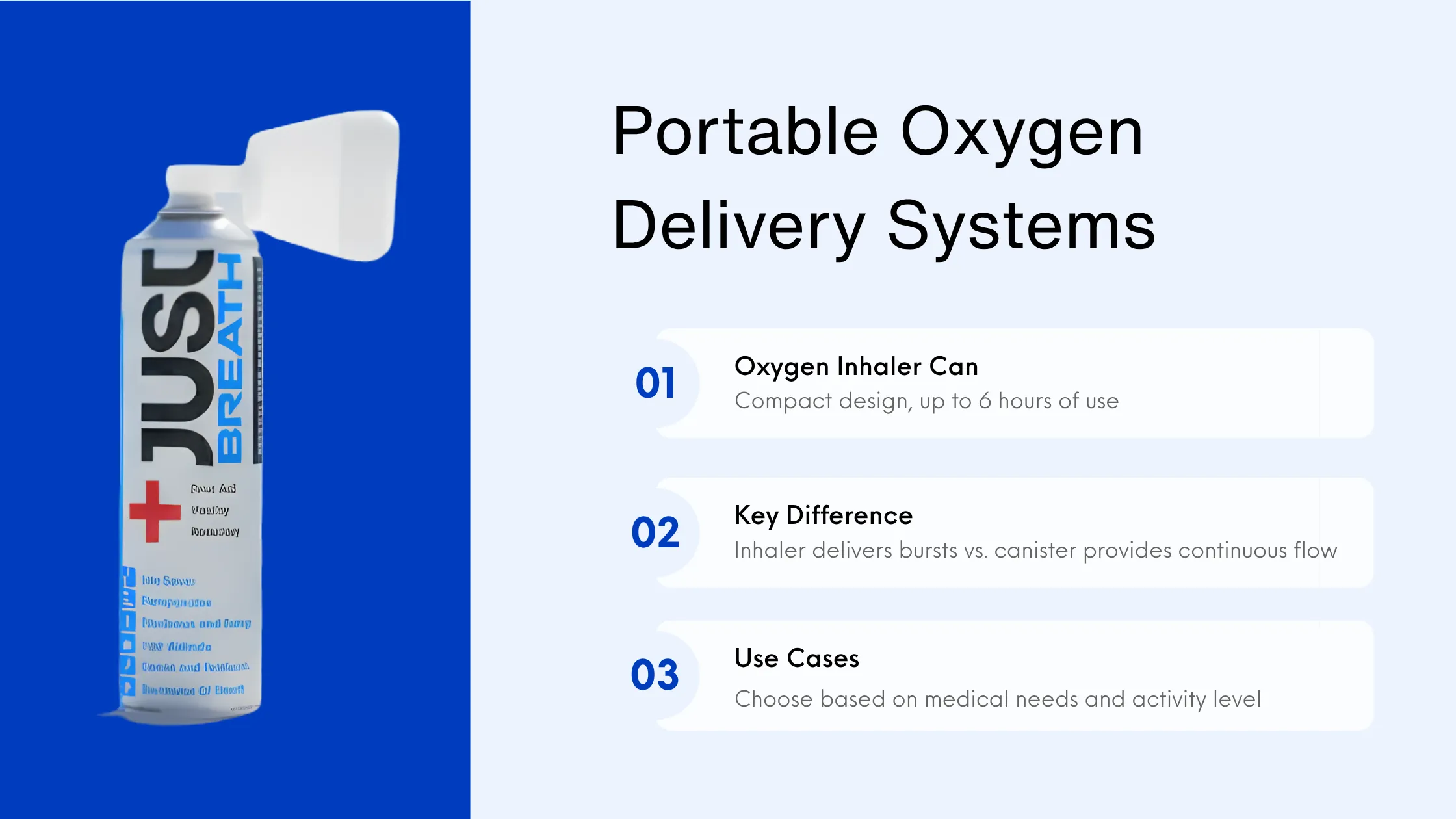
What they all get is a small, fixed amount of oxygen. Depending on the can, that works out to a set number of short puffs, not hours of steady flow. There’s no knob to set litres per minute, no humidifier bottle and no tubing you can sleep with.
Oxygen Can vs Medical Oxygen: The Core Difference
For those uses, that’s perfectly fine. The trouble only starts when someone expects a consumer can to behave like a medical oxygen canister or a full-size cylinder. That’s really what the oxygen can vs medical oxygen debate boils down to. One helps you feel a little fresher on a trip. The other is part of somebody’s treatment.
Purity, Labelling and Regulation: What to Look For
Here’s something most buyers never notice. Two cans can both say “99% pure” on the front and still be completely different products in the eyes of the law. The big number won’t tell you much. The fine print on the back will, and that’s where the oxygen can vs medical oxygen difference actually shows up.
Side-by-Side Comparison
A quick side-by-side makes it easier:
| Medical oxygen canister | Consumer oxygen can | |
| Legal status in India | Treated as a drug | General consumer product |
| Purity standard | Indian Pharmacopoeia (Oxygen IP or Oxygen 93% IP) | Whatever the brand declares |
| Licence | Drug manufacturing licence | Varies from brand to brand |
| What the label shows | “Oxygen IP”, licence no., batch, mfg and expiry dates | Purity claim, volume, directions, warnings |
| Meant for | Short-term medicinal use | Travel, fitness, general wellness |
Label Checklist Before You Buy
So when you’re holding a can, whether at a medical store in Bhopal or on a product page online, flip it over. Does it say “Oxygen IP”, or just “pure oxygen”? Those are not the same claim. If it calls itself a medical oxygen canister, is there a drug licence number printed on it? Can you find a batch number, a manufacturing date and an expiry date? Does it tell you how many litres are inside and roughly how many puffs you’ll get? Is there a proper manufacturer name with an Indian address, and a phone number someone actually picks up? Are the heat and flame warnings easy to read, or hidden in tiny grey text?
Extra Checks for Clinics
If you’re buying an oxygen can for clinic first-aid kits, go one step further. Ask the supplier for a copy of their licence and a test certificate for the batch you’re getting. Any decent manufacturer will send these without a fuss. Honestly, we’d expect you to ask us the same.
Who Regulates Medical Oxygen in India
One last bit of background. In India, drug manufacturing and sales are mainly regulated by each state’s Drug Control department, with CDSCO coordinating from the centre (Rajya Sabha reply, 2024). Medical oxygen is also on the essential medicines list, so its pricing is watched by the NPPA (Linde India). The point is simple. Whether a can is truly medical comes down to paperwork. Not the colour of the can, and definitely not the price.
Why a Consumer Can Is Not a Substitute for Prescribed Therapy
If someone at home has COPD, asthma, heart failure or any long-term lung problem, please don’t skim this part.
The Volume Problem
Let’s start with some simple maths. Say a doctor puts a COPD patient on 2 litres per minute for 16 hours a day. That’s roughly 1,900 litres of oxygen, every single day. A portable can holds a tiny slice of that. You’d need a small mountain of cans just to get through one afternoon, and even then you couldn’t control the flow.
The Risk of False Comfort
But the numbers aren’t even the scariest part. What worries us more is that a few puffs can make a person feel better for a minute while their actual oxygen level keeps falling. The family relaxes, the hospital trip gets pushed to “let’s see how he is in the morning”, and that delay can cost a lot.
Breathlessness Has Many Causes
Breathlessness also has many causes. It could be asthma, a heart problem, anaemia, a clot in the lung or even a panic attack. Oxygen on its own fixes none of these. The same goes for altitude. If someone keeps feeling worse in Leh or Tawang, the answer is to stop climbing and come down, not to keep reaching for the can.
Even a medical oxygen canister is only short-term help, something to bridge the gap while you get to a doctor. For daily therapy, your doctor will suggest a concentrator or cylinder that matches your prescribed oxygen plan.
What Clinics Should Keep Instead
Clinics ask us about this a lot too. Dentists, physiotherapists and small OPDs in towns like Bhilwara or Satara often want an oxygen can for clinic use. It’s a reasonable thing to keep in the first-aid drawer. But if a patient faints in the chair or has a bad allergic reaction, you’ll want a proper medical oxygen cylinder with a regulator and masks, and staff who’ve actually practised using it. The can is a backup. It shouldn’t be the plan.
Questions to Ask Your Doctor Before Buying Oxygen
Your Checklist for the Appointment
Before you spend money on any oxygen product, spend ten minutes with your doctor. It doesn’t matter whether that’s a big private hospital or the district hospital OPD. Jot these down on your phone and take them along:
- Do I actually need oxygen? At what oximeter reading should I start using it?
- How many litres per minute, and for how many hours a day?
- Should I get a concentrator, a cylinder or both? (Concentrators need steady electricity. Cylinders need refills.)
- Is a medical oxygen canister worth keeping as a backup for travel or long power cuts?
- Can I use a regular oxygen can on a trek or on bad pollution days, or should I stay away from it?
- Which symptoms mean I should skip home oxygen and go straight to emergency?
- How often should I check my SpO2, and which numbers should I write down?
- If I travel by train or flight, what papers do I need for my prescribed oxygen?
Details Your Doctor Should Know
Also mention it if you smoke, take sleeping pills, or have been told your carbon dioxide levels run high. Small details like these can change how much oxygen is safe for you.
Making the Final Call
If your doctor says a regular can is fine for your Spiti trip, great, enjoy the mountains. If they say you need a concentrator, go with that. And if you run a clinic, have the same chat with your medical officer before you stock an oxygen can for clinic emergencies.
Safe Use Rules for Both
Oxygen itself doesn’t catch fire. What it does is make anything nearby burn much faster and much hotter. So whether you’ve got a medical oxygen canister or a regular can, the safety rules are exactly the same.
Keep Flames and Heat Away
Keep it well away from flames. That means no cigarettes, no agarbatti, no diya and no gas stove nearby while someone is using it. With Diwali just around the corner, this one’s worth saying twice.
Don’t leave it in a parked car in the sun. A car in Jodhpur in May turns into an oven, and a pressurised can has no business being in an oven. Never pierce it or toss it into a fire either, even if it feels empty.
Handling and Storage
Go easy on oily stuff. Hair oil, Vaseline and thick creams on the face don’t mix well with oxygen, so stick to water-based products while you’re using it. Store the can upright, somewhere cool and dry, out of reach of kids. Take short breaths the way the label says, and never use it inside a closed bag or tent.
Expiry Dates and Air Travel
Check the expiry date every few months, and get rid of empty cans the way the label tells you to. Flying somewhere? Ask your airline first. Most of them restrict pressurised oxygen, and medical oxygen on board usually needs approval well in advance.
When to Call for Help
Lastly, know when to stop relying on it. If the breathlessness doesn’t settle within a few minutes, or there’s chest pain, bluish lips or confusion, call 108 or 112 and head to the nearest hospital. Please don’t wait it out.
Conclusion
If you remember just one line from this post, make it this one. Medical oxygen is a medicine your doctor doses, and a consumer can is a convenience you carry.
A medical oxygen canister sits somewhere in between. It’s a genuine medicine in a small package, meant for short, labelled use. But no can of any kind replaces a concentrator or a cylinder once a doctor has put someone on therapy.
Choosing What’s Right for You
So the oxygen can vs medical oxygen question really comes down to why you need it. Planning a trek, a long drive or trying to get through a smoggy week? A consumer can makes sense. Managing a health condition? Talk to your doctor first, then buy what they recommend. And if you run a clinic, an oxygen can for clinic first-aid kits is a handy extra, as long as a proper cylinder is sitting right next to it.
Talk to Just Breath Oxygen
At Just Breath Oxygen, we ship our oxygen cans all over India, from Srinagar to Thiruvananthapuram. If you’re not sure our product is right for you, just call us on +91 9610251841 or visit Just Breath Oxygen to explore our products and get in touch through our contact page. We’ll give you a straight answer, even if that answer is “this isn’t what you need.”
Frequently Asked Questions About Portable Oxygen Cans and Medical Oxygen
No, a portable oxygen can is not the same as medical oxygen. Medical oxygen is used for prescribed treatment under medical supervision, while consumer oxygen cans are designed for short-term supplemental use and cannot replace prescribed oxygen therapy.
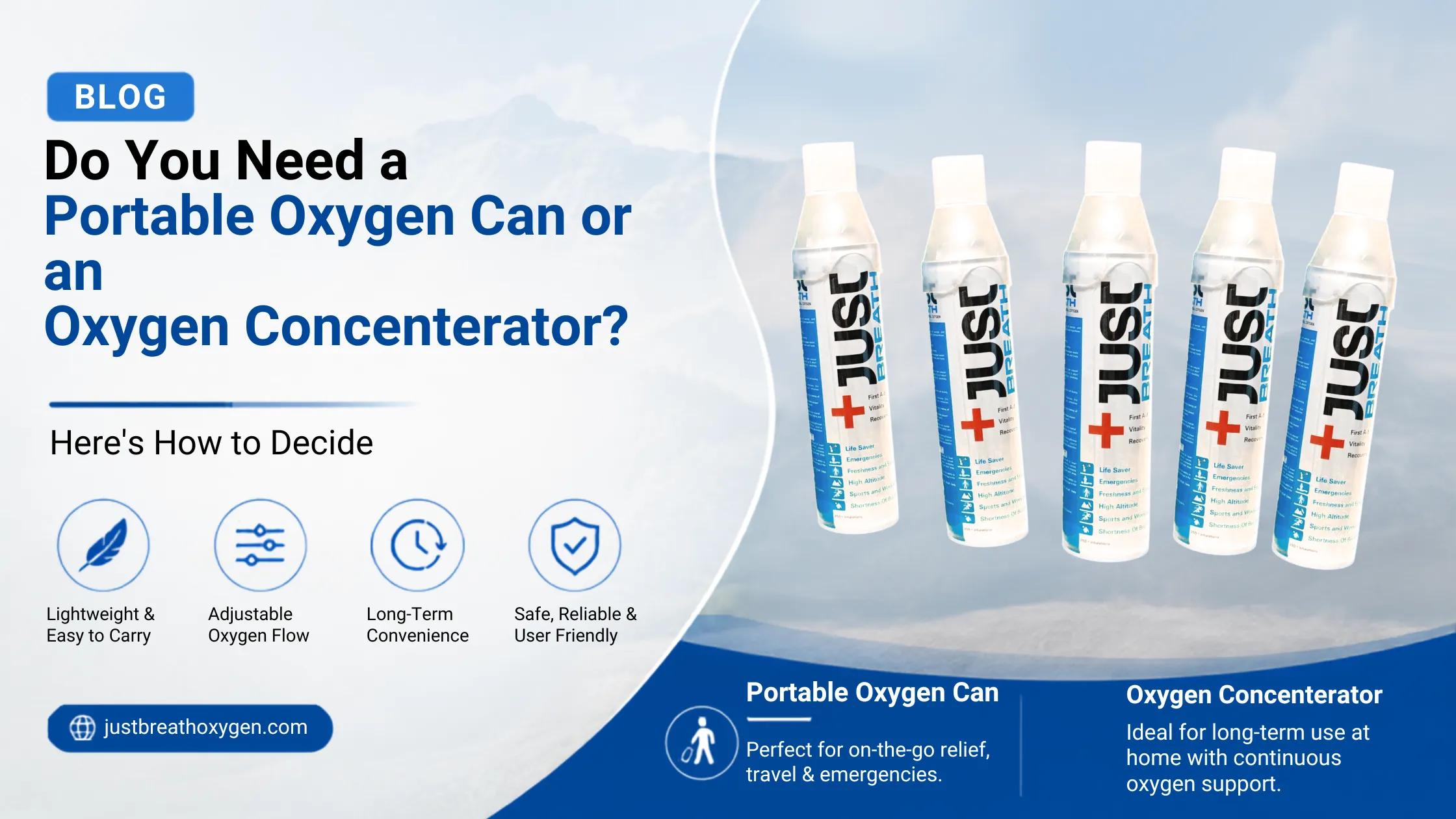
No, an oxygen can cannot replace an oxygen concentrator. An oxygen concentrator provides a continuous oxygen supply for patients who need prescribed oxygen therapy, whereas a portable oxygen can contains a limited supply for occasional use.
Consumer portable oxygen cans are generally available without a prescription, depending on the product and applicable regulations. However, medical oxygen therapy requires proper medical assessment and should only be used as directed by a healthcare professional.
Not all oxygen cans contain medical-grade oxygen. Oxygen purity, quality standards and intended use vary by product. Always check the manufacturer's specifications, product labelling and certifications before purchasing a portable oxygen can.
COPD patients should use oxygen products recommended by their healthcare provider. Depending on their oxygen levels and medical condition, a doctor may prescribe an oxygen concentrator or medical oxygen. Consumer oxygen cans are not a substitute for COPD treatment.
Oxygen I.P. means oxygen that complies with the Indian Pharmacopoeia standards. These standards specify quality requirements for the substance. Always check the product's intended use, labelling and manufacturer information before use.
People with COPD, chronic respiratory conditions or a risk of carbon dioxide retention should never start oxygen therapy without medical guidance. Incorrect oxygen administration can cause complications, so oxygen use should follow a healthcare professional's instructions.