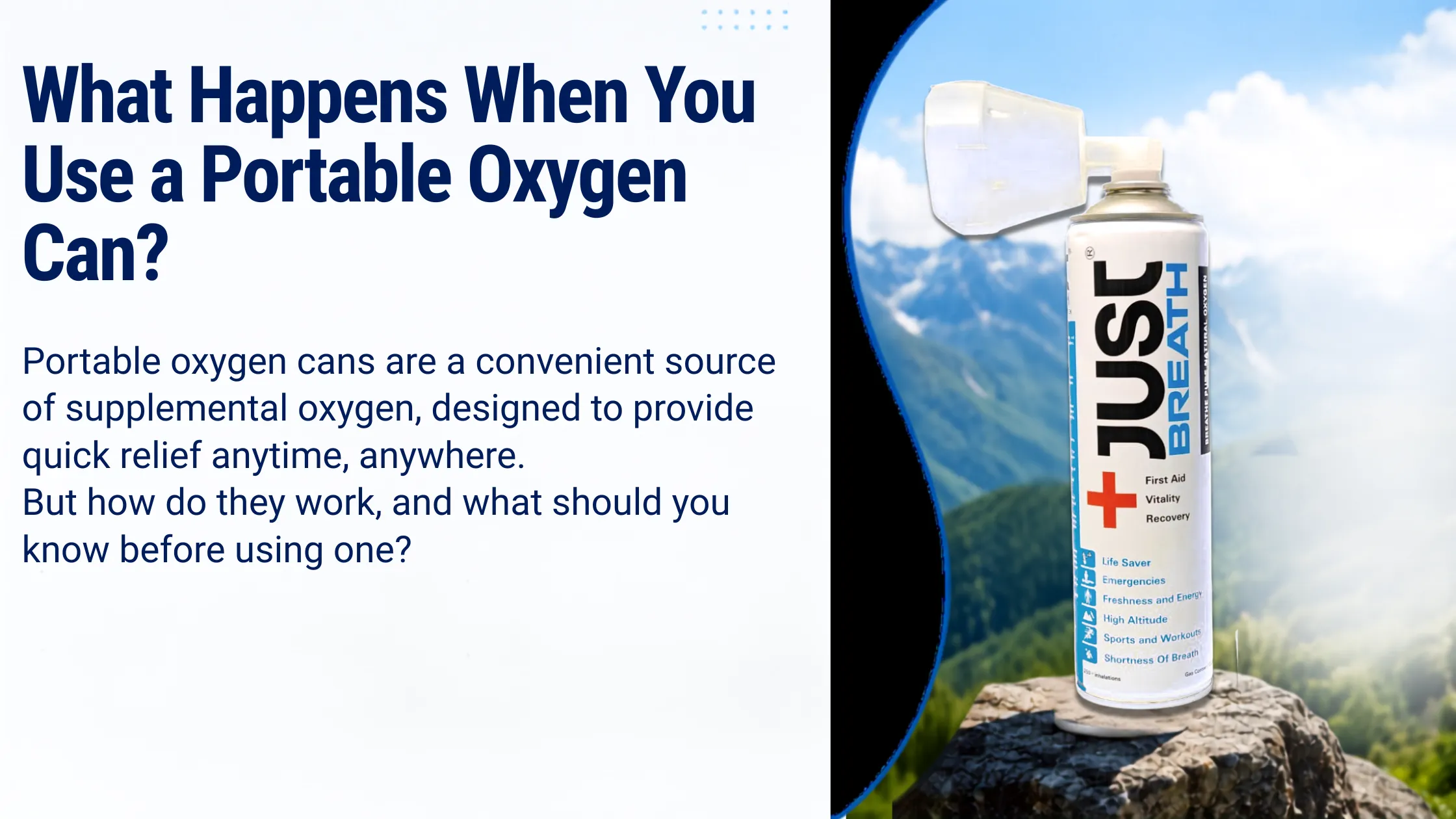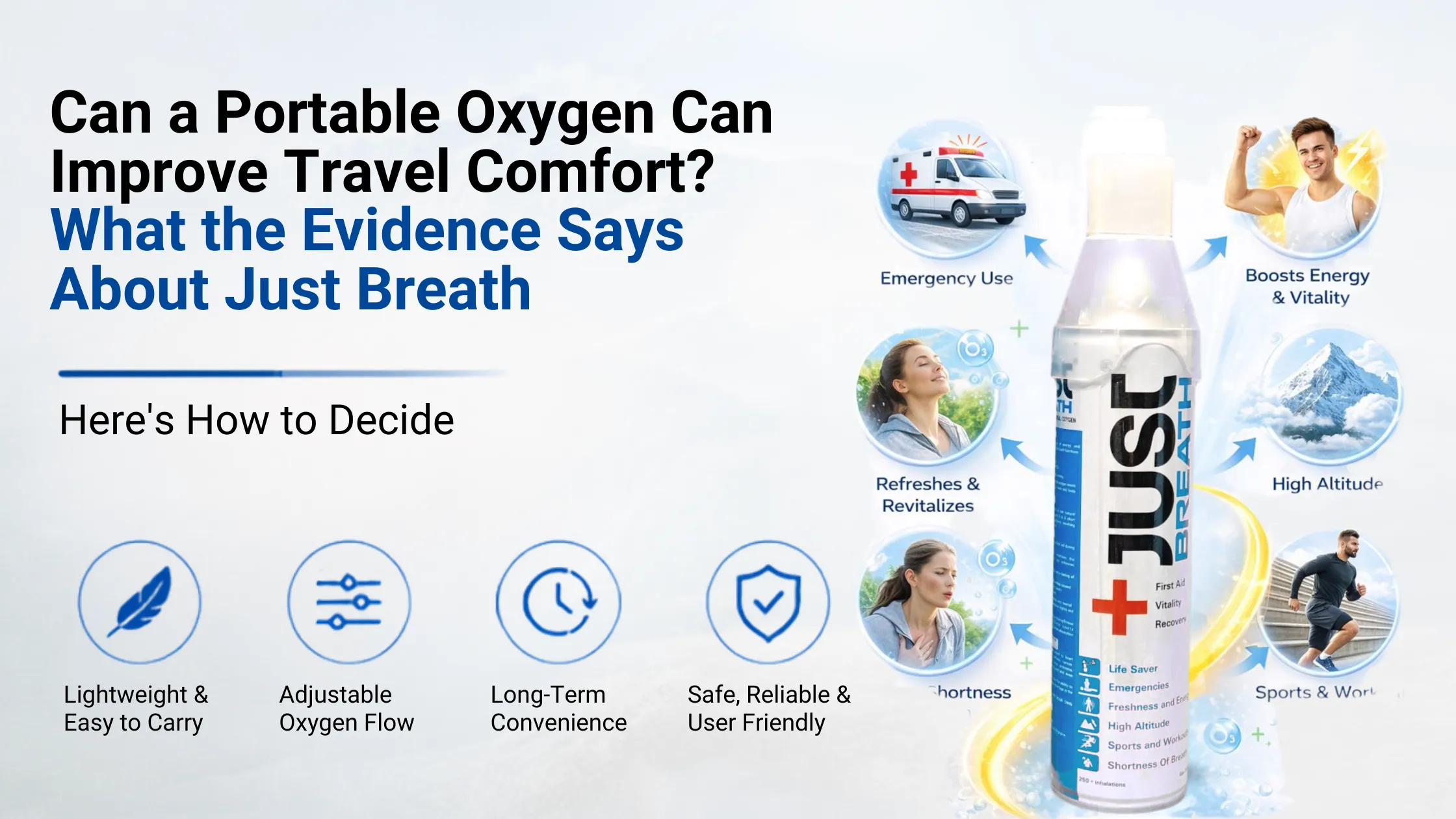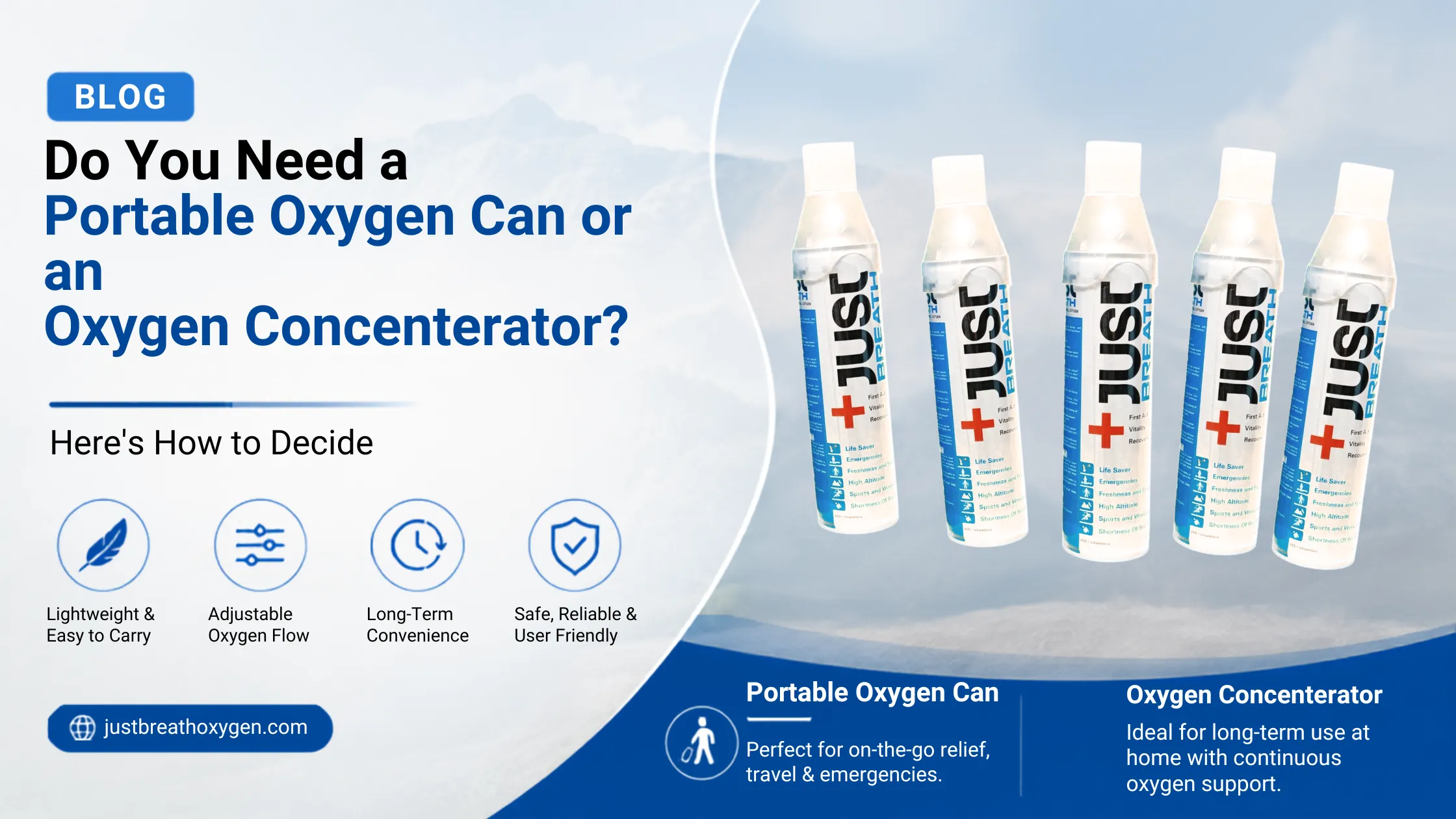
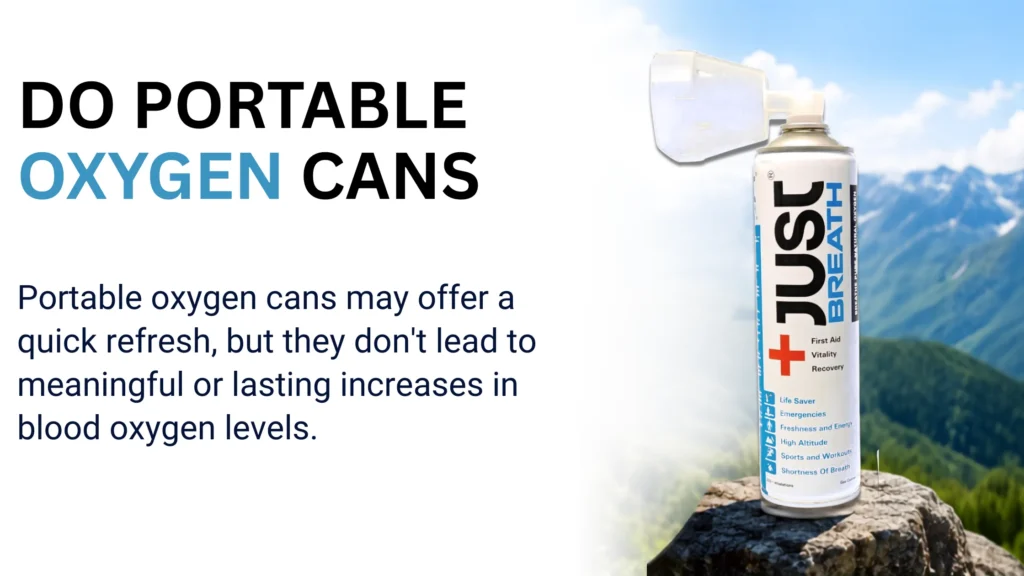
A friend of mine keeps a can of oxygen in her glove box for ski trips. She swears by it. Every time we drive above 8,000 feet, she takes a few pulls from her Portable Oxygen Cans and says she feels less foggy. I used to just nod along, but eventually I got curious enough to look into whether there’s actually anything behind it—or whether it’s basically an expensive placebo in a can.
Here's what I found out.
The short version: for most healthy people, a handful of breaths from one of these cans probably isn’t doing much to your actual blood oxygen level. Not zero effect necessarily, but nothing that would show up as meaningful or last very long. The longer version is more interesting, and it comes down to how your body handles oxygen in the first place, and how different that is from what a five-dollar can on a gas station shelf can realistically deliver.
One thing worth saying up front: recreational oxygen cans and the oxygen therapy someone gets prescribed by a doctor are not the same category of thing, even though they involve the same gas. Worth keeping that distinction in mind as you read.
How oxygen actually gets into your blood
Nothing too complicated here. You breathe in, oxygen crosses from your lungs into your bloodstream, and it latches onto hemoglobin — the stuff in red blood cells that carries it around your body. If your lungs are working the way they’re supposed to, this process runs on autopilot and keeps your oxygen saturation sitting in a pretty narrow, steady range without you thinking about it at all.
That saturation number, usually written as SpO₂, is what a pulse oximeter measures — one of those little clip things they put on your finger at the doctor’s office. It’s a useful number but not the whole story on its own. It’s meant to be read together with how someone’s actually feeling and what else is going on, not stared at in isolation like it’s some kind of final verdict.
So does the can actually do anything?
Doctors at UC Anschutz looked into this a few years back — pulmonary and emergency medicine folks — and their take was basically what I suspected: for a healthy person, a couple of quick puffs from an oxygen inhaler can aren’t likely to produce a real, lasting change in blood oxygen. Part of the issue is that there’s honestly not a ton of research specifically on short bursts of recreational oxygen. Most of what’s known about oxygen therapy comes from clinical settings, where it’s given continuously — often for many minutes — to people whose oxygen is actually low to begin with.
That gap between “a couple one-second puffs” and “continuous flow for several minutes” turns out to matter quite a bit. In studies where healthy people breathed continuous oxygen, their saturation only ticked up slightly, and only after a few minutes of steady flow. Take the oxygen away and the levels drift back down within minutes too. There’s no reservoir. Oxygen doesn’t bank itself for later.
I want to be fair here though — this isn’t a blanket “these things are useless” statement. Delivery method matters, how pure the oxygen actually is by the time it reaches your lungs matters, how long you’re breathing it matters, and so does your own health. It’s just that the specific claim — a few breaths meaningfully raising your blood oxygen — doesn’t really hold up against what’s currently known.
Why a few breaths isn't the same as real oxygen therapy
The percentage printed on the can (usually something like 95%) tells you what’s inside the can. It doesn’t tell you what actually ends up in your lungs. A few things affect that gap:
- How fast the oxygen comes out
- How long you’re actually breathing it in
- Whether you’re using a loose nozzle or something that seals tighter, like a mask
- How deep your breaths are
- How much regular room air — which is roughly 21% oxygen — mixes in with each inhale
Most of these cans use a plain nozzle rather than the snug medical mask you’d see in a hospital, so a good chunk of ordinary air gets pulled in with every breath. So even a can that’s 95% pure oxygen ends up delivering something more diluted by the time it actually gets into your lungs
I want to be fair here though — this isn’t a blanket “these things are useless” statement. Delivery method matters, how pure the oxygen actually is by the time it reaches your lungs matters, how long you’re breathing it matters, and so does your own health. It’s just that the specific claim — a few breaths meaningfully raising your blood oxygen — doesn’t really hold up against what’s currently known.
Why a few breaths isn't the same as real oxygen therapy
| Feature | Consumer Oxygen Cans | Medical Oxygen Therapy |
|---|---|---|
| Purpose | Recreational, convenience | Treating diagnosed low oxygen |
| Delivery | Short, self-administered bursts | Prescribed, usually continuous |
| Dosage | Fixed by the product | Set and adjusted by a clinician |
| Monitoring | None, typically | Often includes pulse oximetry and medical oversight |
| Used Medically? | Not without professional guidance | Yes, by design |
Devices that are actually FDA-regulated for medical oxygen delivery go through a level of scrutiny recreational canisters just don’t. Some brands market themselves as an “oxygen tank alternative,” but that’s a bit of a reach — a can from a gas station isn’t standing in for real oxygen equipment, and shouldn’t be treated that way.
What about altitude sickness, or energy, or working out?
This is probably the actual reason most people buy these — the promise that a few puffs will get you through a hike at altitude, or help you bounce back faster after a workout, or just make a long travel day feel less draining.
Feeling a little better after a few breaths doesn’t necessarily mean anything changed physiologically, though. It’s entirely possible some of what people report is more about expectation than actual oxygen levels — that’s a real thing, expectation can genuinely make symptoms feel better even without a physiological cause. Oxygen absolutely has legitimate medical uses. It’s the recreational, short-burst version that doesn’t have much evidence behind it for altitude sickness, fatigue, or athletic performance. If a can promises it’ll supercharge your workout, that’s marketing, not a documented result.
Is it safe, at least?
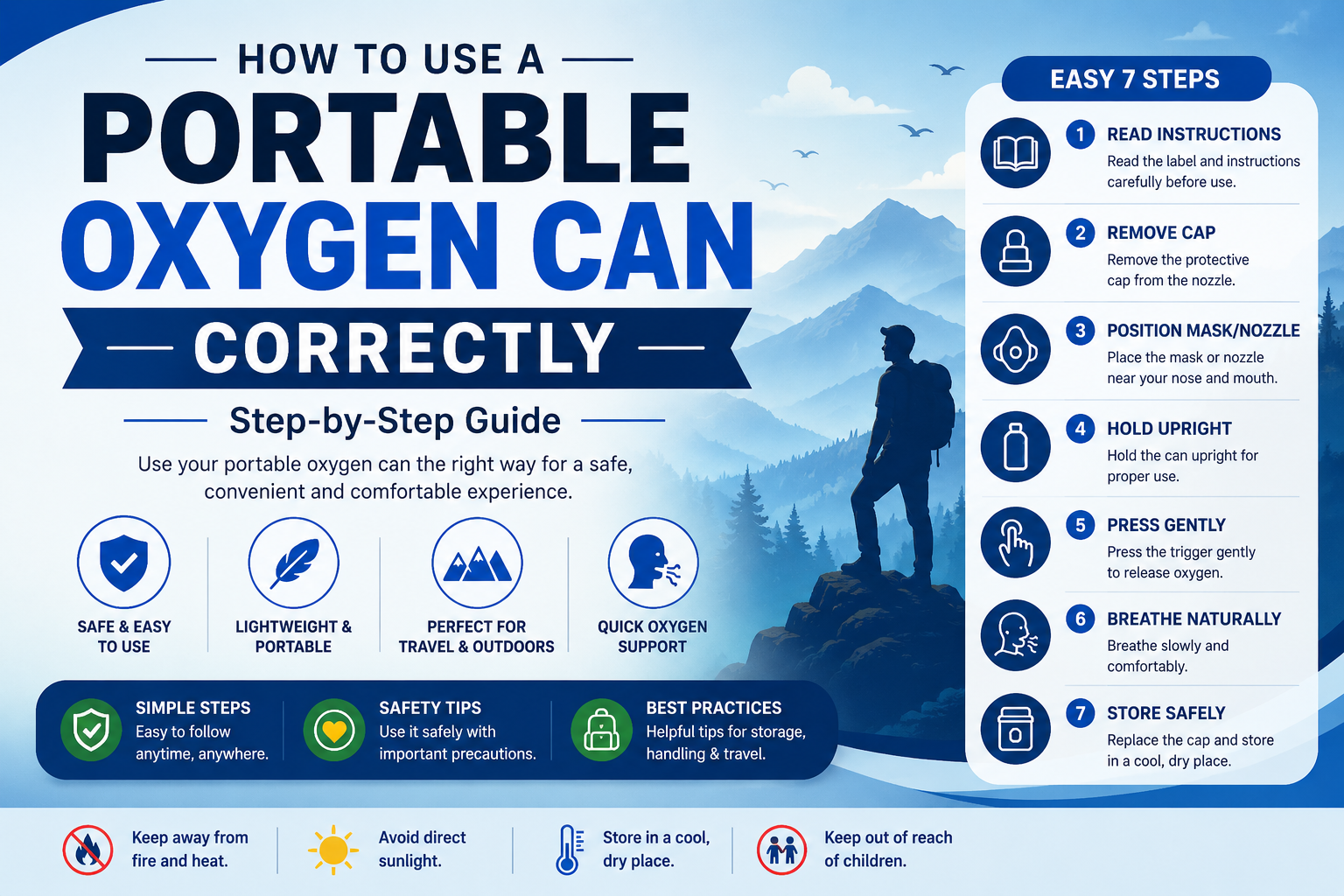
For a healthy person using one as directed, generally yes, low risk. A few things worth knowing though:
Don’t use one to try to self-treat unexplained shortness of breath. That’s a symptom that deserves an actual medical look, not a quick fix from a can. Don’t let feeling temporarily better talk you out of getting checked if something feels genuinely wrong. Keep these away from flames, cigarettes, vapes — oxygen supports combustion, which is exactly why the fire warnings on the label aren’t just legal boilerplate. And if you’re looking at a scented version with added oils (peppermint, eucalyptus, that sort of thing), know that some pulmonologists warn inhaled oils can trigger inflammation or allergic reactions, and that it could be riskier if you have asthma or COPD.
When it's time to skip the can and call someone
A can of oxygen isn’t a diagnostic tool, and it’s not a stand-in for actually getting checked out. If you or someone near you is dealing with any of the following, don’t reach for the can — get medical help:
- Shortness of breath that’s severe or getting worse
- Chest pain
- Confusion
- Bluish lips or face
- Fainting
- Sudden, severe weakness
If a pulse oximeter reading looks off, especially alongside any of those, that’s a reason to call a provider, not something to try to fix on your own.
So, worth buying?
Portable oxygen cans do deliver oxygen — nobody’s arguing that part. What’s shakier is the idea that a few quick puffs translate into any real, lasting rise in blood oxygen for someone who’s already healthy. My friend’s ski-trip ritual might genuinely make her feel better, and I’m not going to talk her out of it — but “feels better” and “measurably higher blood oxygen” aren’t the same claim, and it’s worth knowing the difference before you buy in on the marketing.
If you’re actually dealing with low oxygen or a breathing problem, that’s not something to work out with a can — that’s a conversation for a doctor.
Portable oxygen cans can provide a brief source of supplemental oxygen, but the evidence does not show that a few quick breaths produce a meaningful or lasting increase in blood oxygen for most healthy people. Factors such as oxygen concentration, delivery method, breathing time, and individual health all affect what actually reaches the lungs.
For occasional recreational use, an oxygen can may feel helpful to some people, particularly at altitude, but that feeling should not be confused with proven medical benefits. Portable oxygen cans are also not a replacement for prescribed oxygen therapy, an oxygen concentrator, or medical evaluation when oxygen levels are low.
A few quick questions people usually have
Most consumer cans hold enough compressed oxygen for around 100 short one-second inhalations, though this varies by brand and can size. Larger cans last longer, but the amount inhaled per breath still depends heavily on how the nozzle is used.
Yes. Most manufacturers list a shelf life of two to five years unopened. Once opened, the pressurized oxygen inside gradually leaks out even if unused, so a partially used can loses effectiveness faster than people expect.
Airlines generally restrict compressed oxygen canisters due to combustion risk, and TSA rules vary by product. Always check current airline and TSA guidance before packing one, since policies differ and can change.
There's limited research on recreational oxygen use in children specifically. Given the lack of pediatric-specific safety data, it's best to consult a pediatrician before allowing a child to use one, rather than assuming adult guidance applies.
There isn't strong research on recreational oxygen use during pregnancy. Since oxygen needs and lung function shift during pregnancy, it's worth checking with an OB-GYN before using one rather than assuming it's automatically fine
There's no well-documented interaction between inhaled recreational oxygen and common medications. Still, anyone on respiratory medications or with a lung condition should ask their doctor before adding any supplemental oxygen product.
Price differences usually come down to can size, oxygen volume, mask versus nozzle delivery, added scents, and brand marketing — not necessarily purity, since most consumer brands advertise a similar 95% oxygen concentration
This is a common marketing claim without solid clinical backing. Hangover symptoms are driven by dehydration, inflammation, and other factors that a few breaths of oxygen don't directly address, so don't expect it to be a cure
Most recreational oxygen cans are explicitly labeled as non-FDA-approved and intended for recreational use only. That's different from medical oxygen equipment, which undergoes FDA review and clearance before being sold for treatment.
Rules vary by sport and governing body, and some competitions restrict supplemental oxygen use during events. Athletes should check their specific league or competition rules rather than assume recreational oxygen is automatically permitted.
Store cans upright in a cool, dry place away from direct sunlight and heat sources. Because oxygen supports combustion, avoid storing cans near flammable materials, stoves, or anywhere temperatures could climb significantly.
There's no specific law against it in most places, but taking hands off the wheel to inhale from a can introduces a distracted-driving risk. It's safer to use one before a drive or during a stop, not while actively driving
Jet lag is primarily driven by circadian rhythm disruption, not blood oxygen levels, so there's no strong physiological reason a few puffs of oxygen would meaningfully reduce it, despite some travel-focused marketing claims
Jet lag is primarily driven by circadian rhythm disruption, not blood oxygen levels, so there's no strong physiological reason a few puffs of oxygen would meaningfully reduce it, despite some travel-focused marketing claims
Most are single-use aluminum canisters. Aluminum is recyclable, but check local guidelines before recycling, since pressurized or partially full canisters sometimes require special handling rather than curbside recycling.
This group should be especially cautious, particularly with scented versions, since added oils may trigger flare-ups. Anyone with a diagnosed lung condition should talk to their doctor before using any recreational oxygen product