Every winter, our inbox at Just Breath Oxygen fills up with the same kind of message. Someone is driving to Rohtang, flying into Leh, or taking parents on the Char Dham yatra, and they want to know whether a portable oxygen canister belongs in the luggage. It’s a fair question, and the honest reply takes a little more than a yes or a no.
A can of oxygen weighs less than a phone charger and costs about as much as a decent lunch, so it’s tempting to buy one without thinking twice. Still, canned oxygen from a shop shelf and the oxygen your doctor might prescribe are worlds apart. Below, we break down who usually reaches for a portable oxygen supply, what it can reasonably offer, where it falls short, and the safety habits that should come along with it.
Portable Oxygen Canister Basics: A Closer Look at the Product
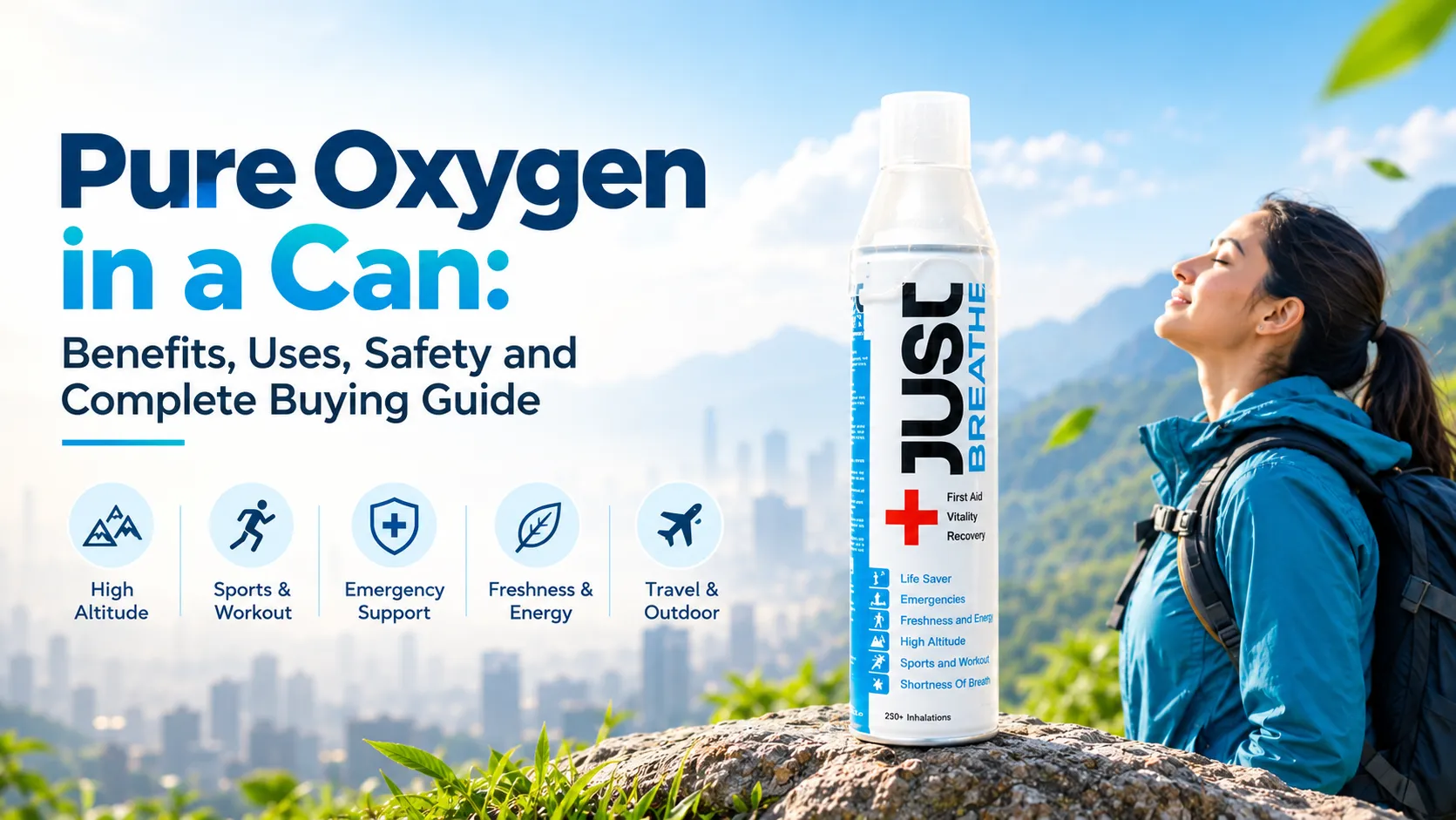
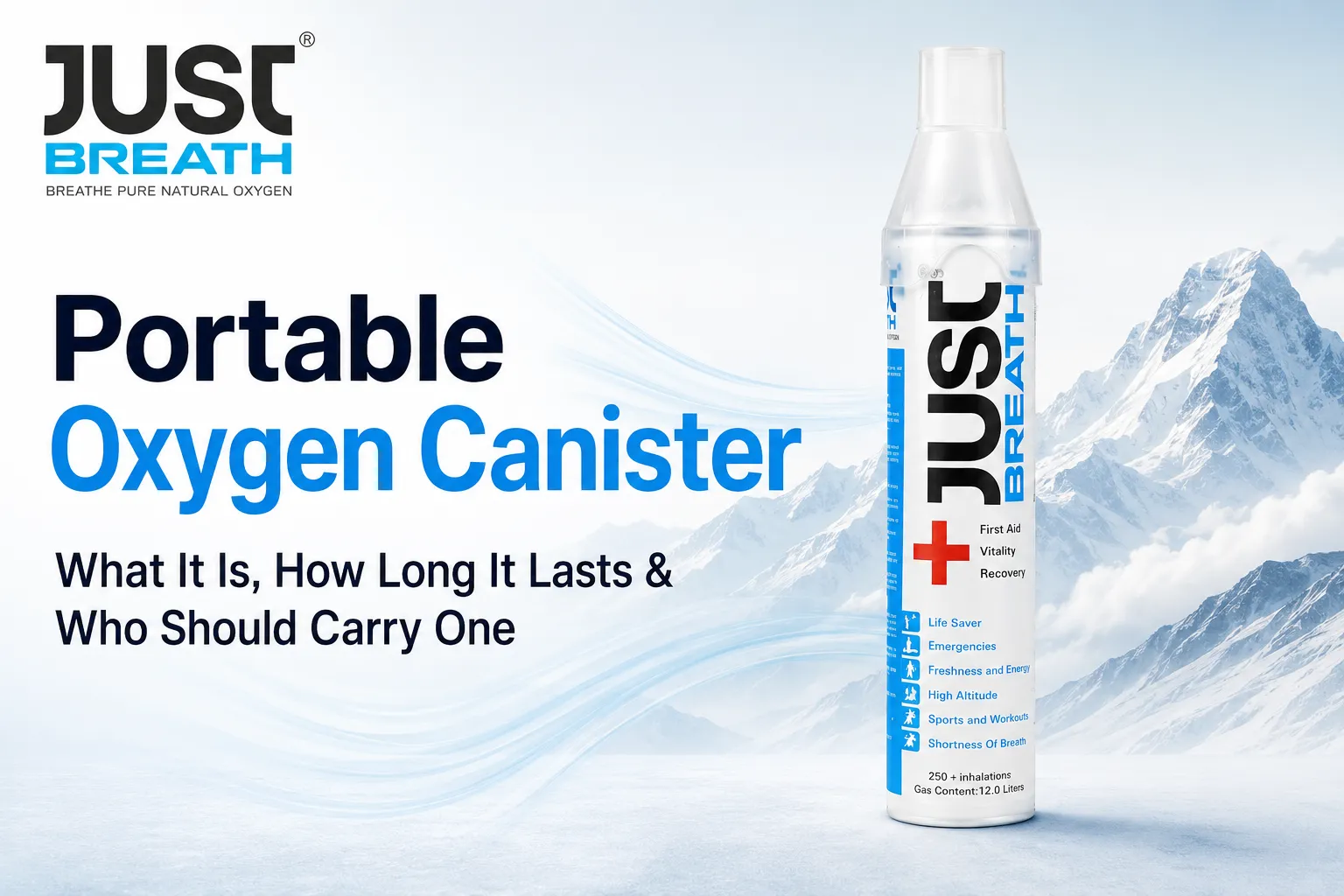
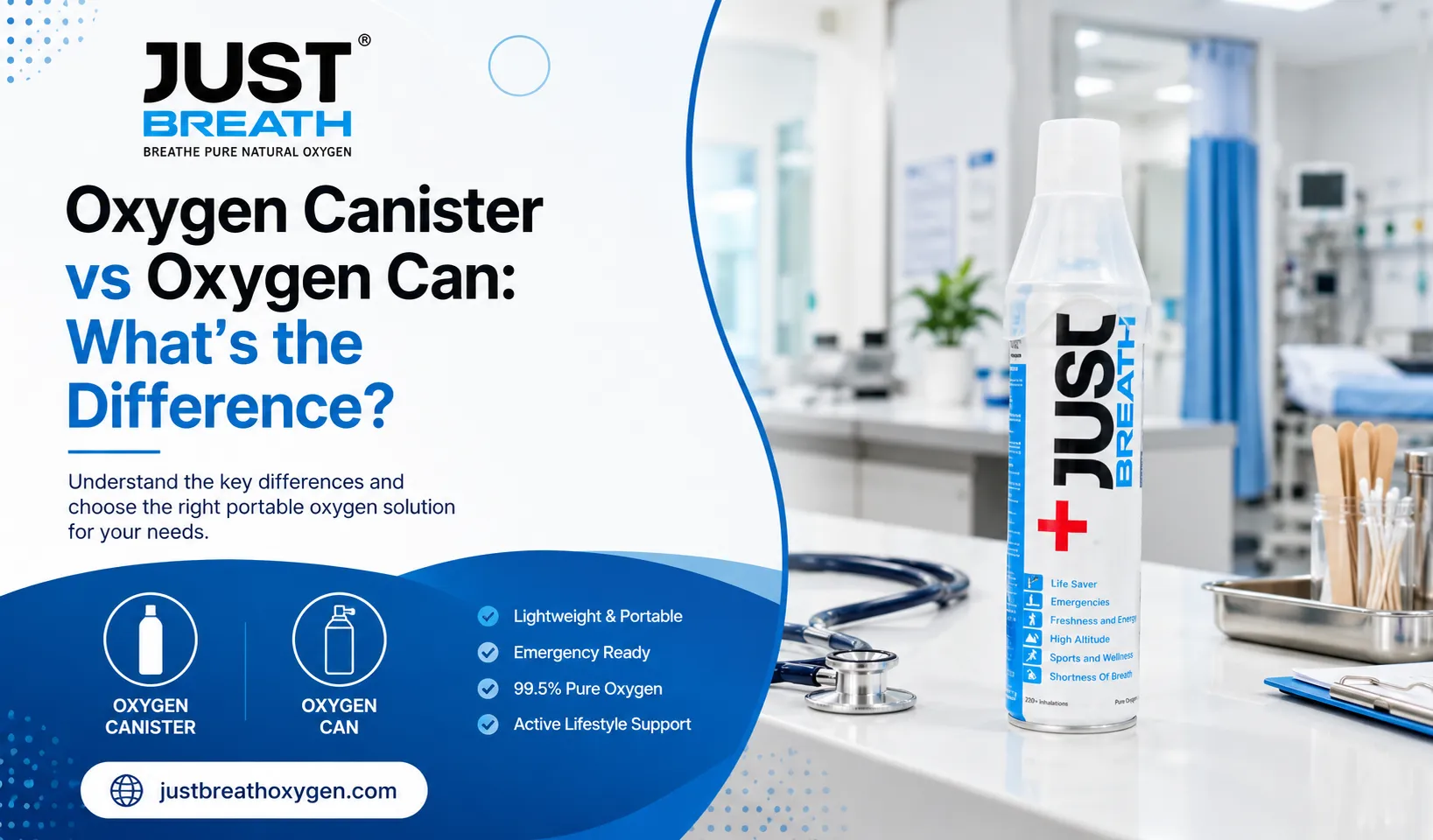
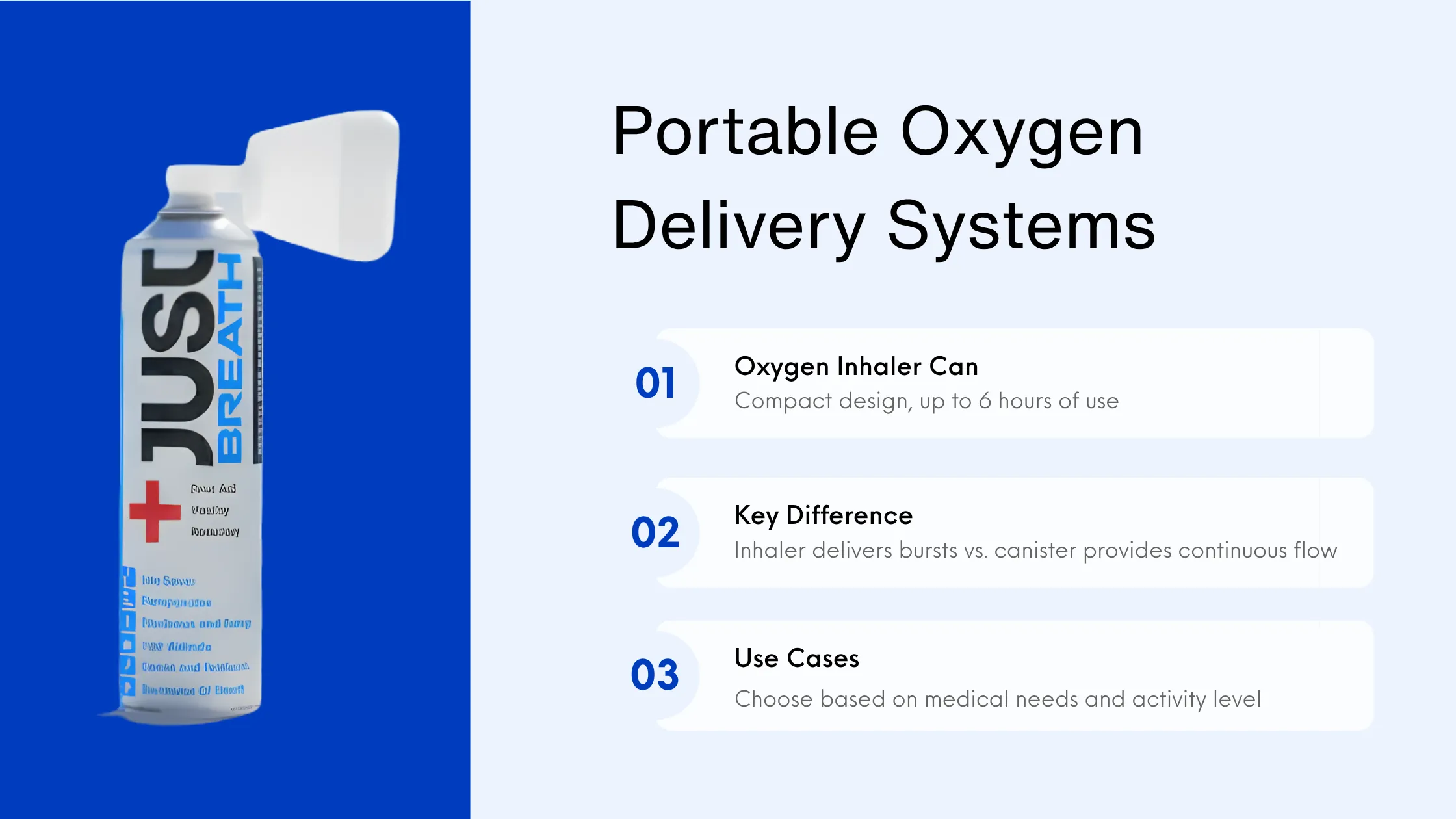
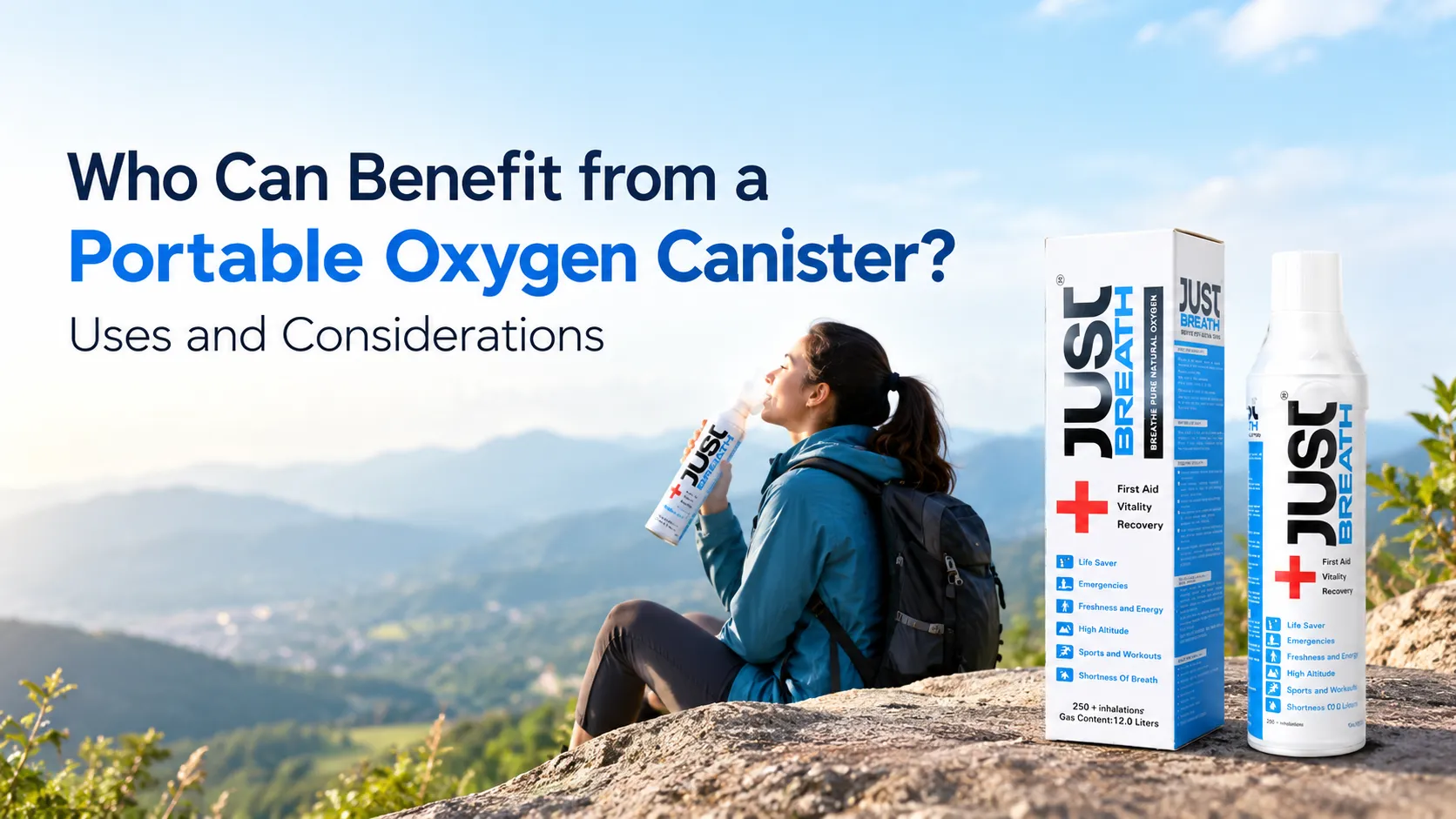
Pick one up and you’ll notice it resembles a tall spray bottle with a cap on top. That cap usually turns into a soft cup you place over your nose and mouth. Under the cap sits a valve, and behind the valve sits compressed oxygen. Press down, and a short stream flows into the cup for you to inhale. Nothing needs charging, connecting or adjusting.
The contents, however, change from brand to brand. Our advice to every customer is to read the side panel before the front. Some products state a purity close to 95 percent, some dilute the oxygen with air, and a few add a scent to make each breath feel cooler. The panel should tell you the oxygen percentage, the total volume of gas, and the purpose the maker designed it for. If any of these details are missing, treat that as a warning sign.
It also helps to know what this oxygen canister is not. Medical cylinders used in hospitals and homes fall under strict regulation and a doctor’s supervision. Portable oxygen concentrators are powered machines that keep pulling oxygen from surrounding air, and Cleveland Clinic outlines how these concentrators function compared with tanks. A consumer can is a third, much simpler category of portable oxygen device, built for short, now-and-then use.
Portable Oxygen Canister Benefits: Who Usually Buys One
We’d rather be upfront than oversell, so here is how we see the main types of buyers and what each can sensibly expect.
The Curious Buyer Looking for a Fresh Feeling
Some customers have tried oxygen at a spa or an airport lounge and want a similar moment at home or at the office. If a couple of breaths leave you feeling lighter, enjoy it. Just remember that this feeling is personal. It hasn’t been proven to boost energy, health or performance in a way a doctor could measure.
Families Travelling to the Mountains
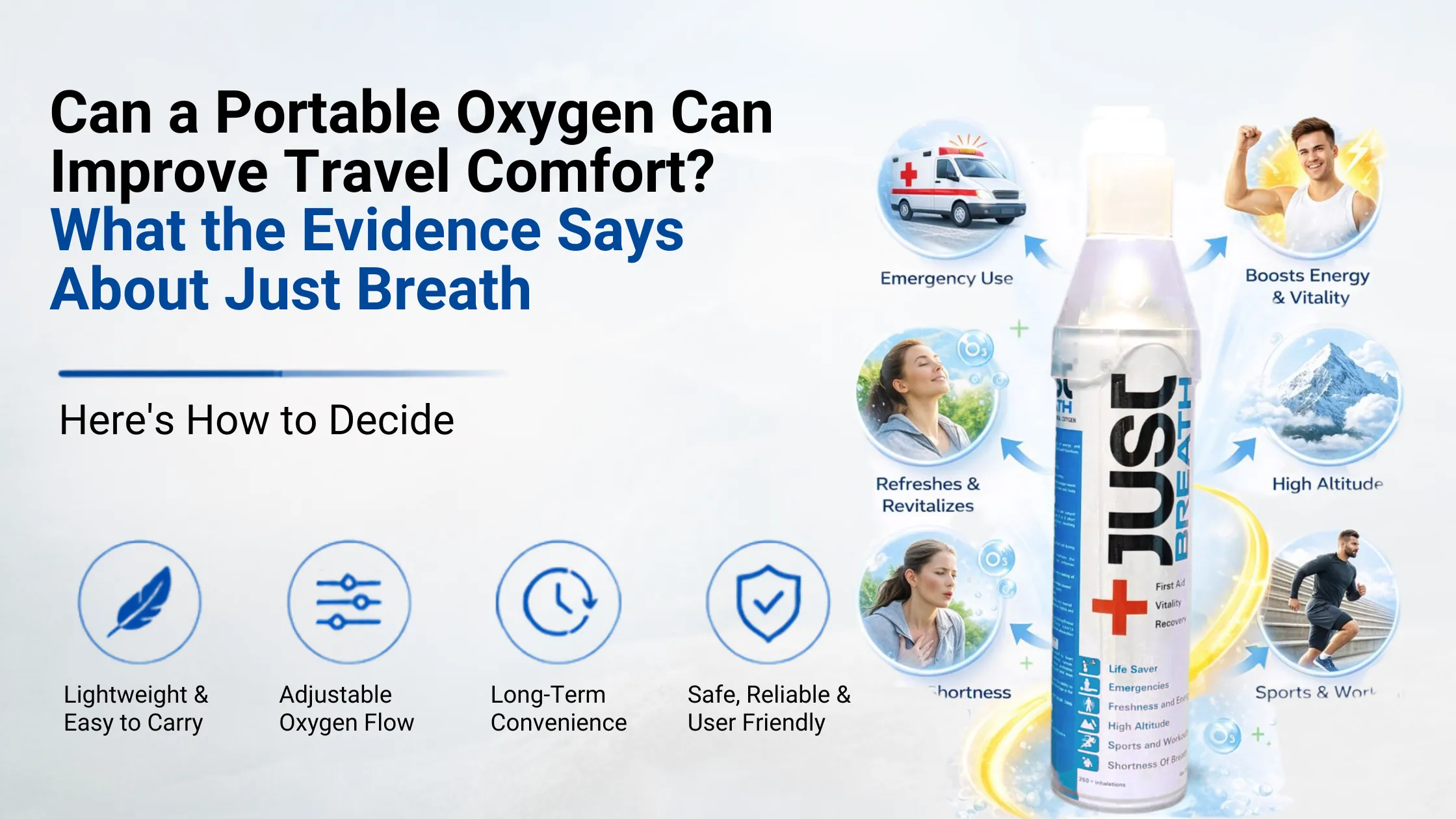
Hill trips are the single biggest reason people order from us. Thin air at places like Nathu La, Kaza or Gurudongmar Lake can feel unsettling, and a can in the glovebox brings peace of mind. What it does not bring is protection against altitude sickness, since no consumer canister has been shown to prevent or treat it. Climbing slowly, spending an extra night at a middle altitude, staying hydrated and heading down if symptoms grow worse are what really keep travellers safe. Elderly parents and anyone with heart or lung concerns should get a doctor’s go-ahead before the journey.
Sports Lovers and Trail Regulars
Marathon trainees, cricket players and weekend trekkers often like keeping light gear in their kit bags, and a can easily fits that role. Panting after a sprint or a tough climb, though, is your body’s normal response to hard work. It doesn’t, on its own, point to a need for supplemental oxygen.
Patients With an Oxygen Prescription
If a doctor has advised oxygen for COPD, interstitial lung disease or another long-term condition, a recreational can is not the right product. Prescribed oxygen is planned around test results, with a specific device and flow chosen for that person. We always tell such customers to keep using what their doctor recommended and never swap it for a can.
Where Canned Oxygen Fits and Where It Doesn’t
The safest way to think about portable oxygen canister uses is to follow the purpose printed by the manufacturer and go no further. Lightness and convenience are genuine strengths. Treating illness is not something these cans claim, and they shouldn’t be used that way. Ongoing tiredness, breathlessness or a low reading on a pulse oximeter can come from anaemia, asthma, infection, heart problems and much more, so a doctor visit should always come before oxygen inhalation from a can.
Portable Oxygen Canister Instructions: Step-by-Step Good Habits
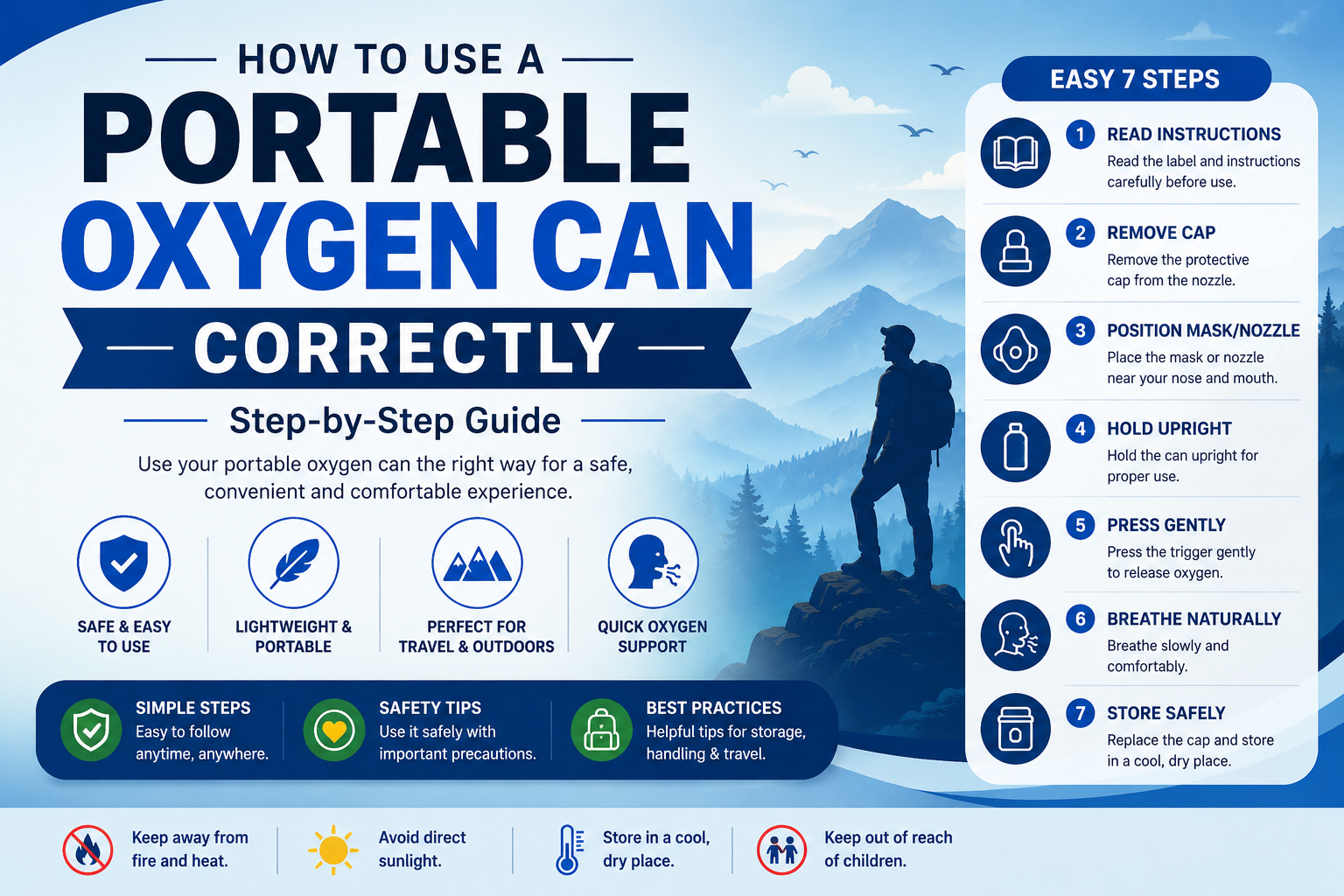
Each brand designs its valve and cup slightly differently, which is why the leaflet or printed portable oxygen canister instructions on your own can deserve a proper read. Here is the routine we suggest to every buyer.
- Check the expiry or manufacturing date and the intended use before opening.
- Fit the cup onto the valve at home first, so you know exactly how it clicks into place.
- Take only the number of breaths per session the label recommends.
- Leave the nozzle untouched, never pierce the body, and never try refilling an empty can.
- Put the can back in a shaded, dry place once you’re done.
Prescribed medical oxygen follows a separate plan altogether, with the doctor setting both the delivery method and the oxygen flow rate. And whenever someone is in real breathing distress, phone for emergency help at once rather than relying on a can.
How Long Does a Portable Oxygen Canister Last?
The answer shifts with the volume of the can, the gas blend, the force of each release and how often you use it. Brands commonly print an estimated breath count, which comes from their own in-house testing, so it’s best viewed as a ballpark figure. Oxygen canister duration is always limited, because once the internal pressure is used up, the can is finished. It was never designed to provide a steady supply through the day.
Understanding Concentration and Capacity
Portable oxygen canister oxygen concentration refers to the share of pure oxygen in the gas, shown as a percentage. Portable oxygen canister capacity refers to how much gas the can holds overall, typically listed in litres. The amount released with each press is a separate figure altogether. Comparing all three across brands gives a clearer picture, and a high purity number alone never means a can is suitable for medical needs.
Portable Oxygen Canister Safety: Precautions We Never Skip
Oxygen doesn’t ignite by itself, but it helps fire spread far more quickly and intensely. That’s the reason behind nearly every safety rule we share.
Keep heat and flame away. Gas stoves, puja diyas, agarbattis, cigarettes, heaters and a closed car parked in the sun are all places your can shouldn’t be. Don’t use it while anyone nearby is smoking.
Store it carefully. A well-ventilated cupboard out of direct sunlight works best. Avoid dropping, crushing or puncturing the can, as leftover pressure can remain even after it feels empty.
Know what it isn’t. It’s a recreational product, not a medical device, so it shouldn’t replace prescribed treatment or be used to self-treat illness. Blue or grey lips, sudden severe breathlessness, chest pain or confusion all need urgent medical care.
Check before you fly. The U.S. Federal Aviation Administration does not permit recreational oxygen canisters in passenger baggage, and airlines in other countries apply their own rules. A quick check with your airline before packing saves trouble at the airport.
Portable Oxygen Canister or Concentrator: Which One Suits You?
Comparing these two is a bit like comparing a power bank with a wall socket. The canister, like a power bank, carries a fixed amount that eventually runs out. The concentrator, like a socket, keeps supplying as long as it’s connected to power, which makes it heavier but far better for anyone needing oxygen on a regular basis.
| What we compared | Canister | Concentrator |
| How oxygen is supplied | Stored compressed gas | Drawn from surrounding air |
| Power needed | None | Battery or socket |
| Supply time | Ends when the can is empty | Continues while powered |
| Weight | A few hundred grams | Generally several kilograms |
| Designed for | Occasional, casual breaths | Prescribed oxygen therapy |
Concentrators also differ among themselves, with some giving oxygen in timed pulses and others in a constant flow. Anyone who truly needs supplemental oxygen should select a device with their doctor’s help, and the American Thoracic Society publishes easy-to-read patient guides on oxygen therapy for further reading.
Conclusion
A portable oxygen canister, such as Just Breath Oxygen, is a light, easy-to-carry product that suits short, occasional use, especially on trips and outdoor days. Before buying one, read the label for its oxygen concentration, capacity, and intended use, and follow every safety precaution printed on it. Treat it as a convenience, not a cure. If you or someone in your family needs oxygen for a health condition, a doctor should guide that choice, because prescribed oxygen therapy and canned oxygen serve very different purposes.
Portable Oxygen Canister: Questions Our Customers Ask
Q.1 Can a portable oxygen canister help with shortness of breath?
Shortness of breath can come from asthma, anaemia, infection, heart trouble or even anxiety. A canister can’t tell you which one is behind it, so if breathing feels hard often or without reason, see a doctor before relying on any oxygen product.
Q.2 Can a portable oxygen canister replace prescribed oxygen therapy?
No. If your doctor has prescribed oxygen for COPD or another lung condition, your device and flow rate were chosen after proper medical tests. Keep using that exact setup and never swap it for a recreational can, not even for a short trip away.
Q.3 How long does a portable oxygen canister last?
It depends on the can’s volume, the gas blend inside, the strength of each burst and how often you press the valve. Brands print an estimated breath count from their own tests, so treat that figure as a rough guide rather than an exact promise.
Q.4 How do I check a portable oxygen canister’s capacity?
Check the side panel of the can or the brand’s official website. You should find the oxygen percentage, the total volume in litres and the estimated number of breaths. If these details are missing from the label, it’s safer to choose another product.
Q.5 Does canned oxygen prevent altitude sickness?
No consumer canister has been proven to prevent or treat altitude sickness. Climbing slowly, resting on arrival, drinking enough water and heading lower if symptoms worsen are what truly help. Speak to a doctor before planning any high-altitude trip.
Q.6 Is a portable oxygen canister safe to use at home?
Yes, as long as you follow a few simple rules. Keep it away from flames, gas stoves, cigarettes and heaters, store it in a cool and shaded place, never puncture or refill it, and take only the number of breaths the label recommends per session.
Q.7 Can I carry a portable oxygen canister on a flight?
Usually not on U.S. flights, as the FAA doesn’t allow recreational oxygen cans in passenger baggage. Rules differ between countries and airlines, so contact your carrier before packing a can for air travel to avoid any trouble at the security check.