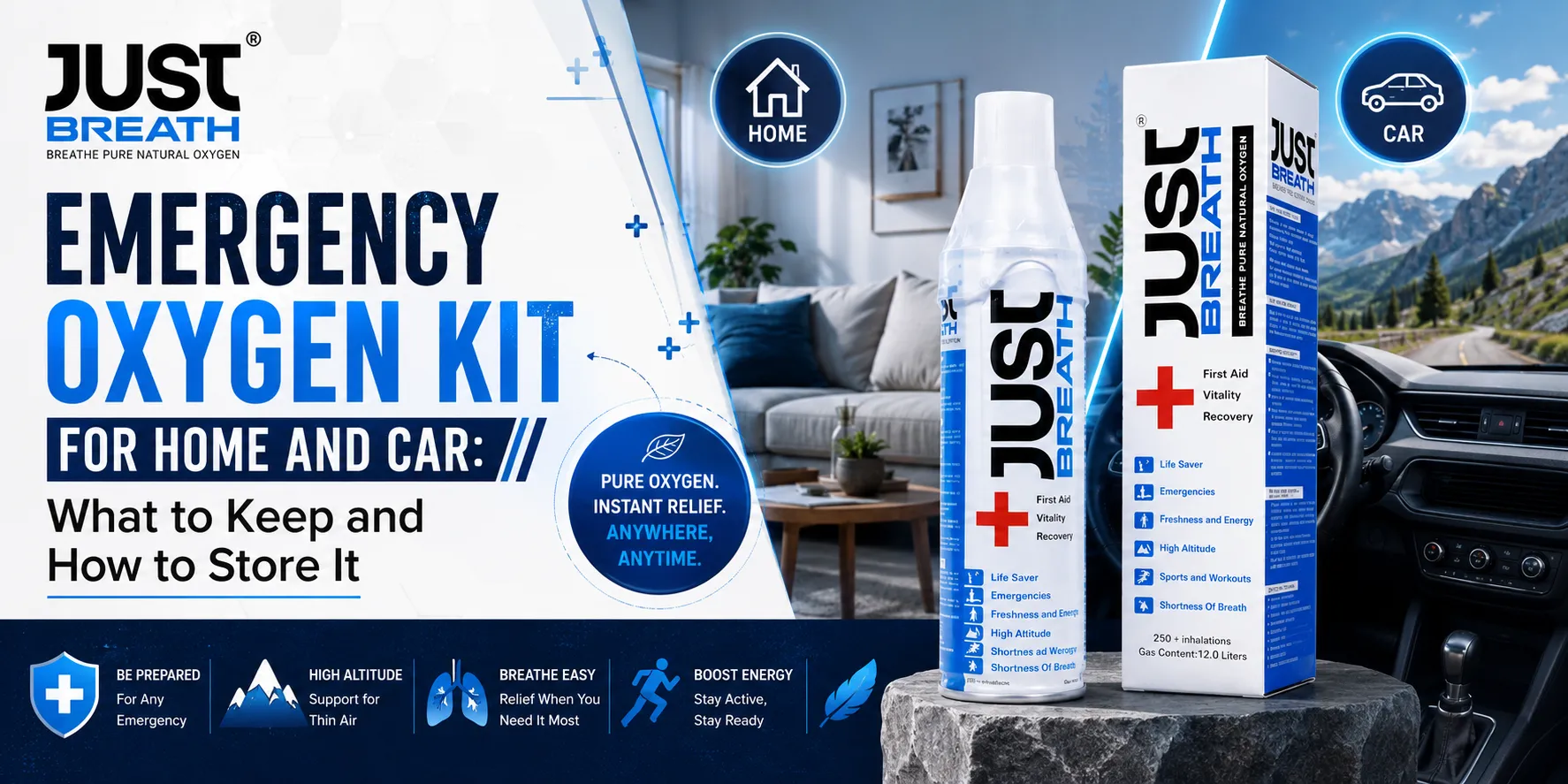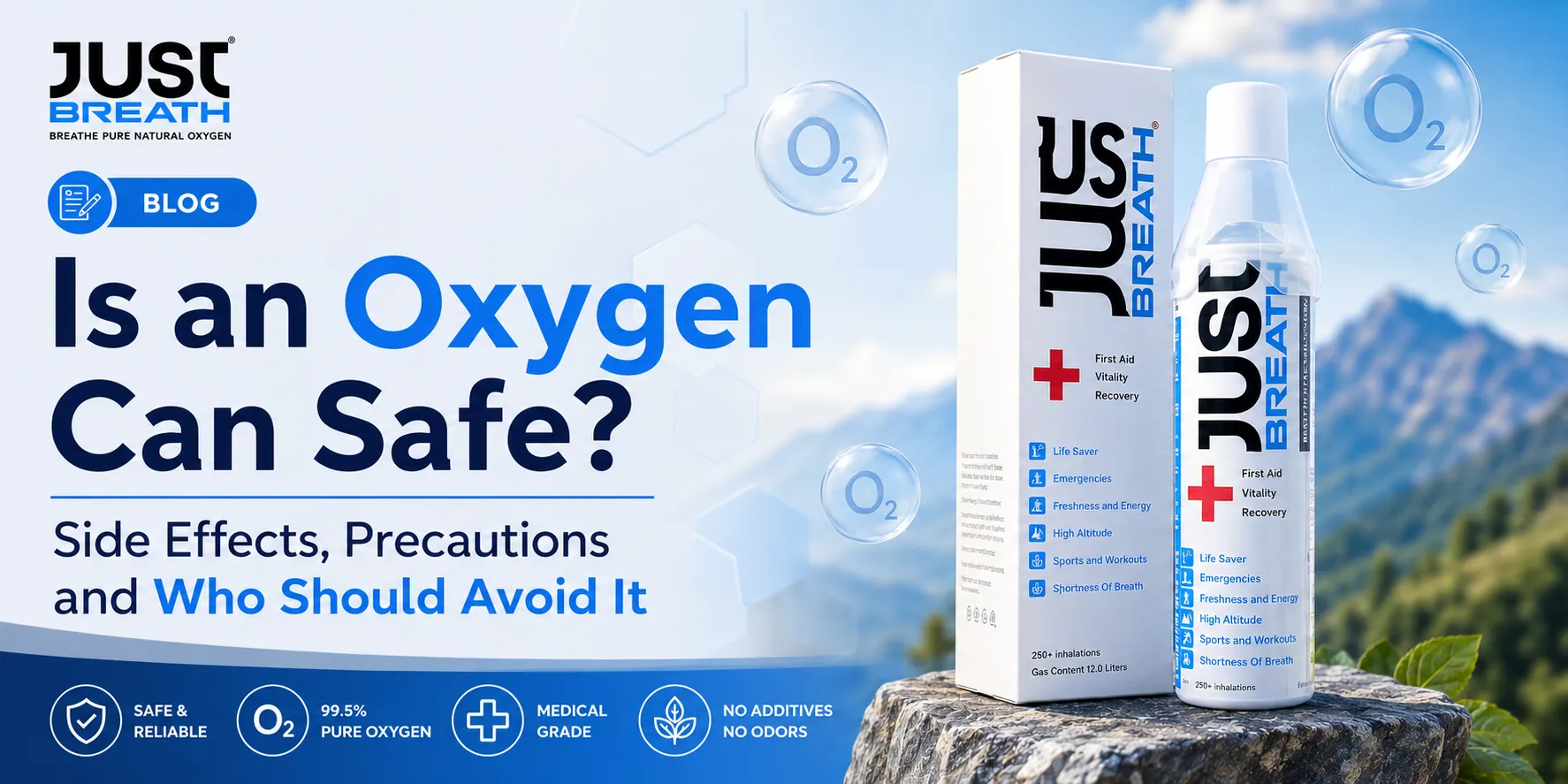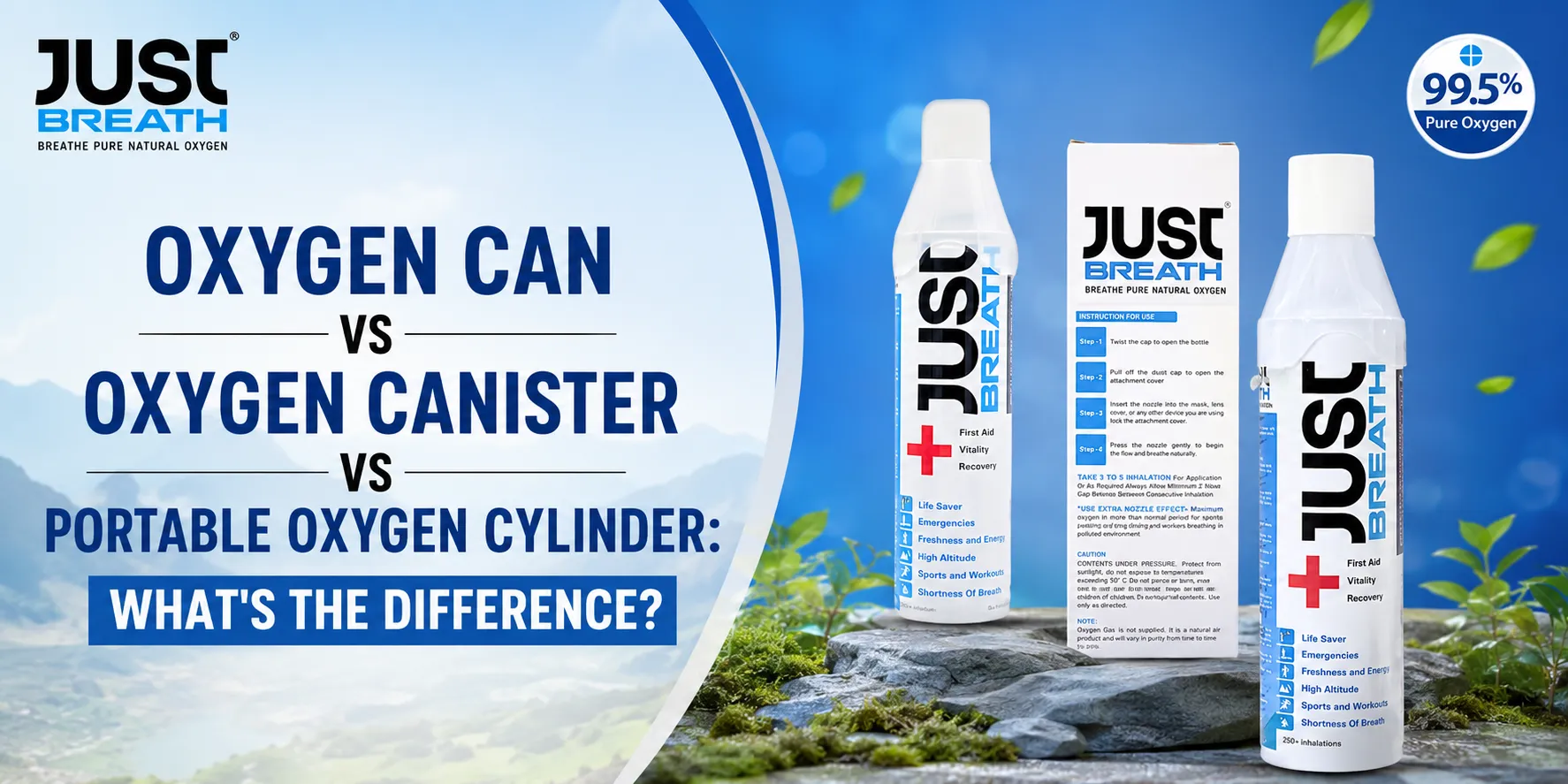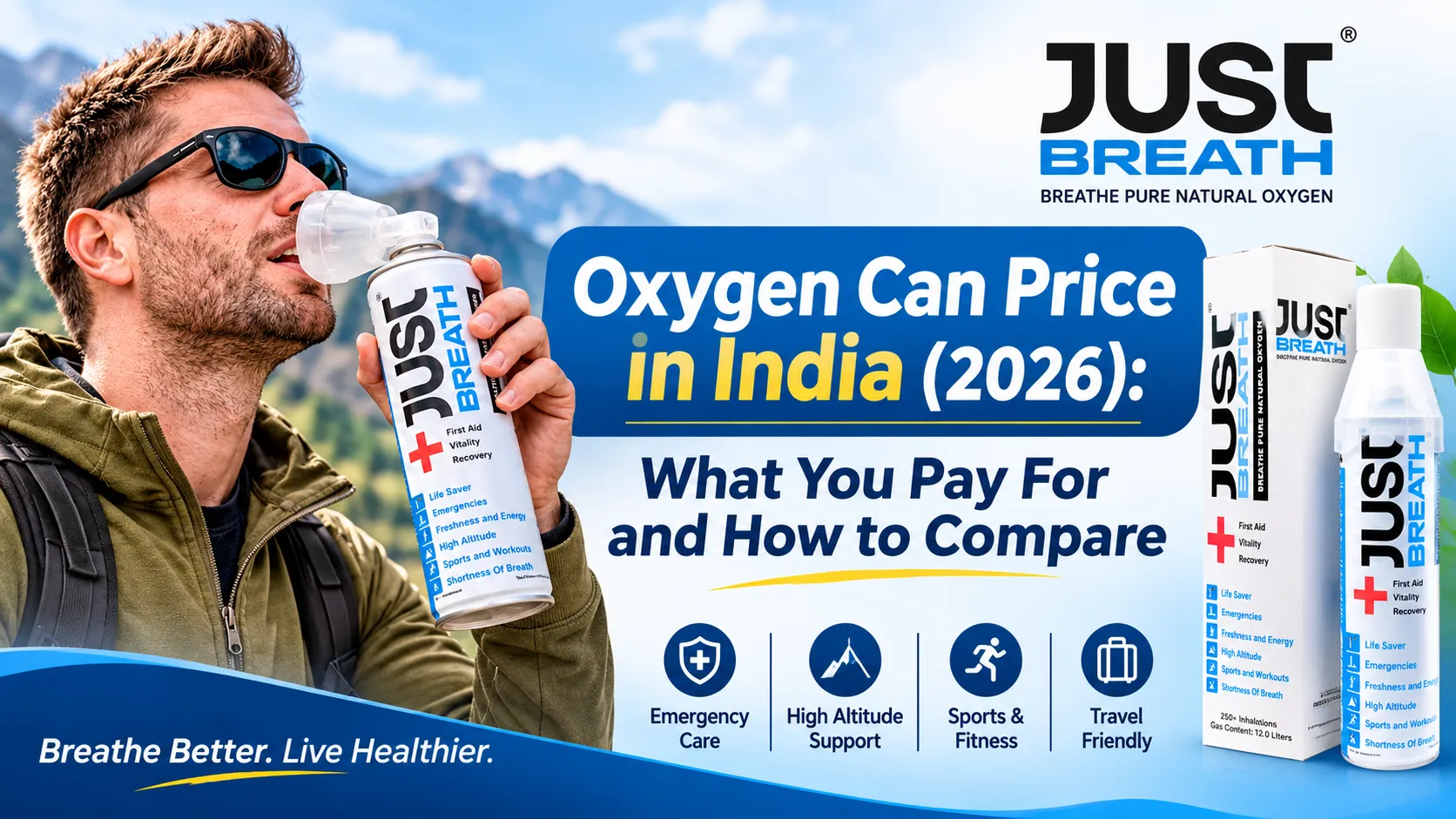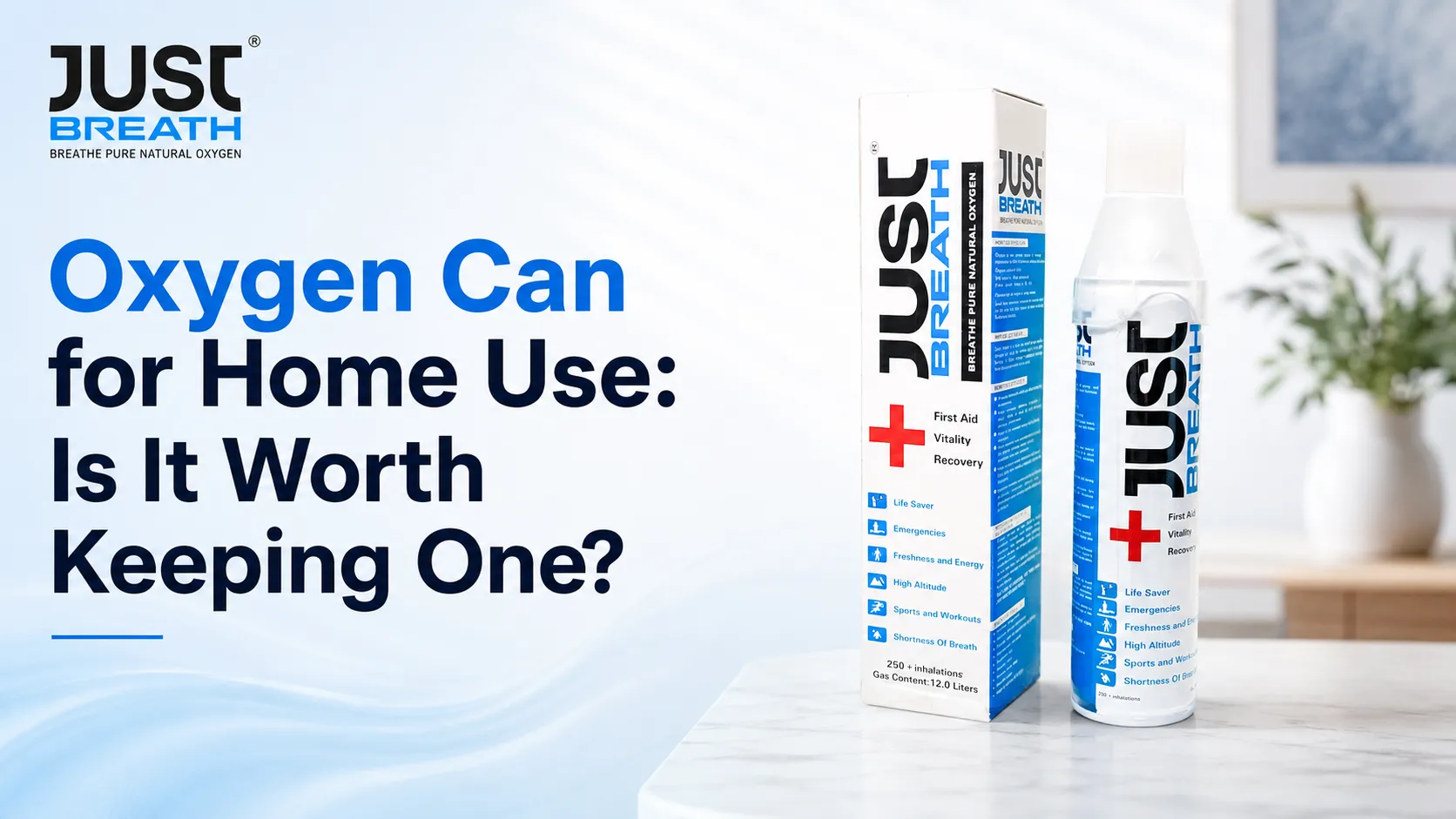
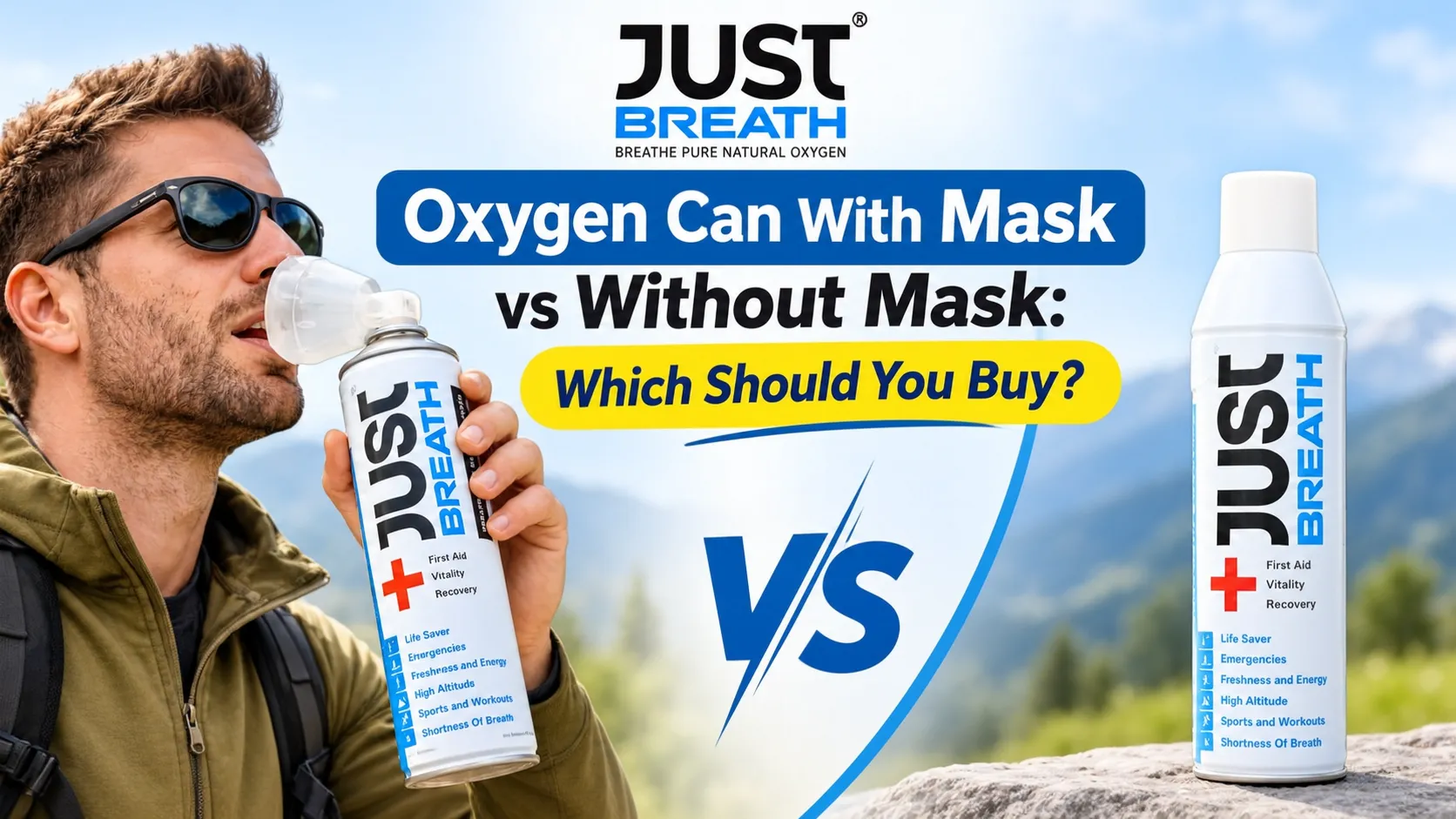
A mask cap covers your nose and mouth, so less oxygen escapes into the air and every puff is easier to breathe in. That makes an oxygen can with mask the better pick for elders, first-aid kits and emergencies. A nozzle (without mask) is lighter and quicker for short sports use. The Just Breath 12 L oxygen can comes with a built-in mask cap.
So, mask wala oxygen can better hai kya? For most homes, cars and first-aid boxes, yes. But the right choice depends on who will use it and where. This guide compares both types on ease, wastage, hygiene and price, then shows you exactly how to use and look after the mask.
Mask vs Nozzle: Quick Answer
Portable oxygen cans come in two styles:
- With mask (mask cap): A soft cup fits over the nose and mouth. You press the trigger and breathe in normally.
- Without mask (nozzle): A small spout or tube. You seal your lips around it, or hold it close to your nose, and inhale while pressing.
Here is the short verdict:
- Choose a mask if the can is for parents or grandparents, a car or office first-aid kit, a trek, or anyone who may be anxious or tired when using it.
- Choose a nozzle only if one fit adult wants a quick puff between gym sets and is happy to trade some wastage for a smaller cap.
Because the mask needs less coordination, it is also the safer default when you are buying one can for the whole family. A portable oxygen with mask setup works for the widest range of people.
How a Mask Cap Delivers Oxygen
An oxygen can holds compressed oxygen. When you press the trigger, oxygen flows out as a short burst. What happens next depends on the cap.
With a nozzle, the burst leaves a narrow opening. If your lips are not sealed well, or your timing is off by even half a second, a good part of that burst goes into the room instead of your lungs.
With a mask cap, the burst first fills the cup that sits over your nose and mouth. The cup acts like a small holding space. You breathe in from it at your own pace, through the nose or mouth, so less oxygen is lost and you do not need perfect timing.
This is why an oxygen mask can feels easier in stressful moments: when someone is short of breath after climbing stairs, sitting in a smoky room, or waiting for help, they can simply hold the mask in place and breathe.
How to use an oxygen can with mask (step by step)
[Step photo 1: Hand removing the protective cap and fitting the mask onto the Just Breath can | Alt text: Fitting the mask onto a Just Breath 12 L oxygen can]
- Fit the mask. Remove the cap and push the mask on firmly.
[Step photo 2: Person breathing out, mask held just below the face | Alt text: Breathing out fully before using the oxygen can with mask]
- Breathe out fully. Then place the mask over your nose and mouth.
[Step photo 3: Seated adult pressing the trigger with mask on face | Alt text: Pressing the trigger of an oxygen can with mask while inhaling]
- Press and inhale. Press the trigger for about 1–2 seconds while breathing in slowly and deeply.
[Step photo 4: Person resting, can on the table | Alt text: Resting and breathing normal air between oxygen puffs]
- Rest. Take 2–3 breaths, then breathe normal air. Repeat later if needed.
Use it while sitting or standing still, and keep it away from flames, cigarettes, incense and gas stoves. For more detail, read our guide on how to use a portable oxygen can correctly.
Comparison Table: Ease, Wastage, Hygiene, Price
| Factor | Oxygen can with mask | Oxygen can without mask (nozzle) |
| Ease of use | Easy. Hold over nose and mouth and breathe normally | Needs a lip seal and good timing |
| Oxygen wastage | Lower. The cup holds the burst until you inhale | Higher. Part of each burst escapes if the seal or timing slips |
| Hygiene | Cup can be wiped after each use; best kept to one user | Lips touch the spout directly; harder to share |
| Best for | Elders, first aid, emergencies, trekkers, travel | Quick puffs during sports or gym |
| Size and weight | Slightly bulkier cap | Smaller, lighter cap |
| Price | Mask included in the Just Breath can price | Can look cheaper, but wastage can mean fewer useful breaths |
| Just Breath option | 12 L can with built-in mask | Not listed on the site |
The takeaway is simple: a nozzle saves a little space, but a mask saves oxygen. Since you are paying for the oxygen inside the can, a mask usually gives you better value per can.
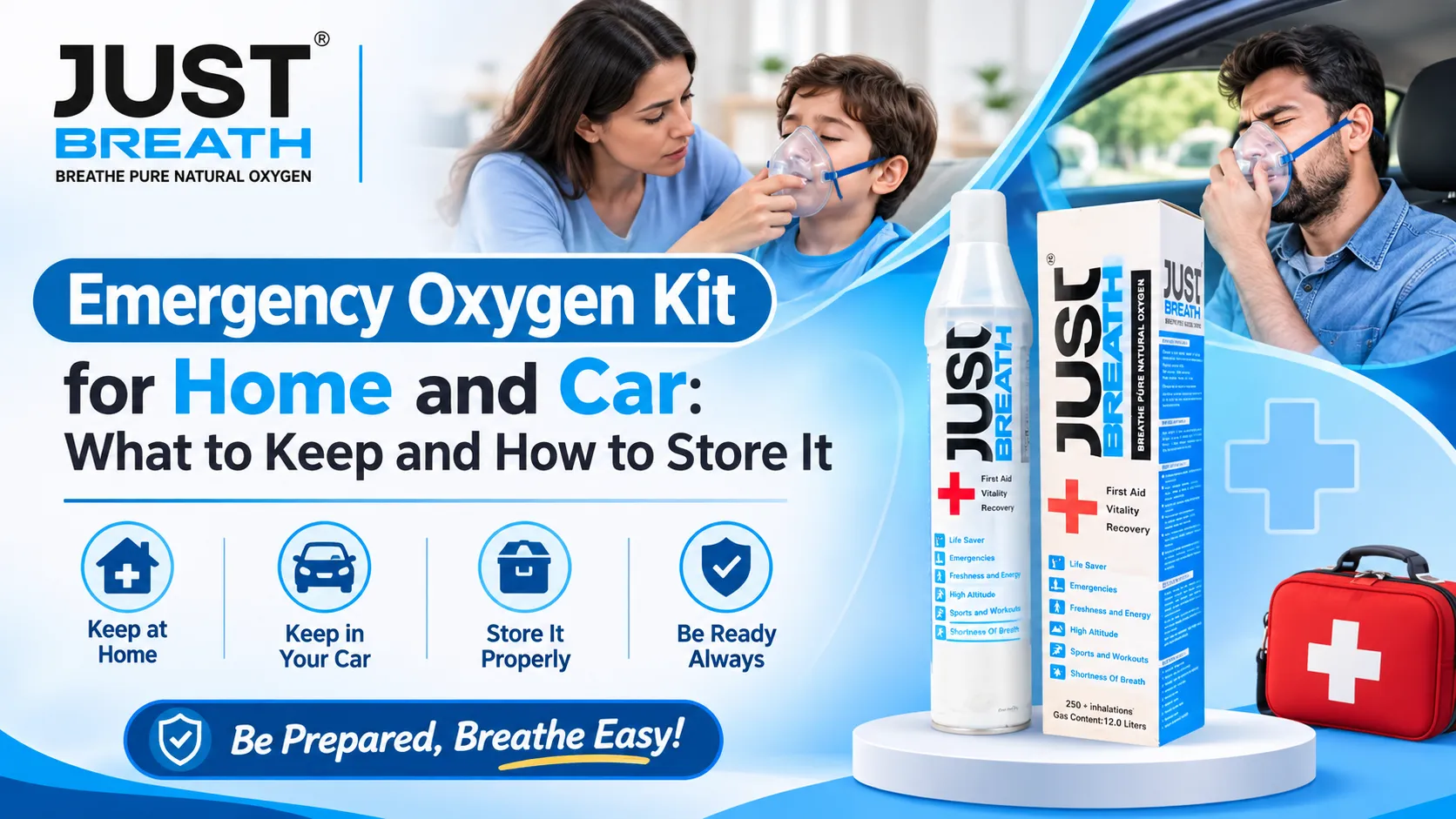
If you are building a home or office first-aid box, an oxygen can kit with mask is the practical choice. See how Just Breath fits into a full kit on our first aid and emergency oxygen page.
Best Choice for Elderly, Trekkers and Athletes
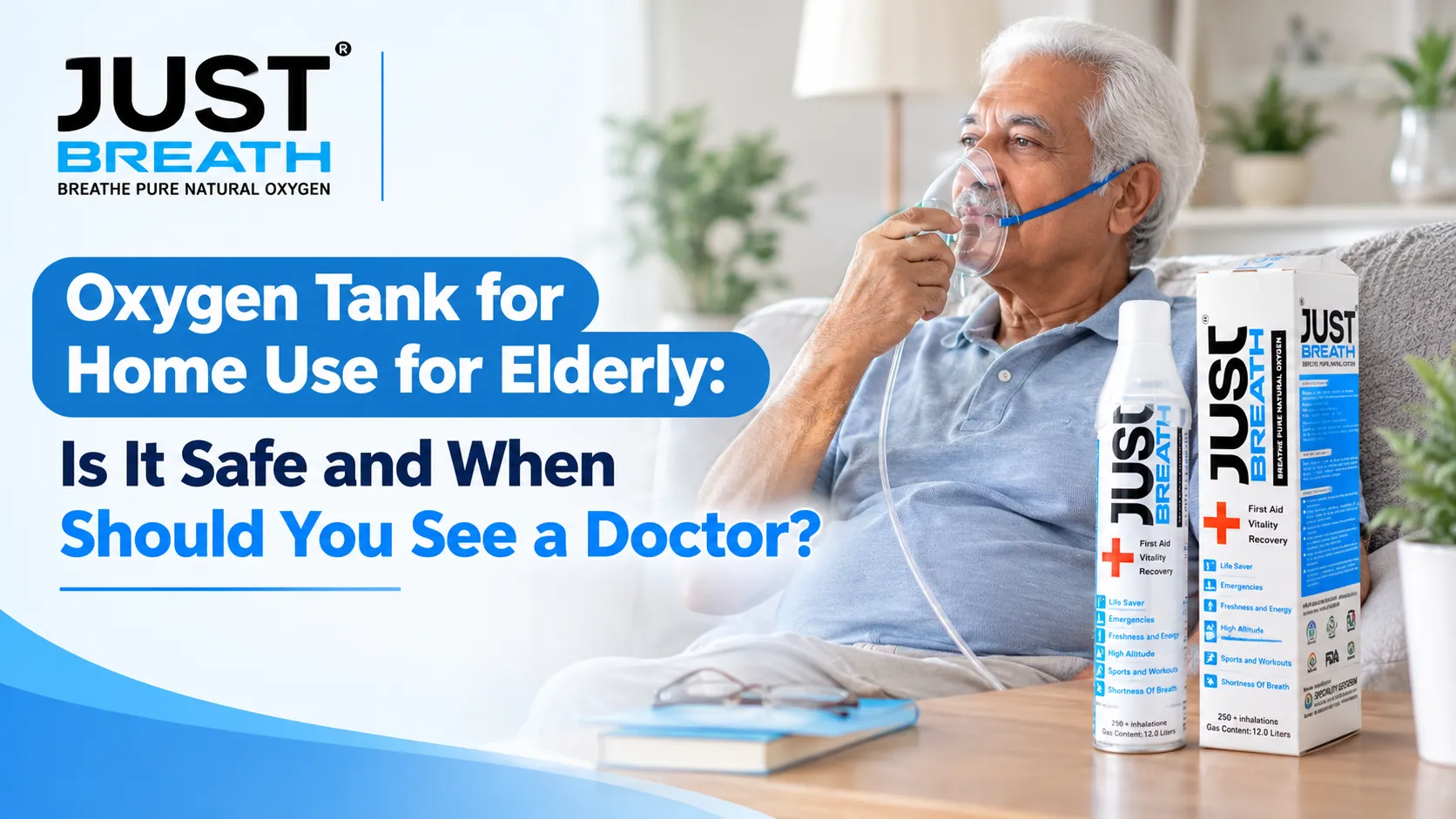
Elderly people: mask. Many seniors find it hard to seal their lips around a nozzle, especially with dentures or shaky hands. A mask covers the nose and mouth and needs no special technique. During the winter smog season, keeping one can at home gives elders a quick way to feel more comfortable after stairs or on a bad-air day. Anyone with a lung or heart condition, or with prescribed oxygen, should keep following their doctor’s advice and equipment. More on our senior citizens page.
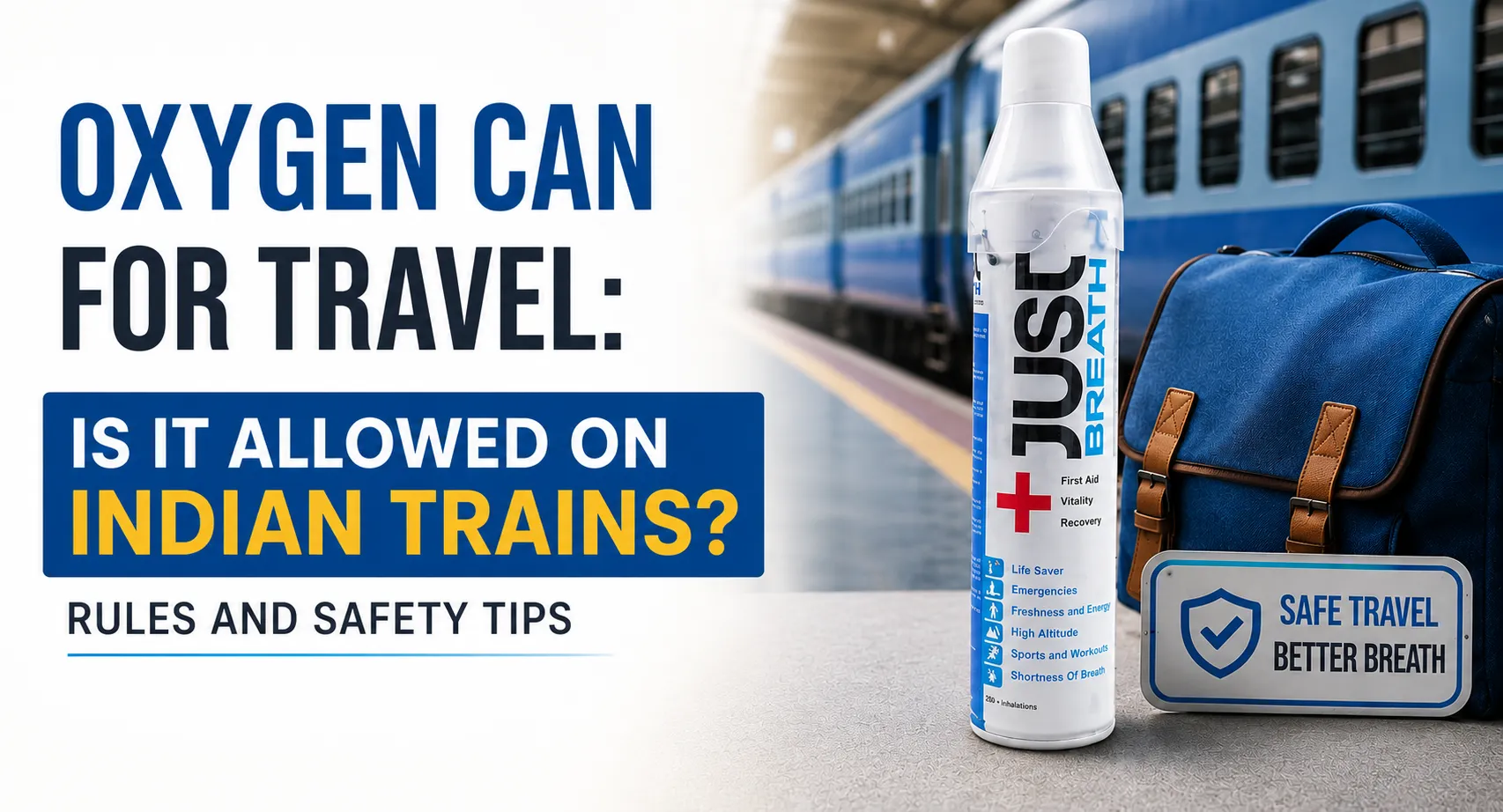
Trekkers: mask. At altitude you are tired, cold and breathing hard. Gloves make a nozzle fiddly, and wind carries away any oxygen that does not go straight into your mouth. A mask cup is far more forgiving. Remember that an oxygen can is a comfort aid, not a cure for altitude sickness: if symptoms get worse, go down and get help. Read more on our trekkers and high-altitude page.
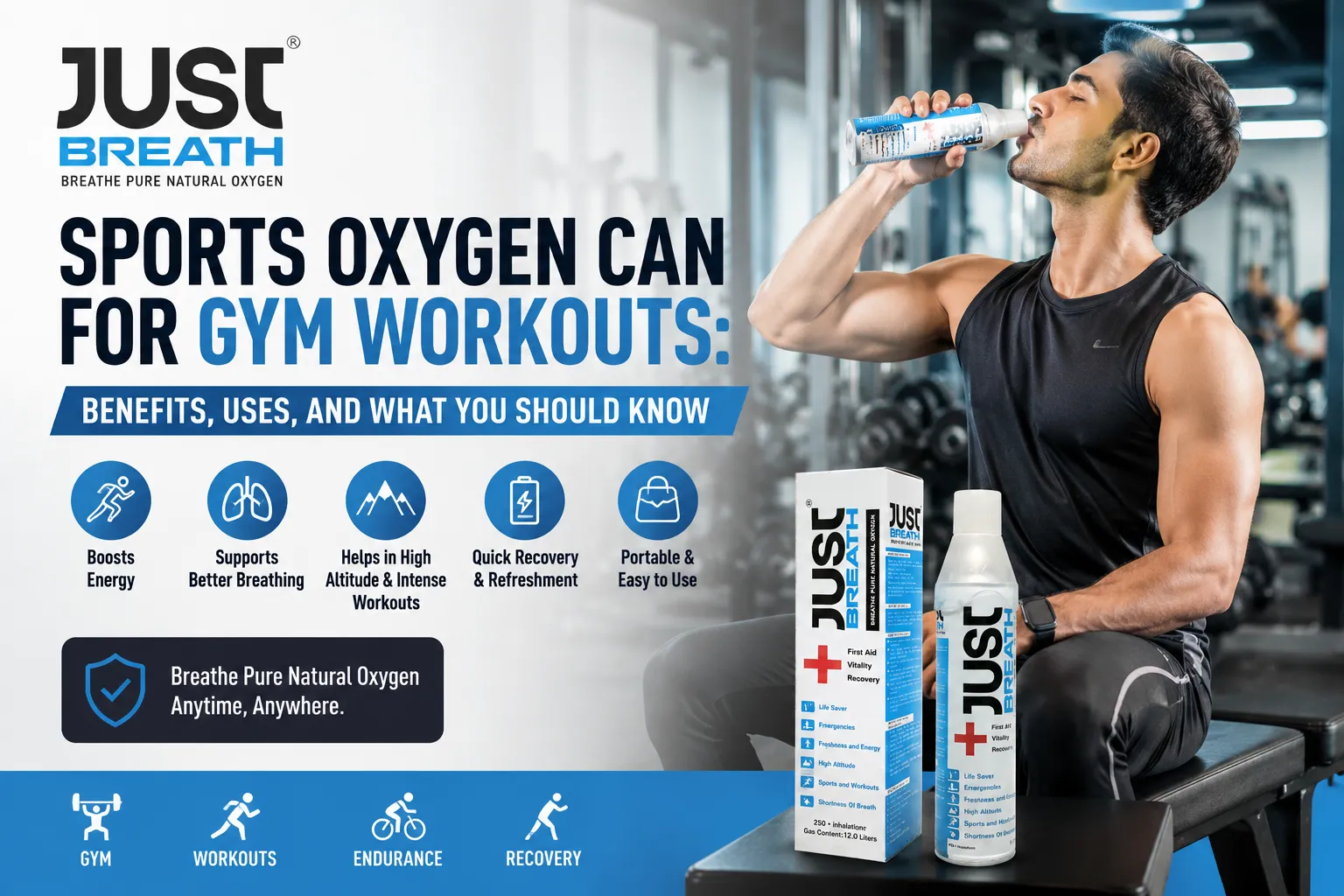
Athletes and gym users: either works. A fit adult taking a puff between sets can manage a nozzle. Still, a mask makes each burst count, so it suits athletes who want fewer wasted puffs. See our athletes and gym users page.
First aid and emergencies: mask, always. The person needing oxygen may be scared or breathless and cannot be expected to time a nozzle. A mask lets a helper hold it in place while they breathe. Keep in mind the can buys comfort while you wait for help; it does not replace an ambulance. For breathlessness at rest, chest pain, blue lips or fainting, call 108 or 112 immediately.
How to Clean and Store the Mask
A clean mask is more pleasant to use and more hygienic. Follow these simple habits:
- Wipe after every use. Use a clean damp cloth or an alcohol-free wipe on the inside and rim of the mask.
- Let it air-dry. Do not put the cap back on a wet mask.
- Refit the cap. This keeps dust out and protects the trigger from being pressed in a bag.
- One user per mask where possible. For families, label cans by person, or wipe the mask well before someone else uses it.
- Store it cool and upright. Keep the can below the temperature on the label, away from direct sun, car dashboards in summer, stoves and heaters.
- Check the expiry date. Just Breath cans have a shelf life of about 36 months from filling, with the batch and expiry printed on the can. See how long an oxygen can lasts.
Never wash the can under running water, never puncture it, and never throw it in a fire. The aluminium can is recyclable once empty.
Which Should You Buy? Final Verdict
If you are buying for a home, an elder, a car, a trek or a first-aid kit, buy an oxygen can with mask. It wastes less oxygen, needs no special technique and is easier to keep hygienic. A nozzle only makes sense for one fit adult who wants a light cap for quick sports puffs.
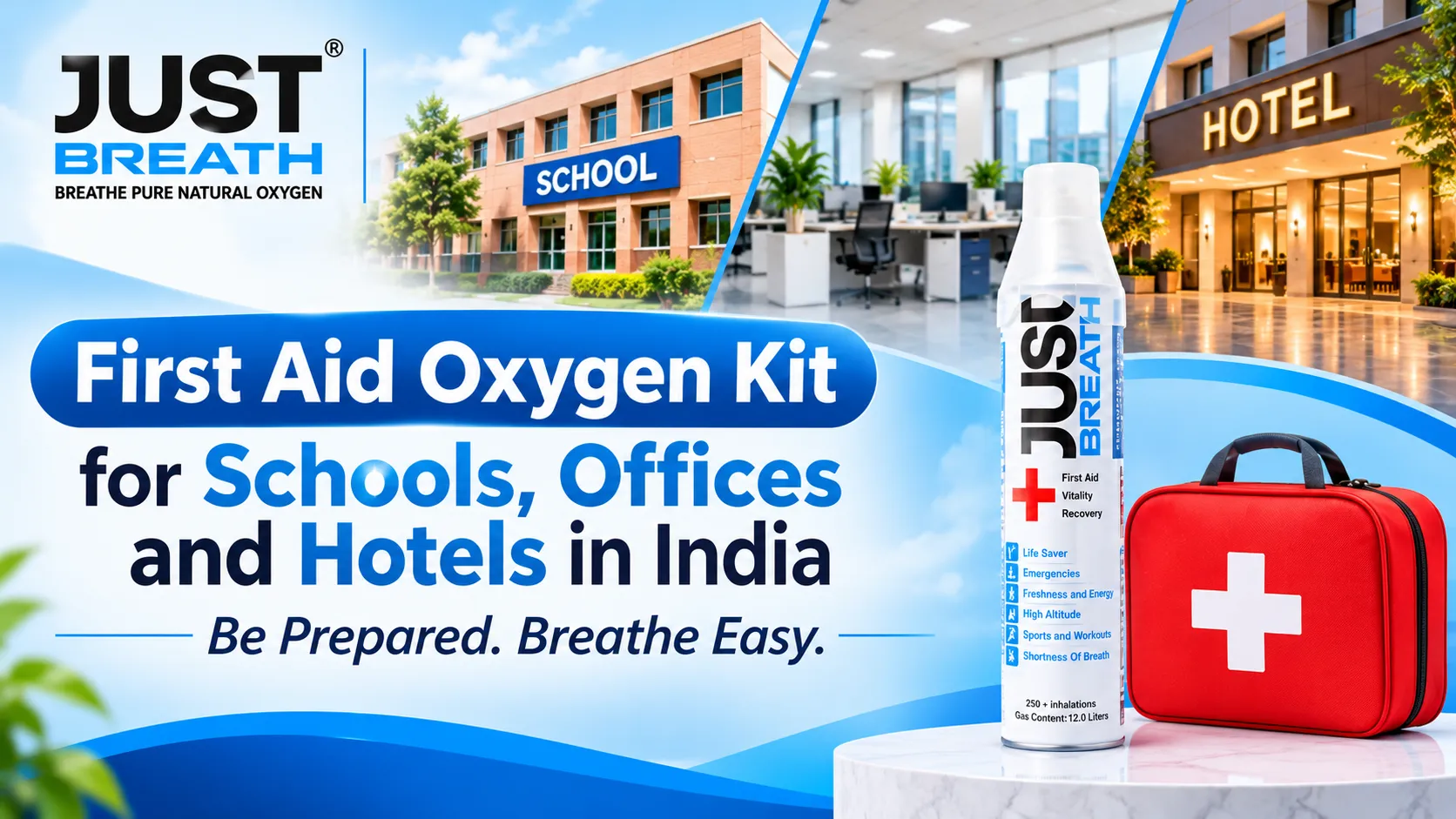
The Just Breath Oxygen 12 L portable oxygen can already comes with a built-in mask, weighs about 400 g full and gives roughly 250+ one-second puffs. It is made by Speciality Geochem in Udaipur, which has worked in safety products since 2010. You can buy it on Amazon India, and packs of 2 or 4 cost less per can. For offices, schools and hotels, send a bulk enquiry through our first aid and emergency page.
Conclusion
The choice between an oxygen can with mask and one without comes down to who will use it. A nozzle is fine for one fit adult taking a quick puff at the gym. For everyone else, including elders at home, trekkers, drivers and anyone keeping a first-aid kit, a mask is easier to use, wastes less oxygen and is simpler to keep clean.
That is why the Just Breath 12 L portable oxygen can comes with a built-in mask. Keep one at home, one in the car and one in every first-aid box, use it in short 1–2 second puffs, and store it cool and capped. Just remember it is a comfort aid, not a replacement for medical care.
Ready to stock up? Buy Just Breath on Amazon India, or order in bulk for your office, school or hotel through our first aid and emergency oxygen page.