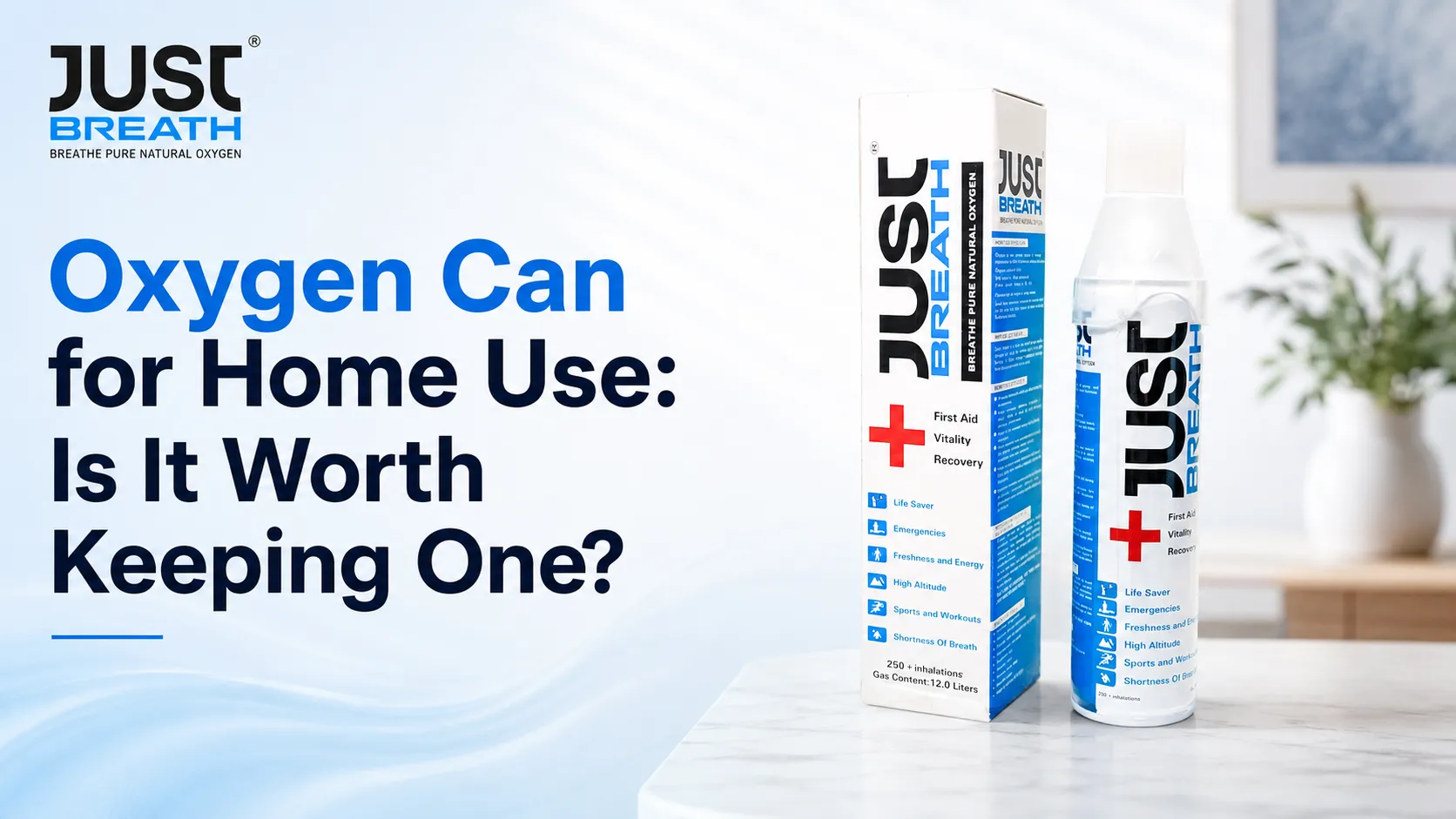
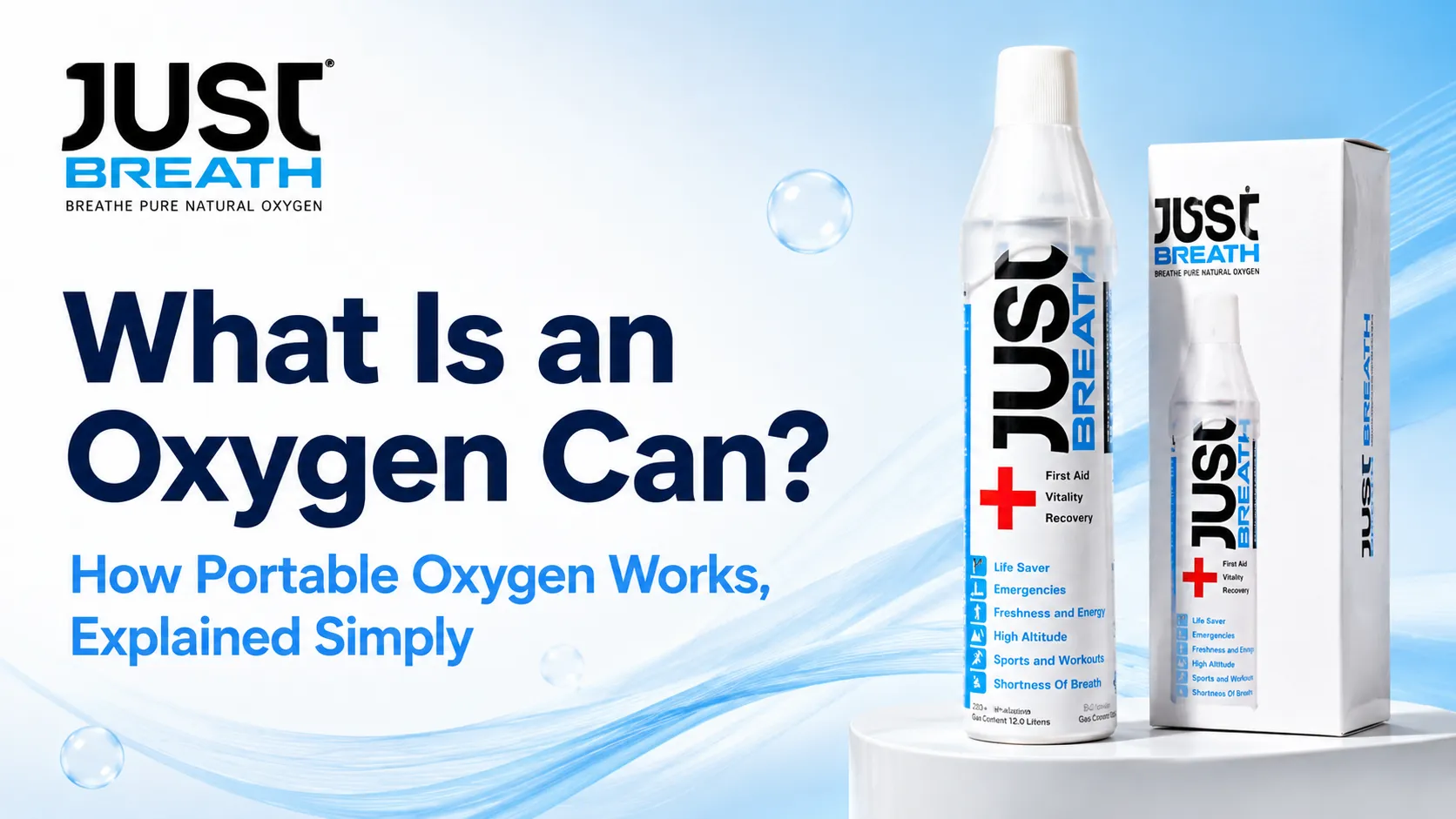
An oxygen can is a small, lightweight aluminium can filled with compressed, high-purity oxygen that you breathe in short puffs through a cap or mask. It’s a consumer product, not the medical oxygen a doctor prescribes. You press the valve, a puff comes out, and a 12-litre can gives you roughly 360 of those short breaths.
That’s really all it is. But if you’ve ever typed “oxygen can kya hota hai” into your phone, you probably want a bit more than one paragraph. Maybe you’re packing for Leh and a friend told you to carry one. Maybe you saw it at a petrol pump or on a trekking checklist and wondered if it’s a gimmick. Fair question. Here’s how it actually works, what you get for your money, and where it stops being useful.
Quick definition: Oxygen can
An oxygen can (also called oxygencan, oxygen in a can or O2 in a can) is a portable aluminium container of compressed oxygen, up to 99% pure, that you breathe through a built-in valve and mask in 1–2 second puffs. It’s meant for short, occasional use while travelling, trekking, training or when you feel drained. It is not a substitute for prescribed medical oxygen.
1. Oxygen Can: A Simple Definition
The air you’re breathing right now is only about 21% oxygen. Most of the rest is nitrogen. An oxygen can flips that ratio. What’s inside is almost entirely oxygen, so each puff gives your lungs a much richer breath than normal air does.
The easiest way to picture it? A deodorant spray, except you breathe it. The gas sits under pressure, a valve keeps it sealed, and you decide when it comes out. No machine, no plug point, no tubes, nothing to refill. When it’s empty, you recycle the can.
Why people call it “oxygen in a can”
Because that’s literally what it is. For most of us, oxygen used to mean a big green cylinder next to a hospital bed. The can takes that same gas and puts it in something you can throw into a backpack or a car glovebox. That convenience is the whole appeal, and it’s why “portable oxygen can” has become a common search before hill trips.
What it isn’t
It isn’t a medical device. It doesn’t give a steady flow, and it can’t help someone who has a real breathing problem. We’ll get into that properly in section 5, because it’s the part people most often get wrong.
2. What Is Inside the Can and How the Valve Works
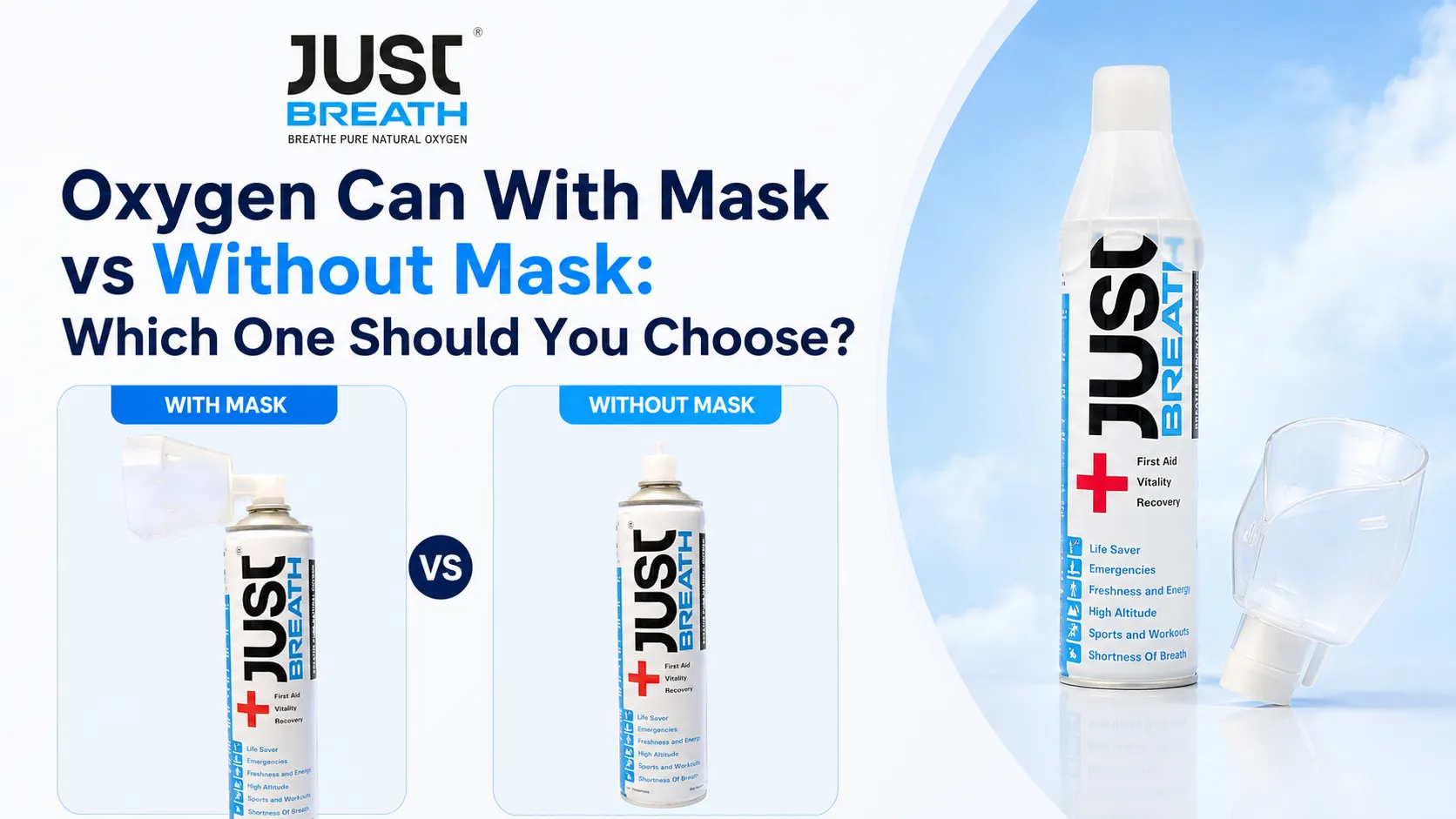
Here’s what a typical can looks like from the inside. This is based on the 12-litre can we sell at Just Breath Oxygen.
┌───────────────┐
│ FACE MASK │ ← ① Fits over nose & mouth; guides the oxygen to you
└───────┬───────┘
│
┌─────┴─────┐
│ ACTUATOR │ ← ② Press here to release a 1–2 second puff
│ / CAP │
└─────┬─────┘
│
══════╪══════ ← ③ Push-valve: stays sealed until pressed
┌───────┴───────┐
│ │
│ COMPRESSED │ ← ④ High-purity oxygen (up to 99%) stored under pressure
│ OXYGEN │
│ (12 LITRES) │
│ │
│ ALUMINIUM │ ← ⑤ Lightweight, rust-free aluminium body
│ BODY │
└───────────────┘
- Face mask: sits over your nose and mouth so the oxygen goes into you, not into the air around you.
- Actuator (cap): the bit your finger presses.
- Push-valve: a small spring-loaded seal. It opens only while you’re pressing.
- Compressed oxygen: the gas itself, packed tight under pressure.
- Aluminium body: light, strong and won’t rust in a damp bag.
What actually happens when you press it
You press the cap and the valve opens a tiny gap. Since the oxygen inside is under pressure, it rushes out into the mask. That’s your cue to breathe in, slowly, through your nose and mouth. Let go and the spring shuts the valve straight away, so nothing leaks out between uses.
So is “12 litres” the size of the can?
No, and this confuses a lot of people. The can itself is about the size of a large water bottle. The 12 litres is how much oxygen comes out once it expands back to normal air pressure. Inside, it’s squeezed into a much smaller space.
3. How Many Breaths Does One Can Give?
A 12-litre Just Breath can gives about 360 short breaths. By “breath” we mean one press of 1 to 2 seconds while you inhale.
That number isn’t fixed, though. It depends a lot on how you use it. Hold the button down for four seconds each time and you’ll burn through the can much faster. Hold the mask loosely and a good chunk of every puff just floats away. Keep the mask snug and the presses short, and you’ll get close to the full count, sometimes a little more.
How most people use it
Two or three short puffs, then a normal breath or two, then stop. That’s usually enough to feel the difference. Used like that, one can covers several sessions, whether that’s a full day on a trek or a week of post-workout cool-downs.
Some customers tell us their first can “finished too quickly.” Almost every time, it’s because they were pressing for too long. Short and slow is the trick.
How long can it sit unused?
Weeks or months, without any fuss. There’s nothing to charge and nothing to maintain. Keep it somewhere cool and it’s ready when you need it.
4. Who Uses Oxygen Cans and Why
Mostly, people who feel tired or a bit short of breath for a short while and want a quick pick-me-up.
Travellers and trekkers
This is the big one. People heading to Manali, Spiti, Ladakh or Kedarnath often keep a can in the day bag for steep stretches. A few puffs can make a hard climb feel a little easier. But please don’t treat it as a cure for altitude sickness. A pounding headache, vomiting, confusion or breathlessness while resting are warning signs. The answer then is to go down and see a doctor, not to reach for a can.
Gym-goers and sports players
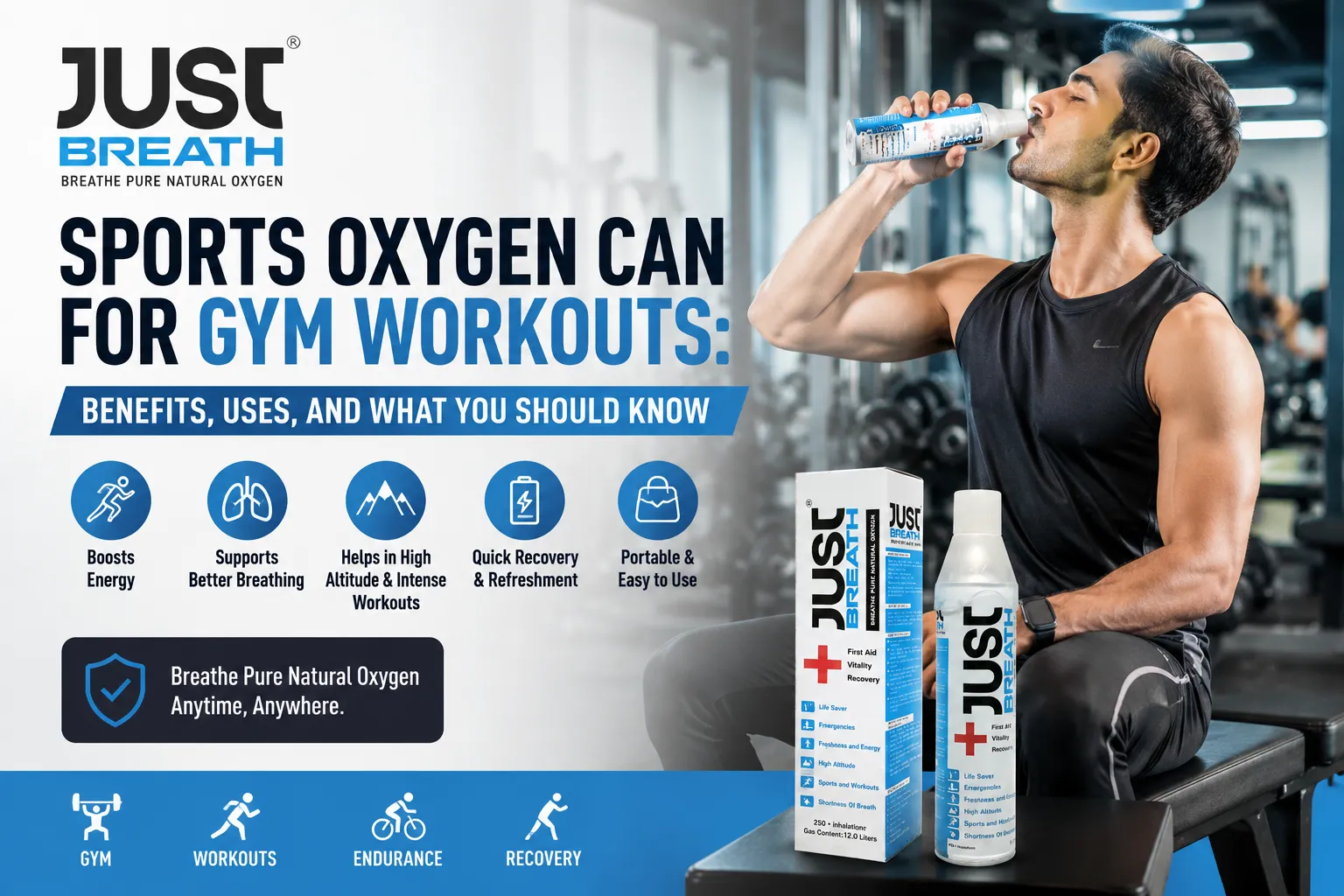
After a heavy session or a match, some people like a few puffs while they cool down. It feels fresh, and for a lot of them it’s become part of the routine, like a protein shake.
Long drives and long workdays
Eight hours on the highway, a stuffy meeting room, a smoggy winter day in Delhi. They all leave you feeling heavy. A can in the glovebox or desk drawer is a small thing that helps you reset during a break.
The first-aid kit at home
Some families keep one alongside the usual bandages and ORS, as a short-term comfort while help is on the way. Just remember it’s a backup. It should never be the reason someone waits to call a doctor.
What it won’t do
We’d rather be upfront here. The fresh, clear feeling people describe is real, but it doesn’t last long, and there’s no solid scientific proof that extra oxygen makes healthy people sharper or fitter. Think of it as a comfort, not a performance booster.
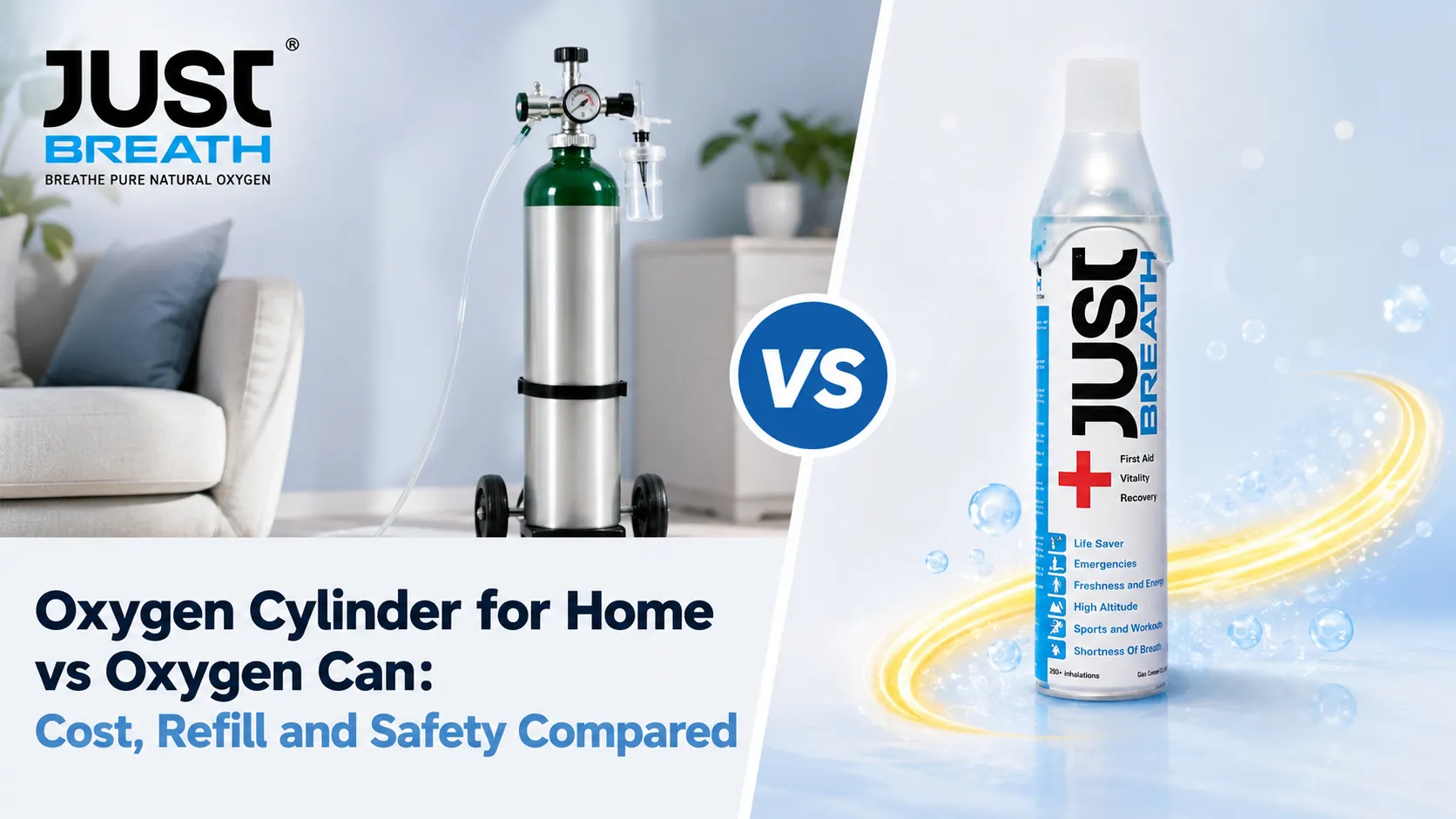
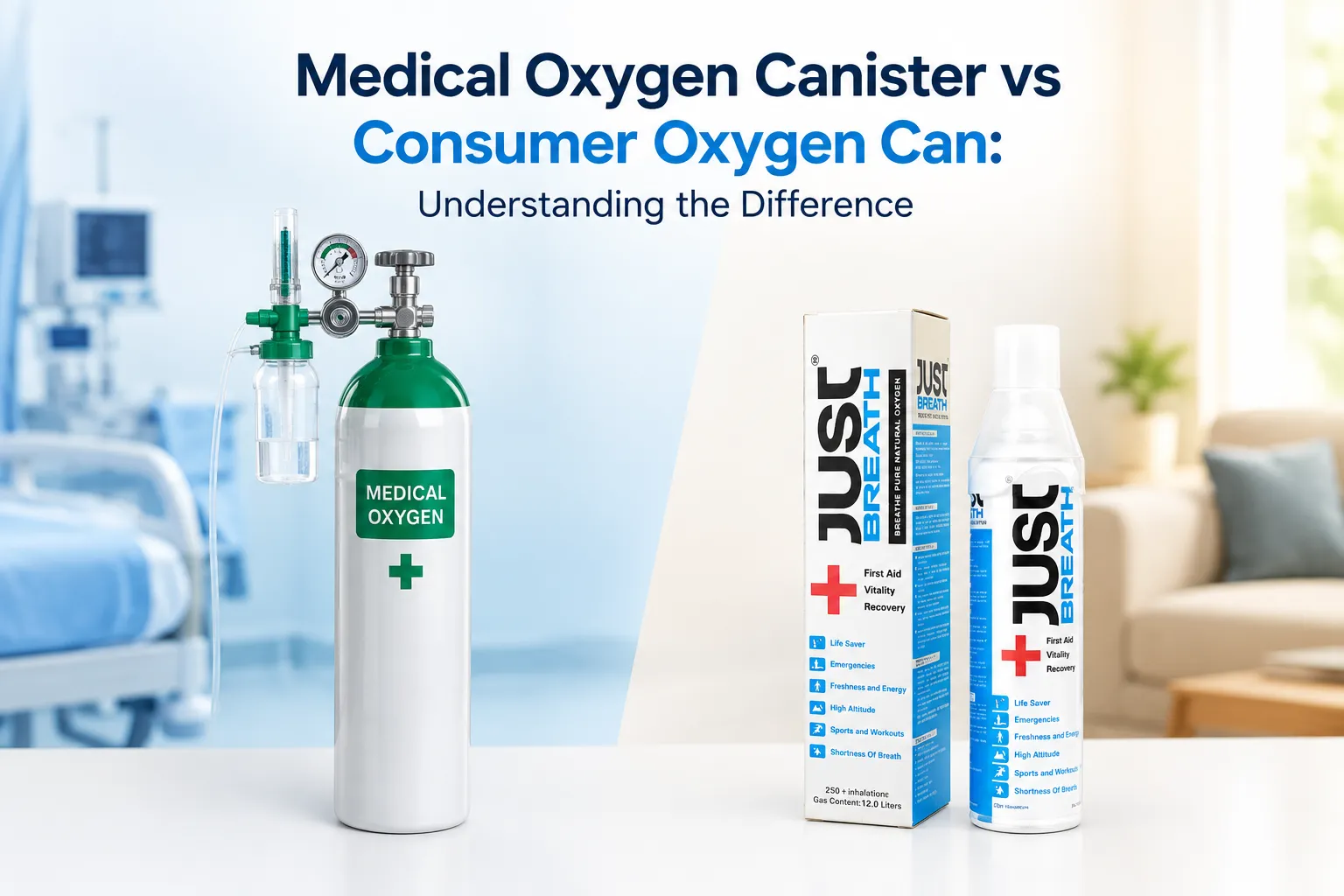
5. Oxygen Can vs Medical Oxygen: Key Difference
If you only read one section, make it this one. Both contain oxygen, but they’re made for completely different jobs.
| Feature | Oxygen can | Medical oxygen (cylinder / concentrator) |
| What it’s for | Occasional comfort and wellness use | Treating patients with low blood oxygen |
| Prescription | Not needed | Prescribed and dosed by a doctor |
| How it flows | Short puffs when you press | Continuous, controlled flow (litres per minute) |
| How long it lasts | About 360 short breaths per 12 L can | Hours to days of supply |
| What you need | Nothing extra; valve and mask built in | Regulator, flowmeter, tubing, mask or cannula |
| Who should rely on it | Healthy adults wanting a quick boost | People with COPD, severe asthma, COVID or similar conditions |
Why this matters
Someone with a lung or heart condition needs a steady, measured supply of oxygen, often for hours. A can simply can’t do that. Grabbing one in a real emergency can cost time you don’t have.
The easy way to remember it
If a doctor has said you need oxygen, use only what they’ve prescribed. If you’re healthy and just want a quick breather on a trek, at the gym or on a long drive, that’s exactly what a portable oxygen can is for.
Conclusion
Strip away the marketing and an oxygen can is a simple thing: high-purity oxygen packed into a light aluminium can, released through a valve and mask a puff at a time. A 12-litre can gives around 360 short breaths, needs no setup and fits in any bag. It suits trekkers, travellers, gym-goers and anyone who spends long hours on the road or at a desk.
It won’t replace medical oxygen, and it won’t fix altitude sickness. Use it for what it’s good at, keep the puffs short, and get proper help if something feels seriously wrong.
If you’d like to try one, our cans are filled in Udaipur and come with a mask. You’ll find them on the Just Breath Oxygen home page.