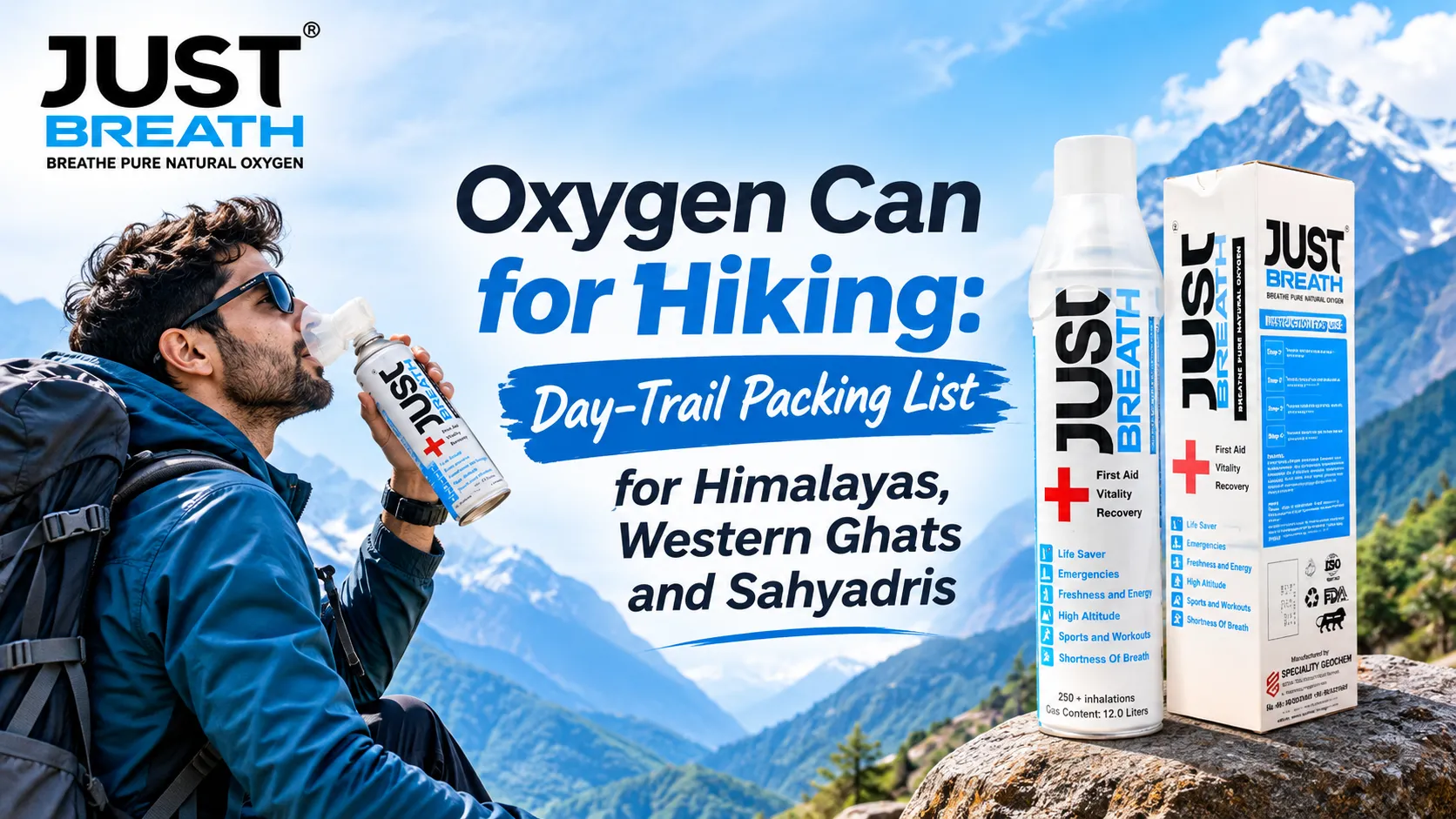
People ask us this all the time, mostly right before a weekend trek. Somebody is planning Kalsubai or Harishchandragad with their college gang, or a quick Triund trip from Delhi, and they want to know if they should carry an oxygen can for hiking or if it’s just one more thing to lug around. Fair question. We sell these cans, so you’d think we’ll just say “yes, buy two”. But the real answer is a bit more boring than that, and it depends a lot on which trail you’re doing and who is coming along with you.
So we put together this packing list for day hikes in the Sahyadris, the Western Ghats in Karnataka, and the shorter trails in Himachal and Uttarakhand. What to carry, when a can is actually useful, and when you can happily leave it at home.
Do Day Hikers Need Supplemental Oxygen?
Most of the time, honestly, no. If you’re reasonably fit and hiking somewhere below 2,500 metres, which covers almost every Sahyadri fort and most of the Western Ghats, there’s enough oxygen in the air for you. That breathless feeling on the climb to Rajmachi or Lohagad is just your body working hard in the heat and humidity. It’s not because the air is thin, and people mix these two up a lot.
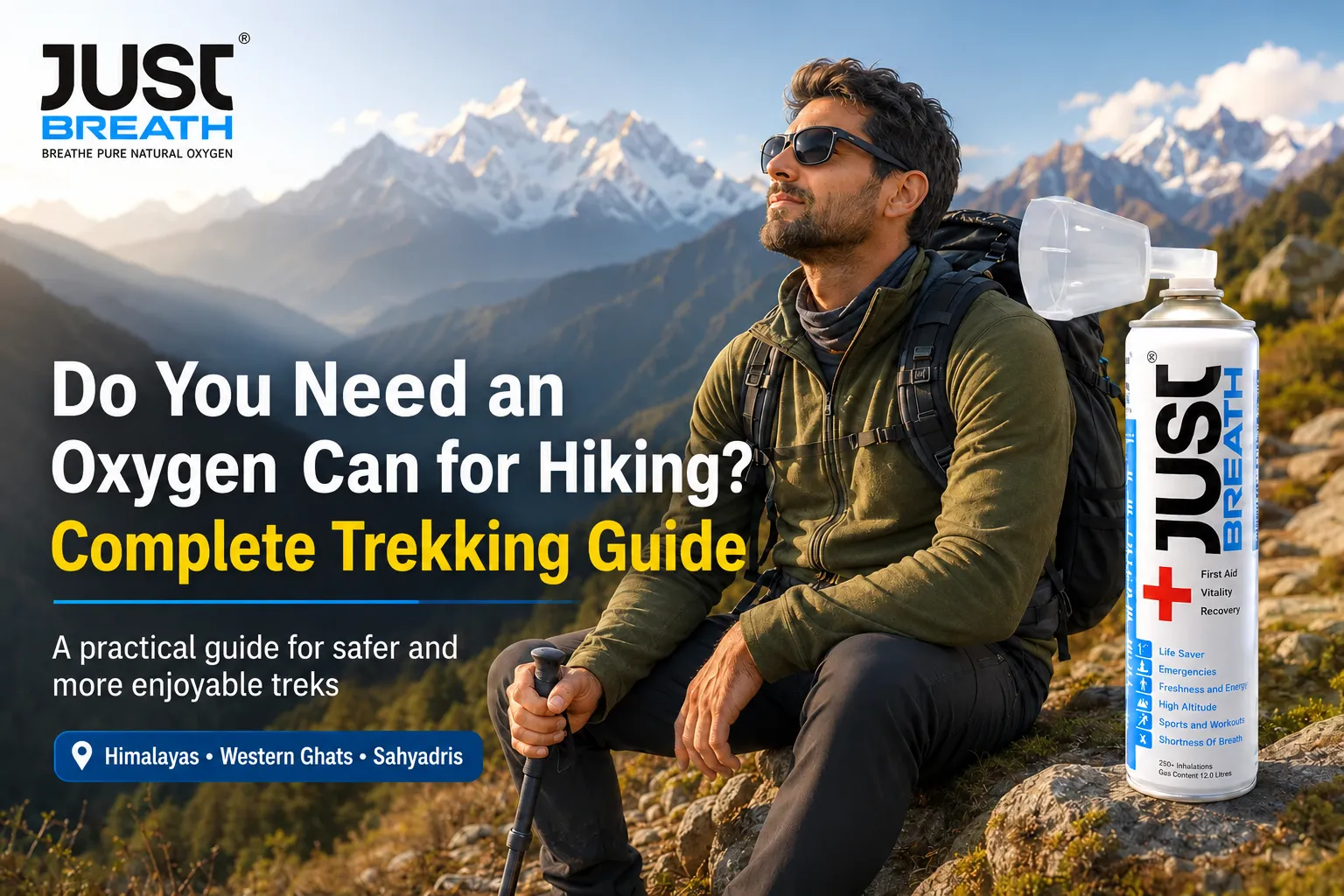
Where a can is actually handy is at the rest stop. You finish a tough patch, sit down on some rock, and you want to recover a bit quicker before the next push. A few slow breaths can help with that. Some of our customers love it, some say they didn’t feel much, and both are fair.
What Does an Oxygen Can for Hiking Actually Do?
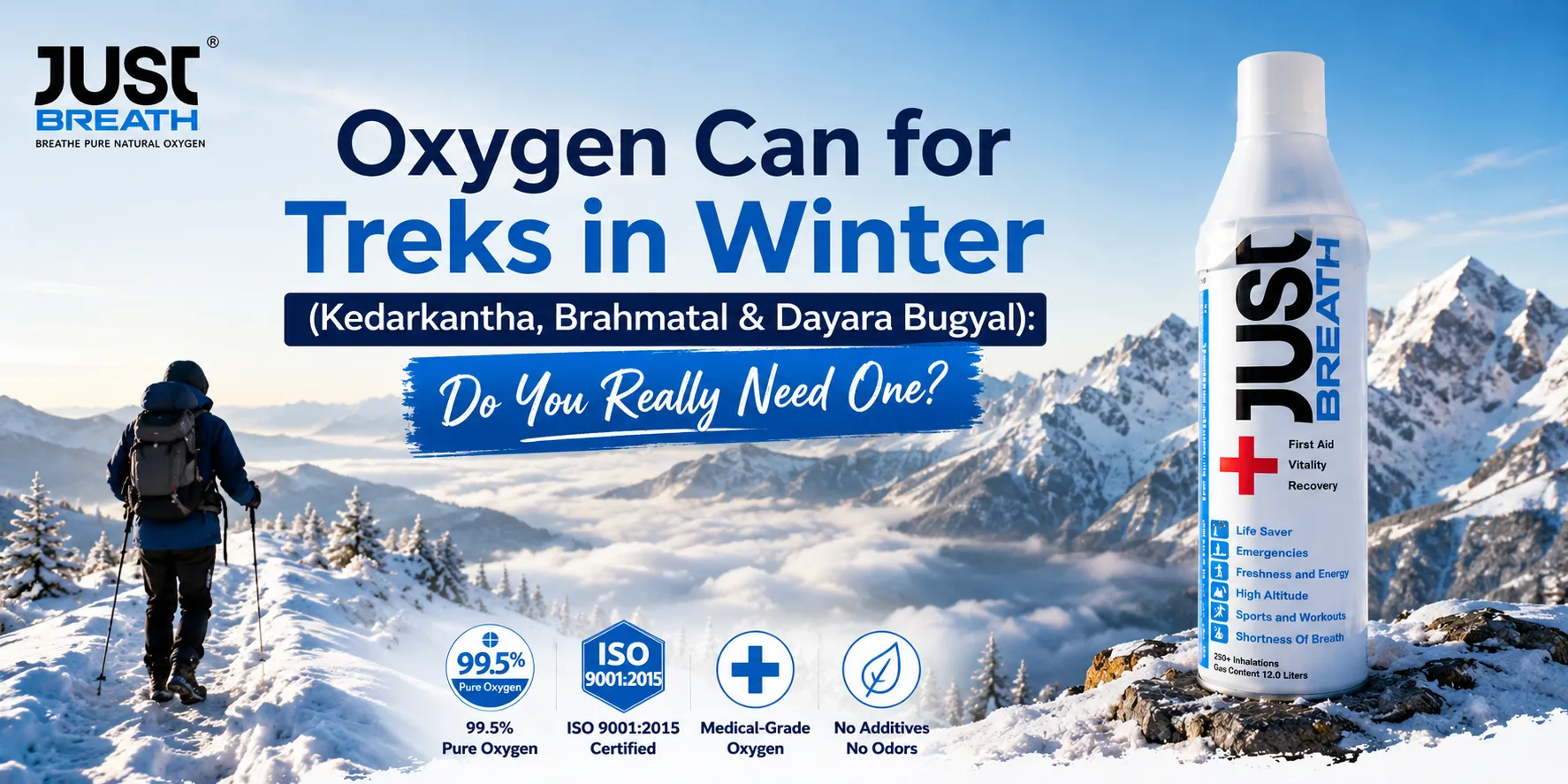
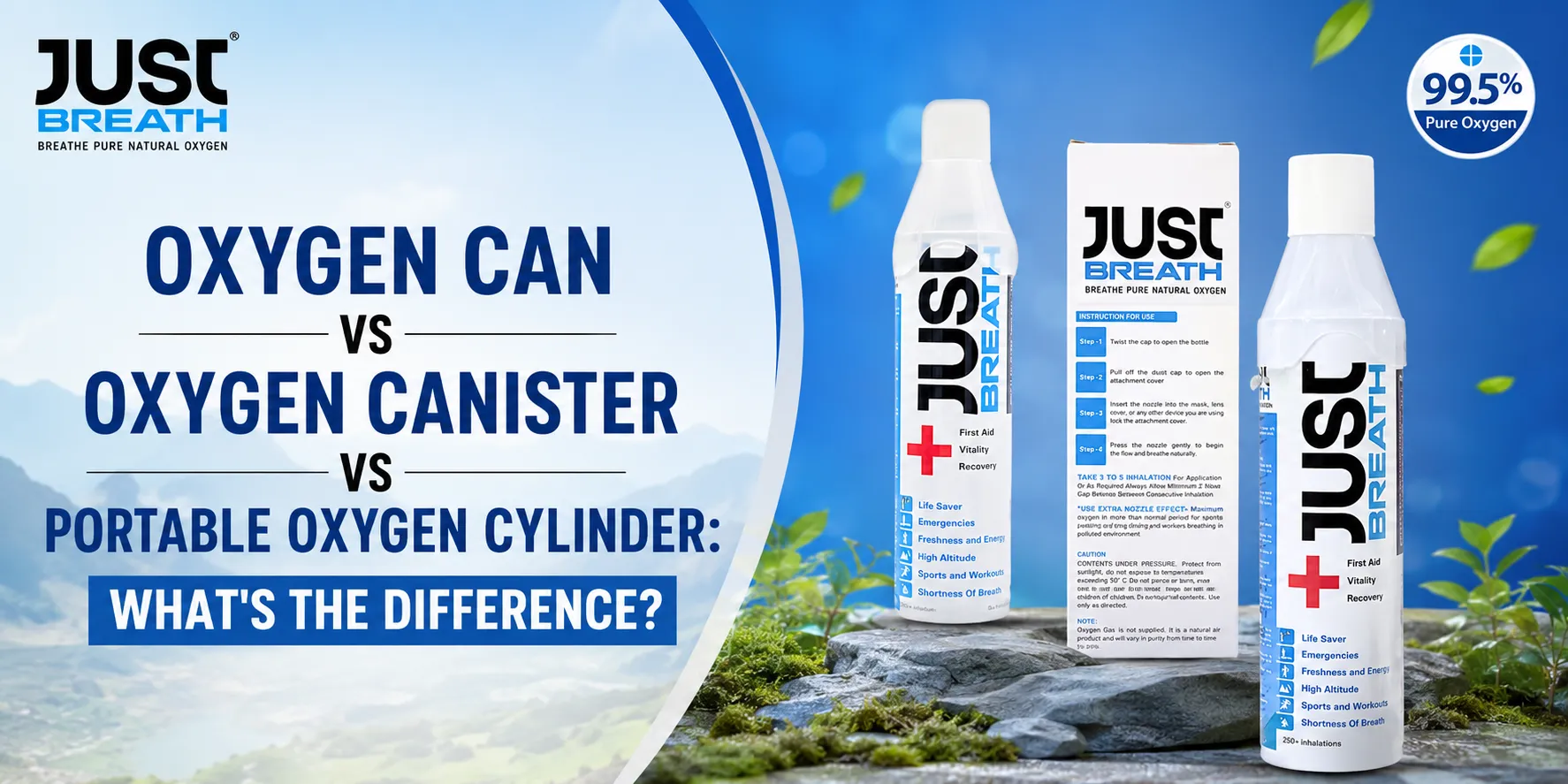
The Just Breath can is 12 litres, it comes with a mask, and you get roughly 360 breaths out of it. There’s no regulator or anything to fix, you just press and breathe in. What you feel is a short burst of freshness. Keep your expectations real though, it’s a few minutes of feeling better, not some magic boost that carries you all the way to the summit.
What it doesn’t do
This one is important, so please read it properly. The can does not prevent altitude sickness and it doesn’t treat it either. If someone in your group is up high and gets a really bad headache, starts vomiting, gets confused or can’t walk straight, you all go down, the same day, no “just one more viewpoint”. The can may make the walk down a little more comfortable, but it’s never a reason to keep climbing.
Altitude Zones: Where Oxygen Matters and Where It Doesn’t
Everyone knows the air gets thinner as you go up, but what most people don’t realise is how low our popular hikes really are. You won’t notice anything on a Sahyadri fort. Once you cross around 2,500 metres some people do start feeling it, more so if they were sitting in Mumbai or Delhi the day before.
Here’s a rough idea of where things stand:
| Zone | Height | Day hikes | Carry a can? |
| Low | Under 1,500 m | Lohagad, Rajmachi, Harishchandragad, Nandi Hills | Not for altitude, maybe on a very hot day |
| Moderate | 1,500–2,500 m | Kalsubai (~1,646 m), Kudremukh (~1,894 m), Mullayanagiri (~1,930 m) | Optional, for steep sweaty climbs |
| High | 2,500–3,500 m | Triund (~2,850 m), Prashar Lake (~2,730 m) | Useful, especially if you came straight from the plains |
| Very high | 3,500 m+ | Tungnath–Chandrashila (close to 4,000 m) | Yes, and know when to turn back |
(These heights are approximate, every website rounds them a little differently.)
Sahyadris and Western Ghats: the climb is the real issue
Kalsubai is the highest peak in Maharashtra and even that is only around 1,646 metres. So what makes people sit down halfway up those famous ladders isn’t altitude at all. It’s the almost 1,000 metres you climb from Bari village, in that sticky humidity where your T-shirt is wet within ten minutes. Down in Karnataka, Kumara Parvatha is even tougher, with more than 1,500 metres of climbing from Kukke Subramanya, which is why a lot of people do it over two days.
So when someone searches for sahyadri trek oxygen, what they mostly need is something to recover with after a hard section. Thin air has nothing to do with it.
Himachal and Uttarakhand: here altitude does matter
This is where most people go wrong, and it usually goes like this. Overnight Volvo from Delhi, reach McLeodganj early morning, have a chai and start walking up to Triund straight away. Or drive to Chopta and try Chandrashila the same afternoon. The body just hasn’t had time to adjust. If you can, spend one night at the base before any day hike above 3,000 metres. To be very honest, that one night of rest will help you more than any product, including ours.
Day-Pack Essentials Beyond the Can
Let’s be clear, the oxygen can is the least important thing in your bag. Get the basics right first.
Water, food and clothes
Carry two to three litres of water, and more if it’s summer, because that stream or “tap near the temple” someone mentioned online may not be there when you reach. Keep two ORS sachets too. For food, take chikki, dry fruits, theplas, bananas, and definitely something salty like peanuts or namkeen, because after three hours of sweating your body will want salt badly.
Even in the Ghats keep a thin fleece, since the top gets windy and you cool down fast once you stop walking. For Himalayan trails add a windproof jacket. From June onwards a poncho and a rain cover for the bag are a must. And please wear shoes with proper grip, wet basalt rock is no joke.
The small things people forget are a cap, sunscreen, a headlamp, a power bank, an offline map, your ID and some cash. Network goes off on most trails, and the little stall at the base village may not have UPI working that day.
First-aid pouch
Nothing fancy, just a small pouch with antiseptic wipes, a few bandages, blister plasters (these are lifesavers on long descents), one crepe bandage for a twisted ankle, your own regular medicines and anything your doctor has suggested, plus tweezers and a whistle. If it’s monsoon in the Western Ghats, add some salt or leech repellent, you’ll need it.
Where to keep the can
Keep it in the side pocket or the top lid of your bag. If someone in the group needs it suddenly, you don’t want to be pulling out a wet poncho and your squashed tiffin to find it.
How to Carry and Use the Can on the Trail
Carrying it safely
It’s a pressurised can, so handle it with a little care. Wrap it in a T-shirt, keep it away from sharp things, don’t drop it on rocks and never try to puncture it. If you’re flying to Dehradun or Dharamshala for your hike, check with the airline first, because many airlines don’t allow pressurised cans.
Using it during a break
First stop and sit down properly, not standing and leaning on your trekking pole. Wait a minute or so and let your breathing come down by itself. Then put the mask on, breathe out, press and breathe in slowly. Two or three breaths is enough, after that rest for a few minutes and then carry on. One thing we always say: never use it while you’re on a ladder, a rock patch or a narrow ridge, because there you need both hands and full focus.
Sharing in a group
360 breaths sounds like a lot, but it finishes fast if four friends keep passing it around at every chai stop. Save it for the steep parts or for whoever is really struggling, and wipe the mask before passing it on.
Monsoon and Summer Heat Precautions
Summer (March to June)
On Sahyadri and Karnataka trails in summer, the heat is a much bigger problem than oxygen will ever be. Start early, by 6 am if possible, and try to finish the open rocky stretches before noon. Keep the can deep inside your bag wrapped in clothes, never in direct sunlight, and never leave it on the car dashboard. When you take a break, keep your bag in the shade. Also keep checking on each other, because dizziness, cramps, nausea or someone who suddenly stops sweating are signs to stop right there, sit in the shade and drink water.
Monsoon (June to September)
Monsoon is when the Sahyadris and Western Ghats look the most beautiful, all green with waterfalls everywhere, but it’s also when the trails are the most risky. Rocks get slippery, small streams from May become knee-deep, fog comes in suddenly and the leeches are everywhere. Put the can, your phone and your wallet in a dry bag. Before leaving home, check the forest department updates, because some trails close after heavy rain and nobody wants to drive four hours only to be sent back from the check-post.
Hiking With Kids and Seniors
Kids
With children keep it simple: a short trail with shade, water and an easy way back. If you’re carrying a can, an adult should hold it and supervise, and only a few breaths. If your child has asthma or any heart or lung problem, speak to their paediatrician before the trip. And if a child looks very pale, breathless or sleepy on the trail, stop there, don’t push them to reach the top.
Parents and seniors
A lot of people in their sixties walk better than us younger lot, they just need to go at their own speed. Let the slowest person walk in front, and fix a turnaround time before starting so no one feels bad about saying “bas, enough”. If anyone has a heart or lung condition, take the doctor’s okay first. We’ve written more about this on our senior citizens page, and if you’re planning something higher, do read our page on choosing an oxygen cylinder for hiking.
Conclusion: Pack Smart, Climb Steady
So coming back to the question, do you need an oxygen can for hiking? On most weekends, no. Good shoes, enough water and a poncho will do more for you on Lohagad than anything we sell. But for a hot climb up Kalsubai, a high ridge in Himachal or a family trek with your parents, a small can in the side pocket is a sensible backup to have for those sit-down-and-catch-your-breath moments.
Pack light, start early, know how high you’re going, and turn back when your body is telling you to, the mountain isn’t going anywhere. If you want a can for your next trail, you can check out the Just Breath portable oxygen can. It’s light, needs no setup and fits easily in a side pocket