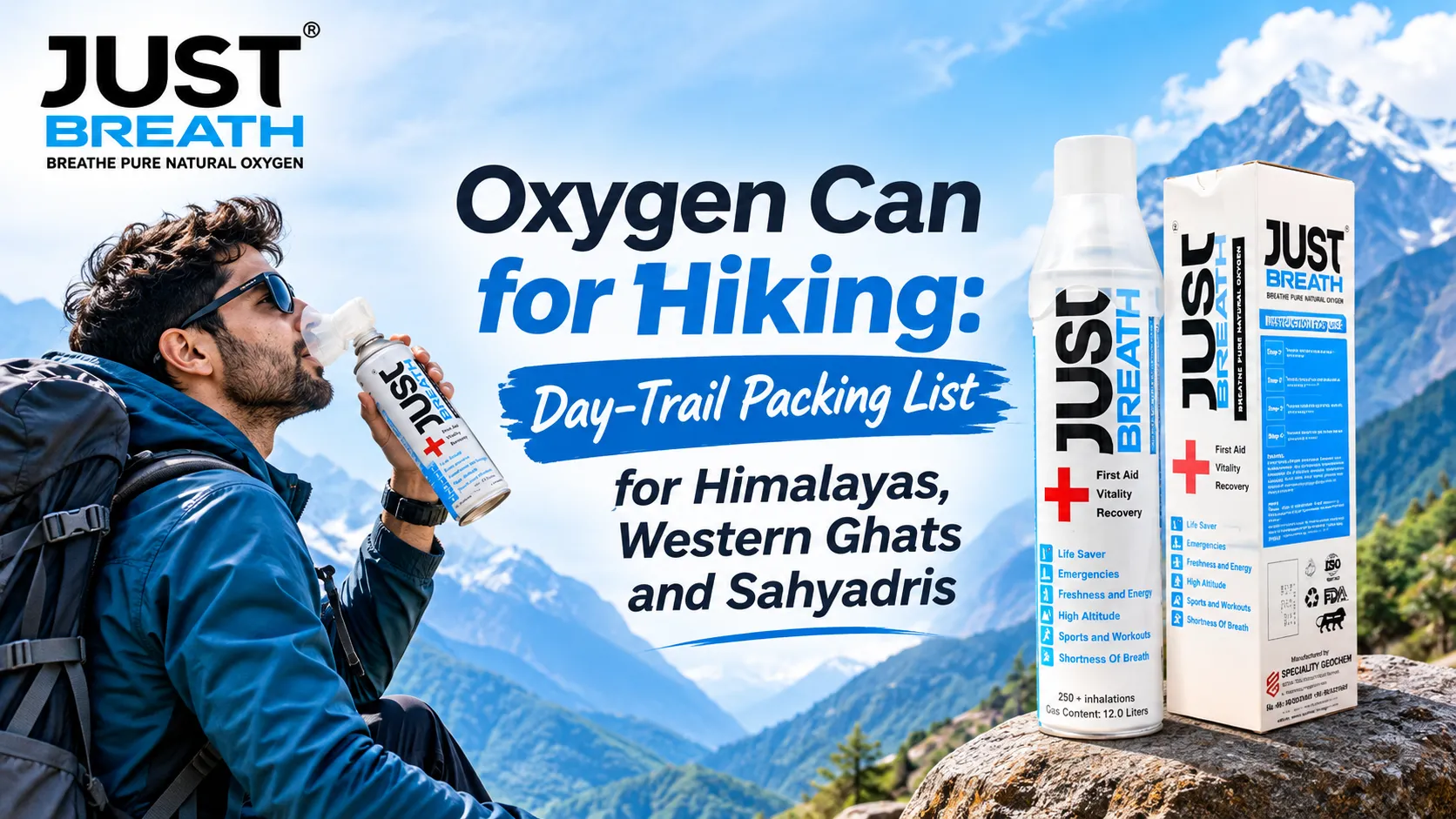
Oxygen Can for Hiking: Day-Trail Packing List for Himalayas, Western Ghats and Sahyadris

Table of Contents

Expert Guidance Awaits
Just Breath portable oxygen can for hiking in the Himalayas, Western Ghats and Sahyadris.
Just Breath Portable Oxygen Can – A Handy Addition to Your Hiking and Day-Trail Packing List.
If you’ve ever done Kalsubai on a Sunday, you know the scene. The early train out to Kasara, someone’s cousin who swore he “does this every weekend” already panting at the first ladder, and a vada pav stall at the base that is somehow open before sunrise. Nobody there is thinking about oxygen. Now picture Chopta in May. Same kind of backpack, same kind of group, but the trail to Tungnath starts higher than Kalsubai’s summit and keeps going up. That’s a different conversation. People ask us almost every week whether they should carry an oxygen can for hiking. We fill these cans in Udaipur, so you’d expect us to say yes every time. We won’t. For a lot of Indian day hikes, you really don’t need one. For some, it’s a smart thing to have in the bag. This post is about telling the two apart.

Do Day Hikers Need Supplemental Oxygen?

Usually not. Below roughly 2,500 metres, a healthy body copes with the air just fine. When your legs are shaking on a Sahyadri trek, oxygen isn’t the problem. It’s the gradient, the humidity and the fact that you skipped breakfast. Your lungs are doing okay.

Where a can starts to make sense

Go higher and things shift. In Himachal and Uttarakhand, plenty of day trails begin around 2,500 metres and end well above 3,500. Every breath up there carries less oxygen than you’re used to in Pune or Bengaluru. That’s when an oxygen can for hiking is worth its weight. A few puffs on a steep switchback, or at the top when your head feels a bit floaty, can make the rest of the walk more comfortable.

And where it doesn’t

It does nothing to prevent altitude sickness, and it won’t fix it either. We tell every trekker who calls us the same thing. A headache that won’t quit, nausea, stumbling, confusion? Stop going up. Start going down. A can is for comfort. It isn’t a rescue plan.

Altitude Zones: Where Oxygen Matters and Where It Doesn’t

A rough guide, based on hikes people actually do. Heights are approximate, and your own body may disagree with the table.
Altitude Example hikes Oxygen?
Below 1,500 m Rajmachi, Lohagad, Harishchandragad, most Sahyadri forts Not for altitude. Heat and steep climbs are the real fight
1,500 to 2,500 m Kalsubai (1,646 m), Kumara Parvatha (1,712 m), Mullayanagiri (1,930 m) Rarely. Nice to have after a hard push, nothing more
2,500 to 3,500 m Triund (about 2,850 m), Kedarnath (about 3,580 m), Tungnath (about 3,680 m) Worth carrying, especially if it’s your first time up high
Above 3,500 m Chandrashila (about 4,000 m), Hemkund Sahib (about 4,330 m) Carry it, and keep a close eye on how everyone feels

Sahyadris and the Western Ghats

Kalsubai is the roof of Maharashtra and it’s only about 1,646 metres. Kumara Parvatha in Karnataka is a touch higher, but it’s famous for something else entirely: the brutal climb up from Kukke Subramanya, most of it in thick, sticky air. On a Sahyadri trek, oxygen just isn’t the thing that’ll stop you. Cramps will. Dehydration will. That one wet rock patch near the top definitely will.

Himachal and Uttarakhand

Different story. Chopta to Chandrashila, or Ghangaria to Hemkund Sahib, packs more than a thousand metres of climbing into one day and finishes high. A lot of people do these after flying into Dehradun the night before, which gives the body zero time to adjust. If that’s your plan, pack your oxygen can. Day trek or not, the altitude doesn’t care that you’ll be back at the hotel by 4 pm.

Day-Pack Essentials Beyond the Can

Honestly, the can is one of the last things to worry about. Ask any regular from the Pune or Bengaluru trekking groups for their list of hiking essentials. India’s trails are hot, wet or both, and that list always starts with water.

What we’d never leave without

  • 2 to 3 litres of water, and a couple of ORS sachets
  • Food that survives a hot bag: chikki, dates, nuts, theplas, a banana or two
  • A rain jacket, even in “dry” months (the Ghats don’t read forecasts)
  • A headlamp, because descents always take longer than you planned
  • Shoes with real grip. Gym trainers will betray you on wet laterite
  • A charged phone with offline maps, plus a power bank

The small first-aid pouch

Band-aids, a crepe bandage, antiseptic, blister plasters, paracetamol and whatever medicines you take normally. Going above 2,500 metres? Throw in a fingertip oximeter and your oxygen can. The whole thing fits in a pencil pouch.

Oxygen can or oxygen cylinder for hiking?

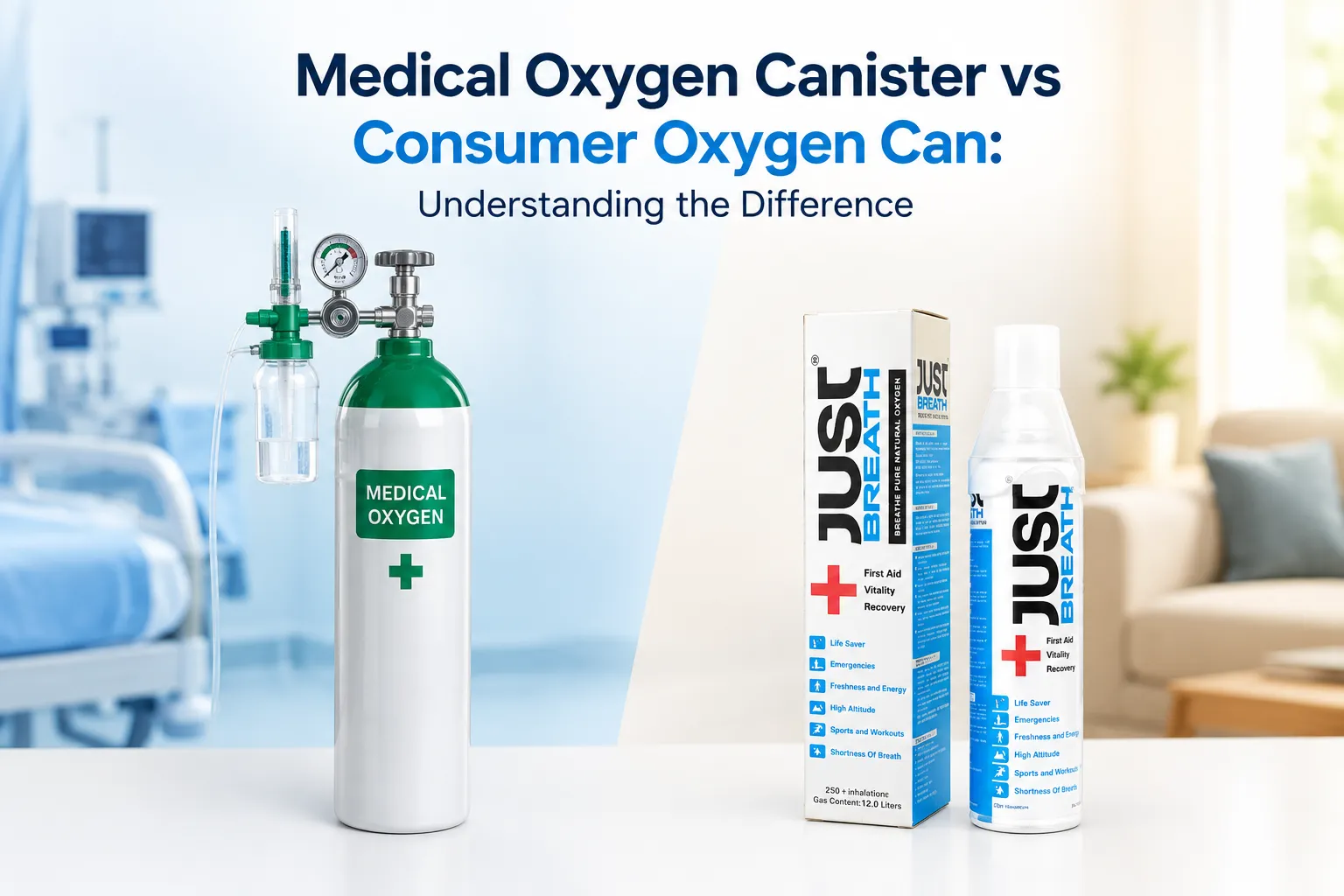
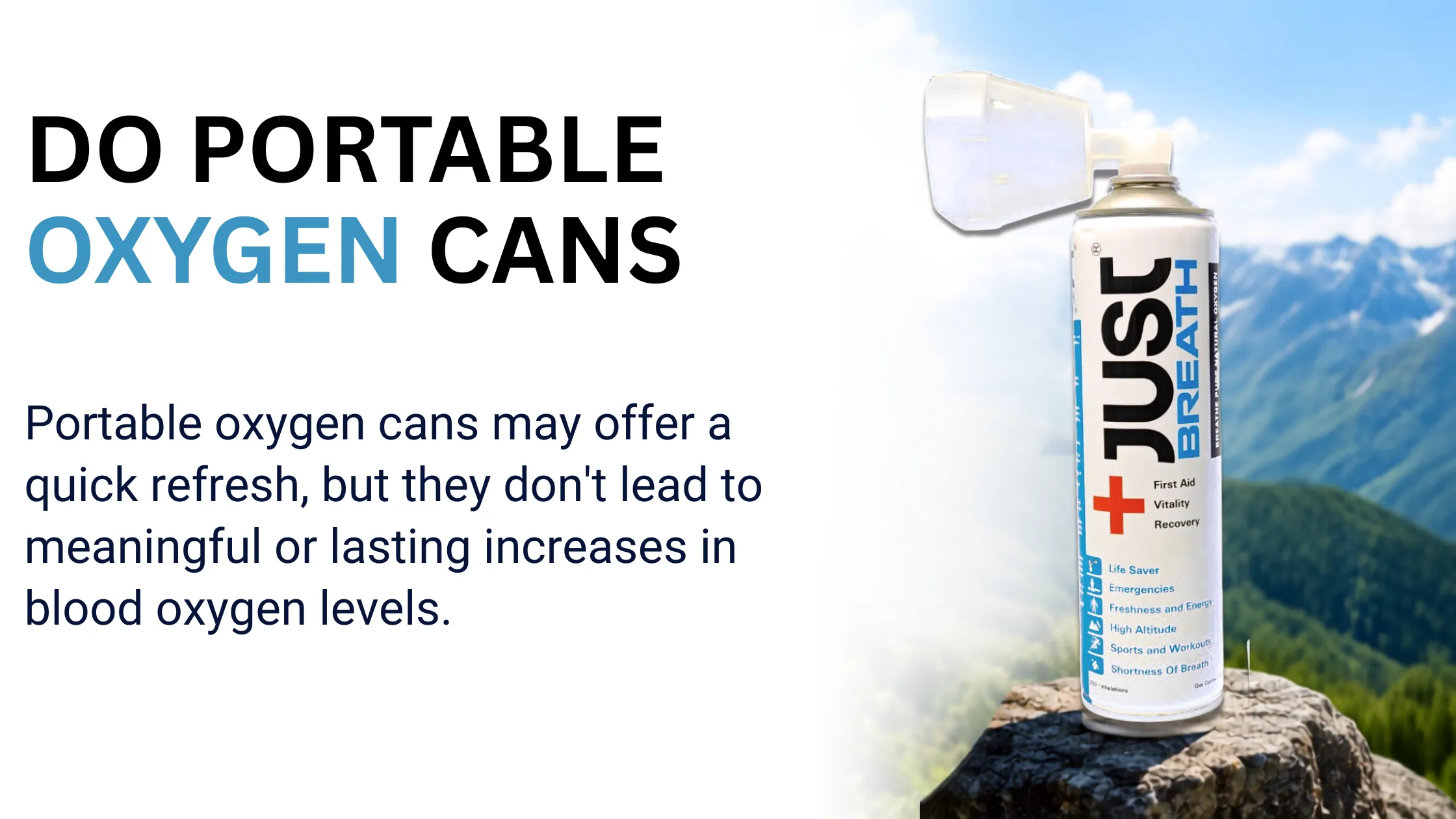
People often search for an oxygen cylinder for hiking, and we get why. But a proper cylinder is heavy, costly and really meant for medical use. Nobody wants to haul that up Triund. If you were picturing an oxygen cylinder for hiking, a portable can is the lighter, saner version. Ours holds 12 litres, roughly 360 short breaths, and weighs next to nothing. One per person is plenty.

How to Carry and Use the Can on the Trail

Where it goes in the bag

Treat your oxygen can, day trek or overnight, the way you’d treat your phone. Main compartment, wrapped in a t-shirt or fleece. Not dangling off a carabiner, and not in the mesh side pocket where it bangs against every rock and cooks in the sun. Keep it away from the stove too, if your group likes making chai at the top. Oxygen and flame don’t mix.

Using it

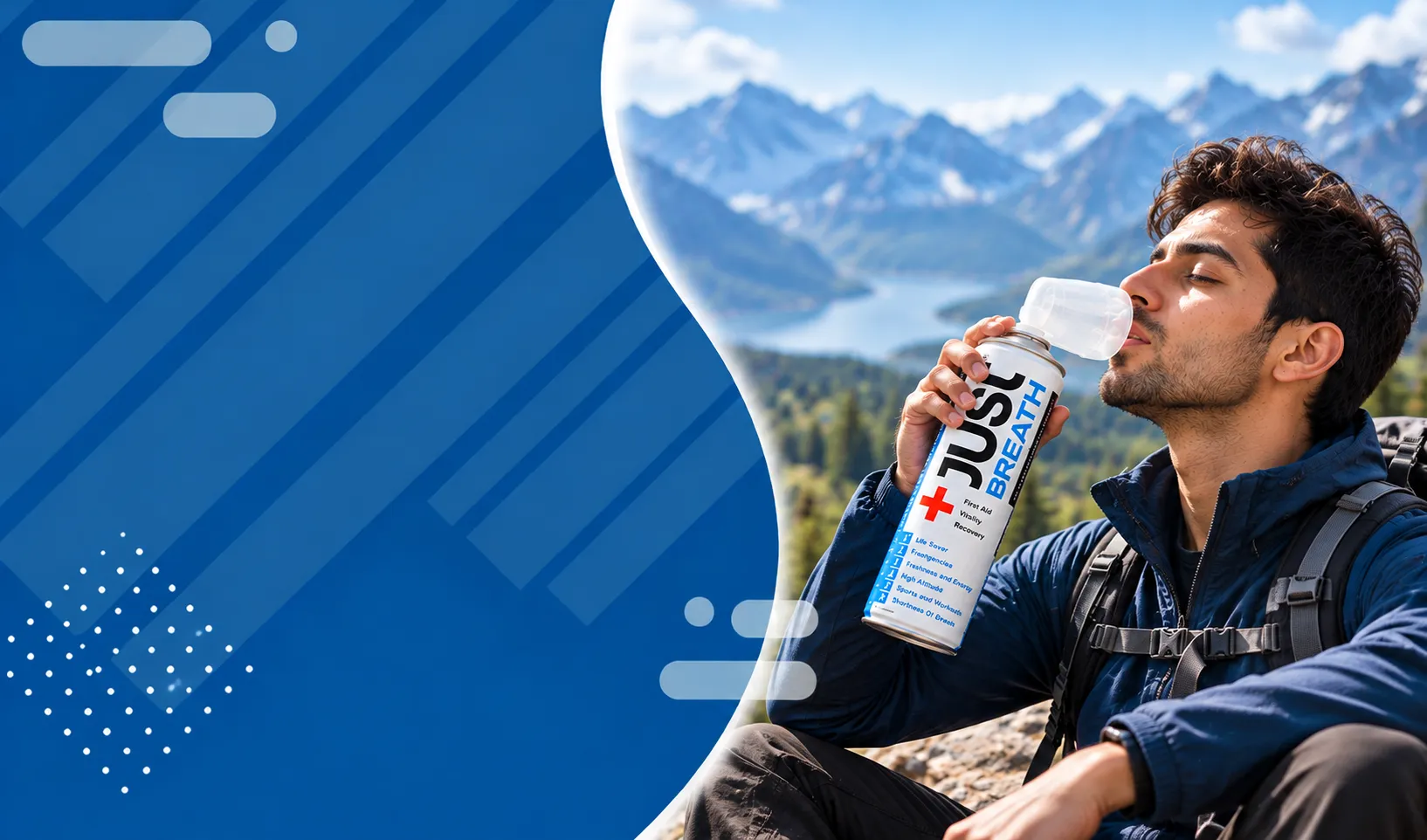
An oxygen can for hiking only helps if you use it properly, so stop walking first. Seriously, find a flat bit and sit down. Breathe out fully, put the mask over your nose and mouth, press for a second or two and breathe in slowly. Hold it a moment, then let it out. Two or three of those is plenty. Rest a few minutes before you get moving again. Trying to puff while scrambling up rock is how phones and cans end up in valleys.

The turn-back rule

If the can is the only thing keeping someone on their feet, the hike is over. Turn around. Nobody stays upset about a summit they skipped for long, and it’ll still be there next season.

Monsoon and Summer Heat Precautions

Monsoon in the Ghats

June to September is when Maharashtra and Karnataka go trek-crazy, and it’s also when things most often go wrong. Rock gets slick, a stream you hopped across at 8 am can be waist-deep by noon, and fog can swallow the trail in minutes. Pack your oxygen can, day trek snacks, phone and first-aid pouch in a dry bag or a heavy zip-lock. Check the forest department’s rules for your trail, since some close during heavy rain, and start early.

Summer

April and May are rough in the Sahyadris. By 11 am the rock throws heat back at you like a tawa. On an April Sahyadri trek, oxygen is the least of your worries. Heat exhaustion is the real risk, so start at first light and rest in the shade whenever you can. The can needs looking after too. Keep it deep in your bag, out of the sun, and never leave it in the car at the base while you hike. The label gives the safe storage temperature, so go by that.

Hiking With Kids and Seniors

Kids

Kids are usually happier on short fort hikes like Lohagad or Sinhagad than on anything ambitious. Go slow, carry more water and snacks than seems reasonable, and turn back before they’re miserable rather than after. If you’re taking them somewhere high, an adult should handle the can and keep it to a few puffs. A child who suddenly seems very tired, breathless or out of sorts at altitude needs to go down, not keep going.

Seniors

Lots of people in their 60s walk up to Tungnath or Triund and have a great time. The trick is going slowly and planning rest stops. If there’s any heart or lung condition in the picture, a doctor’s check-up before the trip isn’t optional. Ponies are available on some routes, and there’s no shame in using one. Keep an oxygen can for hiking in whichever bag stays closest to them.

Conclusion

Most of the Sahyadris and Western Ghats don’t call for oxygen at all. Of all the hiking essentials, India’s lower trails reward water, decent shoes and an early start far more than anything in a can. Head into Himachal or Uttarakhand, above roughly 2,500 metres, and it’s a different picture. There, an oxygen can for hiking is a sensible thing to carry, as long as you remember it’s for comfort and not a cure for altitude sickness. Pack it deep, use a few puffs at a time, and don’t be stubborn about turning back. If you’re planning a high-altitude day trail, have a look at our Oxygen Cylinder for Hiking page, or start on our home page.

Frequently Asked Questions

Related Blog