How Long Does an Oxygen Can Last? Breaths, Litres and Real-World Use

Table of Contents

Expert Guidance Awaits
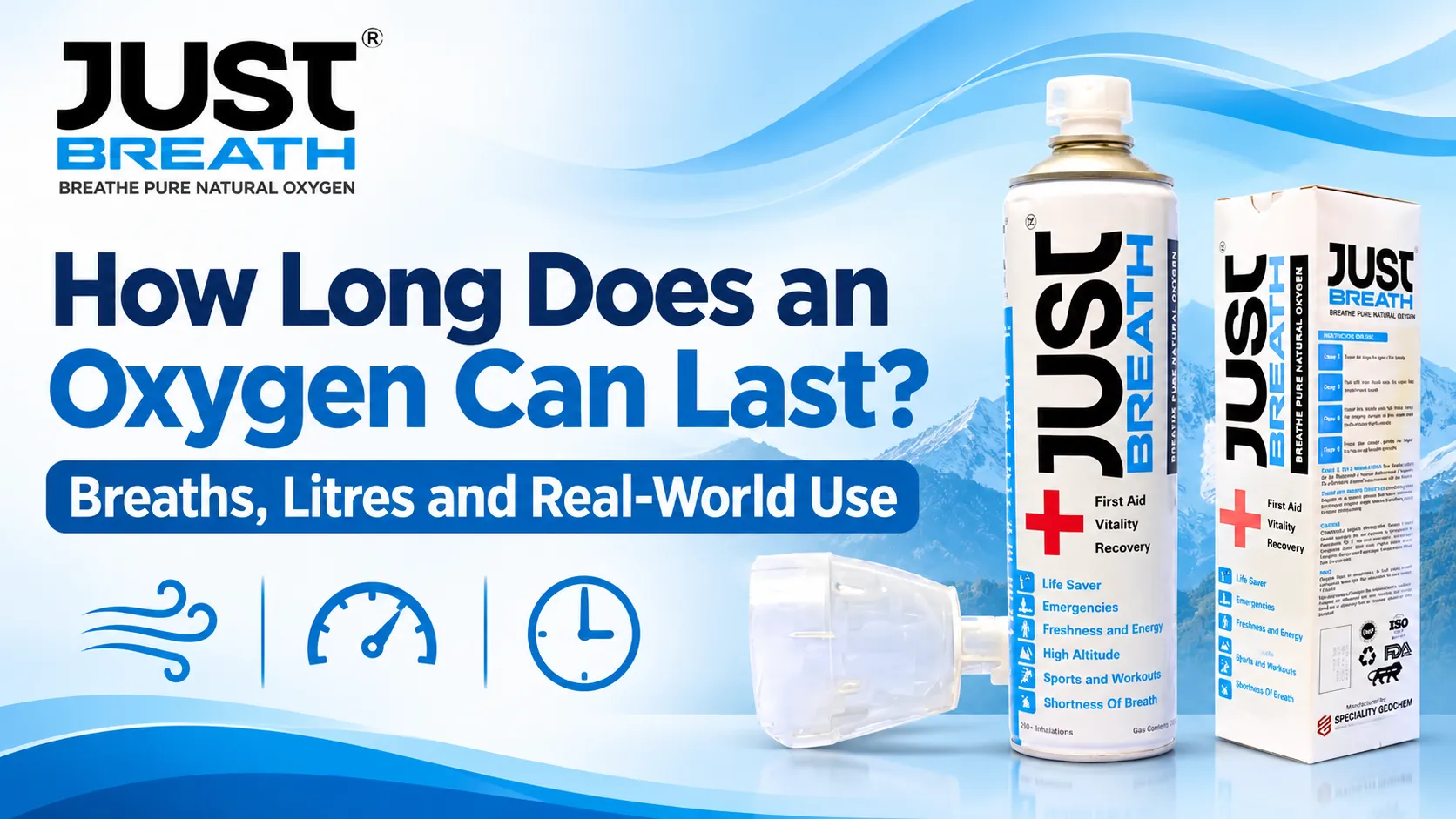
Just Breath portable oxygen can and product box featuring an oxygen can usage guide against a mountain trekking background.
How Long Does a Just Breath Portable Oxygen Can Last? Understand its breaths, litres, and real-world usage.
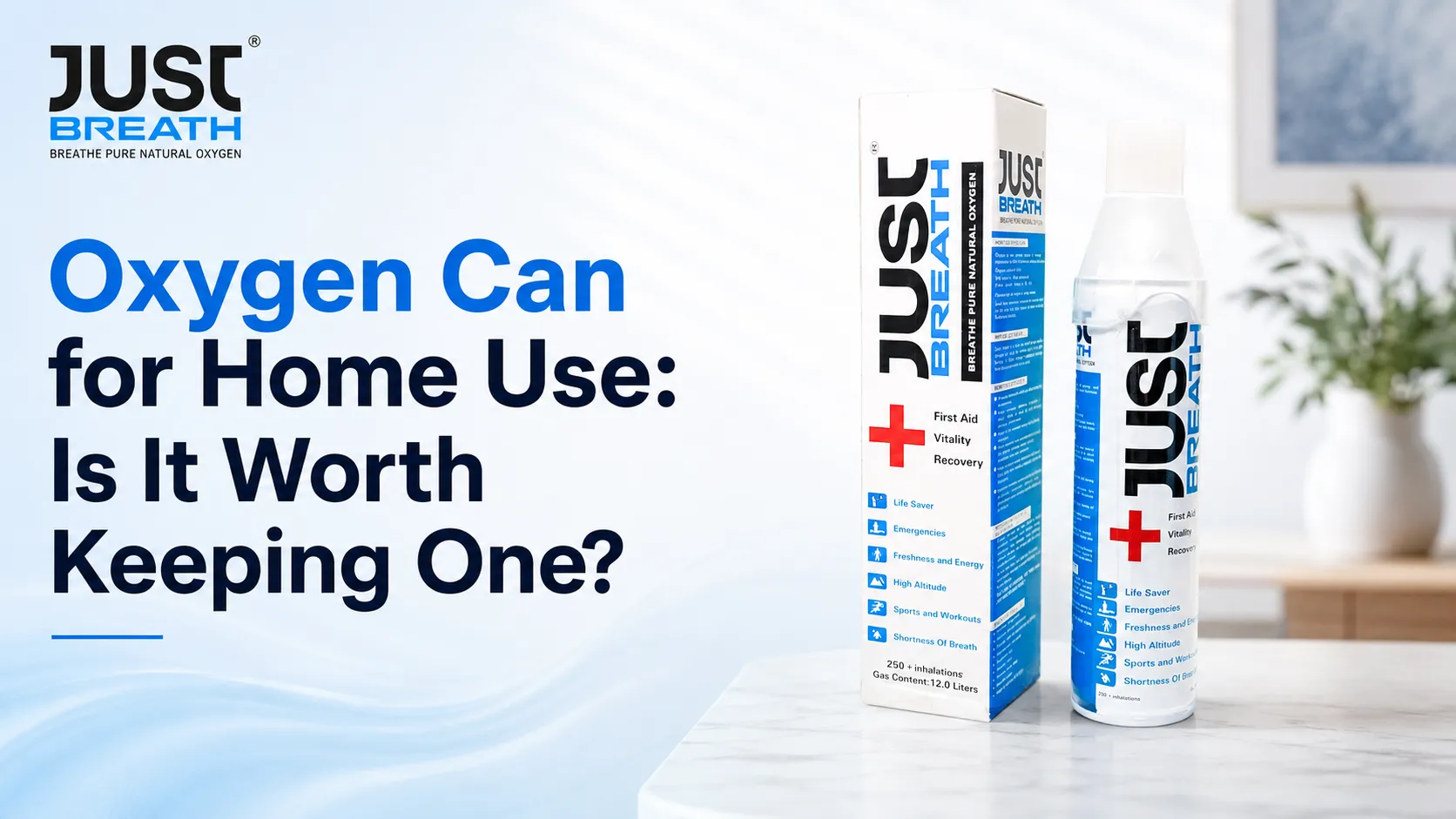
A 12-litre Just Breath oxygen can gives you roughly 360 one-second puffs. Sealed, it’s good until the expiry date printed on it, because oxygen itself doesn’t go stale. How many days will it last? That’s really up to you. Ten puffs a day gets you about five weeks. Sixty a day on a trek, and it’s gone in under a week. This is the question we get asked most. On WhatsApp, on calls, from people packing for Leh the night before their flight. So here’s the full answer, with the actual numbers, and nothing extra.

1. How Many Breaths Are in One Oxygen Can?

Around 360, if you use it the way it’s meant to be used. That number comes from a simple habit: one short press per breath. Stretch the press and the count drops fast. So before we get into maths, it’s worth knowing what a “breath” actually means here.

What one breath actually looks like

Put the mask over your nose and mouth. Press for about a second. Breathe in slowly and deeply while you hear the hiss. Let go, and breathe out away from the mask. That’s one. Most people do three or four of these back to back, then put the can down for a while. We call that a session, and it’ll matter when we work out days later.

Why some people say their can “finished too fast”

Here’s something most people don’t realise. It’s the press that uses up oxygen, not the breath. Hold the trigger for four seconds and you’ve spent four puffs’ worth on a single lungful. Your lungs can’t take in all that extra, so a good part of it just drifts off into the air around your face. So if a can seems to run out in two days, look at the press first. It’s almost always the culprit.

Comparing brands? Look at litres, not breath counts

Every brand counts breaths its own way. Some count a two-second burst as one, some count one second, some don’t say at all. The litre number is the only fair comparison. More litres, more oxygen. Simple.

2. Litres vs Inhalations: Simple Math (Table)

Quick division: 12 litres ÷ 360 puffs works out to about 33 ml of oxygen per one-second puff. Press twice as long and you get half as many puffs. That’s honestly the whole formula.

Inhalation table for a 12 L Just Breath oxygen can

Press time per breath Oxygen per breath (approx.) Breaths per can (approx.)
1 second (what we recommend) ~33 ml ~360
2 seconds ~66 ml ~180
3 seconds ~100 ml ~120
5 seconds ~165 ml ~72
These are rough figures at room temperature. A can that’s been sitting outside your tent all night in Spiti will flow a little weaker, so keep it inside your jacket or sleeping bag when it’s cold.

No, 12 litres doesn’t mean 12 minutes

A lot of people expect 12 minutes of nonstop oxygen. That’s not how it works, and it’s not what the can is for. Think of it as a quick top-up after a steep climb, a long drive or a stuffy room. It’s not a cylinder and it’s not a concentrator.

3. How Many Days Will One Can Last for Trekking, Travel or Home?

Or, as a lot of our callers put it: ek oxygen can kitne din chalta hai? The honest answer is that it depends on you. Someone who takes a few puffs after evening walks and someone doing the Hampta Pass are going to have very different numbers. So rather than guess, just work it out.

Usage calculator (takes ten seconds)

Days the can lasts = 360 ÷ (puffs per session × sessions per day) Say you take 4 puffs a session, 3 times a day. That’s 12 a day. 360 ÷ 12 = about 30 days. Done.

How it usually works out

How you use it Puffs per day One 12 L can lasts
Now and then at home 10 ~36 days
Office or commute pick-me-up 20 ~18 days
Long road trip or travel day 30 ~12 days
Trekking at altitude 40–60 ~6–9 days
One can shared by 3–4 trekkers 100+ ~3 days or less

On a trek

In places like Ladakh, Spiti, Kedarnath or Sikkim, the can comes out most on steep sections and in the evening when you’re wiped out. Five to eight puffs a session, a few times a day, is pretty normal. Plan for one can per person for every 5 to 7 days of proper trekking. And if your group is planning to “just share one”, don’t. Carry a spare.

Travel days

Long drives, overnight buses, that heavy feeling after landing in Leh. Most people only need a few puffs here and there. For a two-week holiday, one can is usually plenty.

At home or the office

This is the lightest use by far. A few puffs after a workout or during a late night at work, and one can easily lasts a month or more. If you’re in Delhi-NCR right now, you know what a bad AQI morning feels like, and a few puffs can feel refreshing. Just be clear on what it is: a top-up, not an air purifier. It won’t protect your lungs from pollution. Please read this: Canned oxygen is a comfort product. It doesn’t replace prescribed medical oxygen and it isn’t a treatment for altitude sickness. If you get a bad headache, breathlessness, vomiting or confusion up high, go lower right away and see a doctor.

4. Shelf Life of a Sealed vs Opened Can

Oxygen is a very stable gas. It doesn’t spoil or lose strength sitting on a shelf. So when we talk about oxygen can shelf life, we’re really talking about the can: the valve, the seal and the aluminium body.

A sealed can

Unopened, it’s good until the expiry date printed on it. Valves and seals do age over the years, and that’s what the date is protecting you from. Check it before a trip. If it’s close, get a fresh one.

Once you’ve opened it

There’s no countdown. The valve shuts itself after every press, so whatever is left stays inside. Use half of it in Manali this year and the rest on next year’s trip, no problem, as long as it’s still within the expiry date and you’ve stored it properly.

Where to keep it

Away from heat, mainly. Don’t leave it on a car dashboard in May, and keep it under 50°C. Keep it well away from stoves, matches and cigarettes too, because oxygen can makes any flame burn harder. Store it upright with the cap on, keep oily hands off the valve, and never puncture it or throw it in a fire, even when it’s empty.

5. How to Know When the Can Is Empty

There’s no gauge on these cans, but you’ll know.

Signs it’s running low

The first thing you’ll notice is the sound. A full can gives a strong, steady hiss. Near the end it turns thin and short. The can also feels lighter in your hand, and if you hold it next to a fresh one the difference is obvious. You’ll feel less flow against your face too. When pressing gives you nothing at all, that’s it.

The marker trick

On a trek, keep count. Take a marker and jot down the day’s puffs on the can itself. It sounds fussy, but it works. Once you’re past about 300, get the spare out of your bag.

Empty can? Don’t refill it

These cans are filled once, at the factory. Don’t try to get it refilled anywhere. Send the empty aluminium can for metal recycling instead.

Conclusion

So, how long does an oxygen can last? A 12-litre Just Breath can holds about 360 one-second puffs, and whether that’s five days or five weeks depends entirely on how you use it. Keep your presses short, count on treks, keep the can away from heat, and check the date before you pack. If you remember just one thing, make it this: 360 ÷ your puffs per day. Planning a trip, or just want one at home? Get the Just Breath 12L portable oxygen can. Every can comes with a mask and is filled by us in Udaipur, Rajasthan.

Frequently Asked Questions

Related Blog