1. What Goes Into an Emergency Oxygen Kit (Checklist)
You don’t need a hospital trolley. A good emergency oxygen kit fits in a small pouch or shoebox, and every item in it should earn its place.The Four Essentials
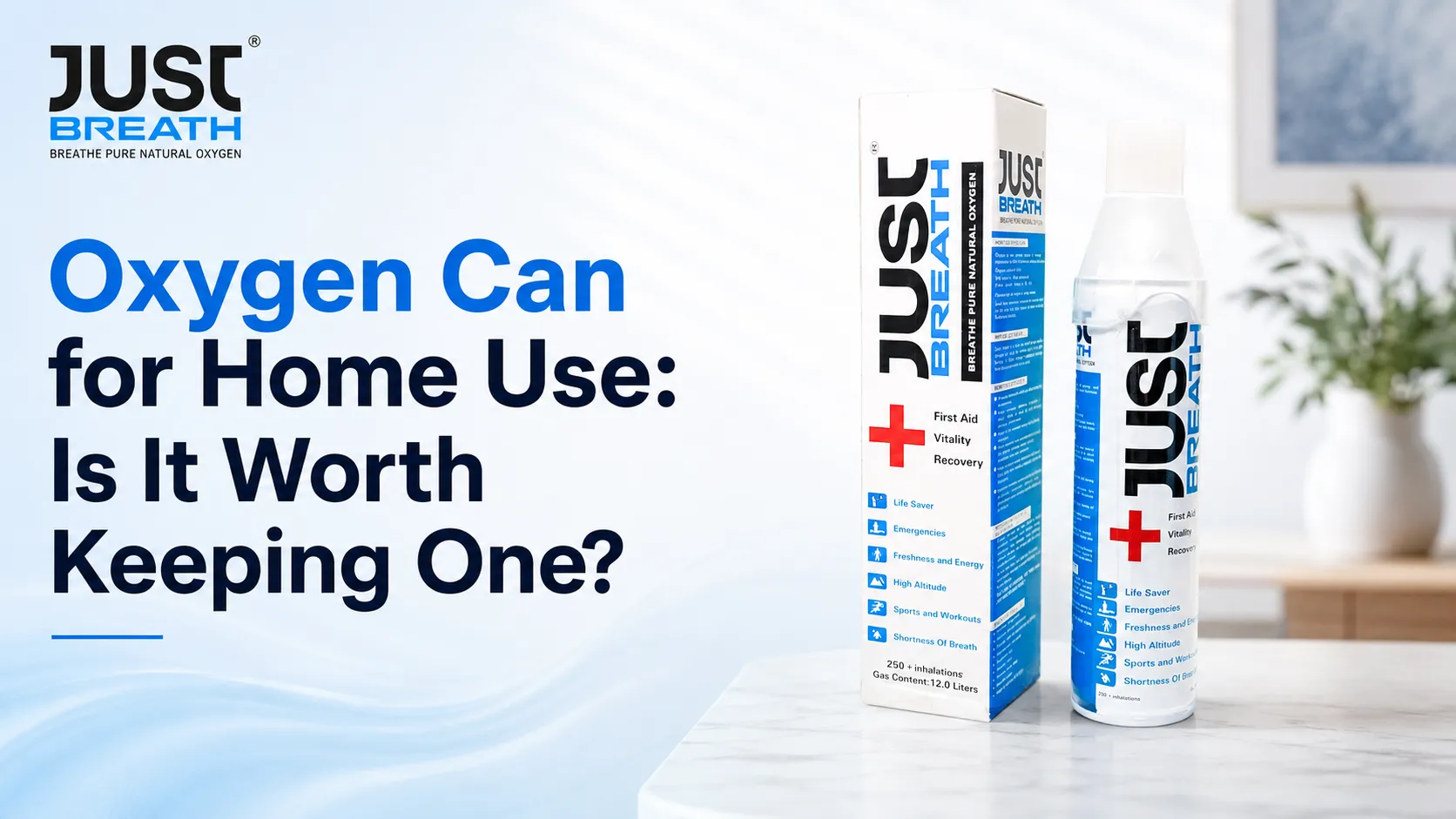
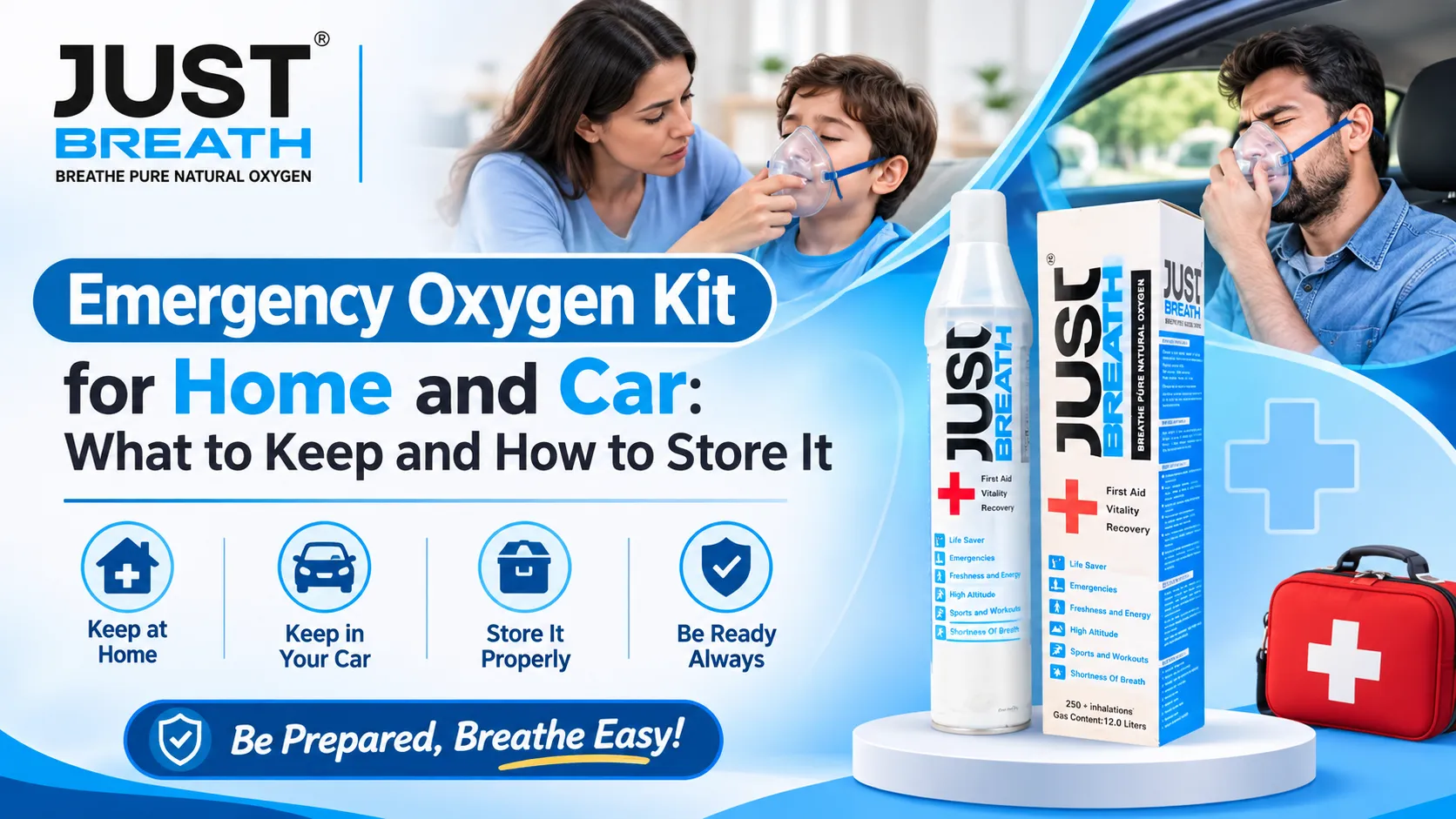
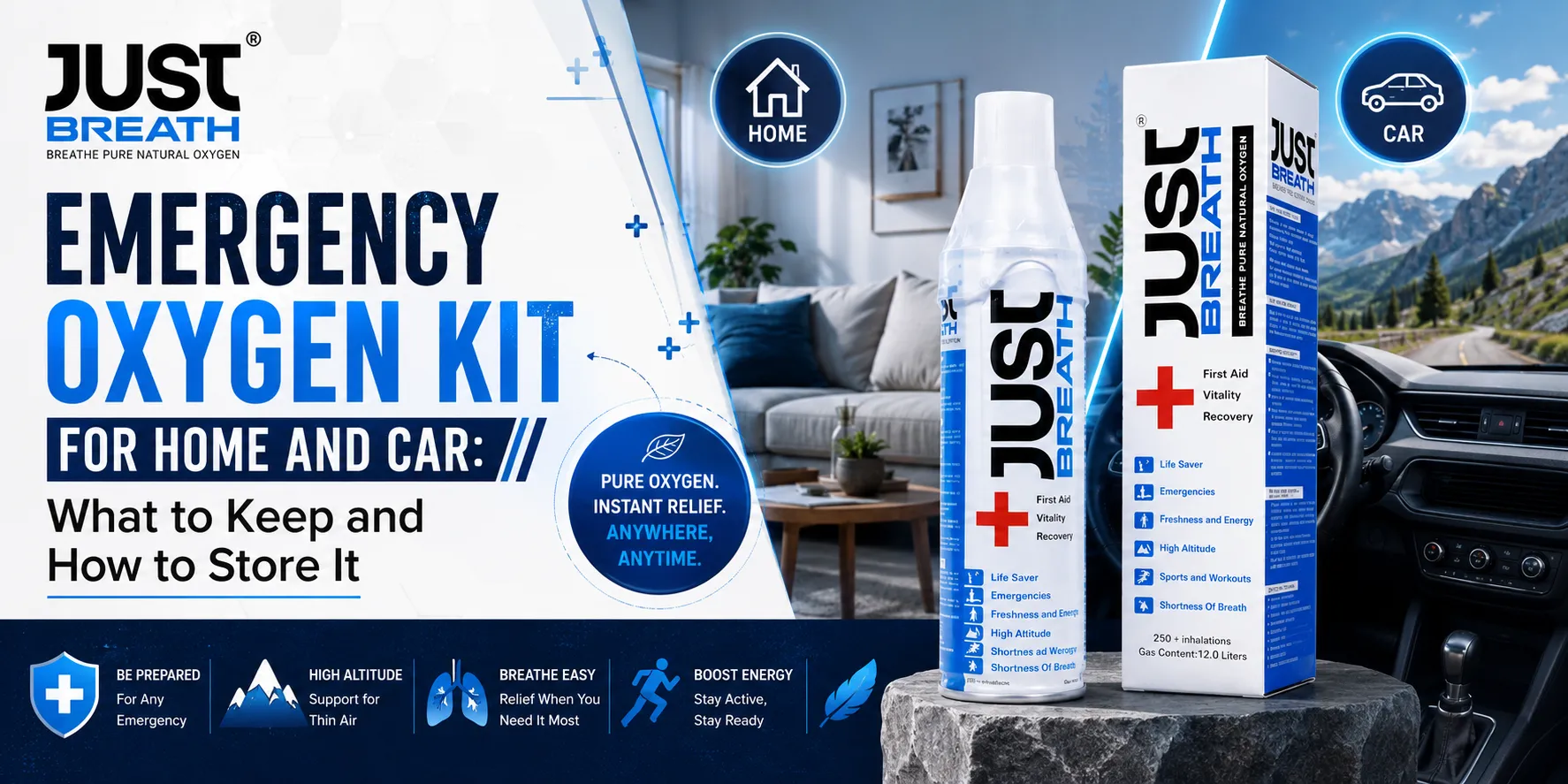
- Emergency oxygen can with mask. A 12 L Just Breathe can weighs about 400 g and has a built-in mask, so nobody has to fumble with fittings when they’re panicking. Keep one or two cans per kit.
- Pulse oximeter. It clips on a fingertip and shows oxygen saturation and pulse. It turns “she looks unwell” into a number you can give the doctor.
- Emergency numbers card. Write down 108, 112, your family doctor, the nearest hospital and two relatives. Phones die, and people forget numbers under stress.
- Basic first-aid items. Gauze, tape, disposable gloves, an ORS sachet and any prescribed medicines the family uses.
Helpful Extras
A small torch, a bottle of water, a list of each family member’s medical conditions and allergies, and a pen. For the car, add a phone charging cable.Printable Checklist
Print this and tape it inside the lid of your kit:- Oxygen can with mask (check expiry date)
- Spare oxygen can
- Pulse oximeter (with working batteries)
- Emergency numbers card: 108 / 112 / doctor / hospital / family
- Gauze, tape, gloves
- ORS sachets
- Family medicines + medical info sheet
- Torch
- Water bottle
- Date of last check: ________
2. Home Kit vs Car Kit vs Office Kit
The basics stay the same everywhere. What changes is where the kit lives, who uses it and how much stress it takes.| Item / Factor | Home Kit | Car Kit | Office Kit |
| Oxygen cans | 1–2 | 1 | 2+ per floor |
| Pulse oximeter | Yes | Yes | Yes |
| Emergency numbers card | Family + doctor | Family + highway helpline | HR + nearest hospital |
| Extras | Medicines, info sheet | Water, torch, charger | Gloves, register for use |
| Where to keep it | Cool cupboard, easy reach | Under a seat, shaded | Next to the first aid box |
| Who is responsible | One family member | The driver | A named first-aid person |
| How often to check | Monthly | Monthly + before trips | Monthly |
Home Kit
An oxygen kit for home works best where everyone can find it quickly, such as a hallway cupboard rather than the back of a wardrobe. Show elderly parents and teenagers where it is. If you live in a pollution-heavy city, this is the kit you will think about most from November to February.Car Kit
An oxygen kit for a car has the hardest job because of heat. Keep it compact and check it before every long trip, especially to hill stations, where some people feel short of breath at height.Office Kit
In offices, schools and hotels, the main risk is that everyone assumes someone else knows where the kit is. Name a person, add the kit to your fire-safety drill and keep a simple usage register.3. Where to Store It (Heat and Sunlight)
This is the part most people get wrong. An emergency oxygen can holds compressed gas, and it should be stored below 50°C, out of direct sunlight, with the cap on.At Home
Pick a cool, dry spot away from the kitchen stove and windows that get afternoon sun. Above the fridge is a bad spot, because it gets warm there. A shelf in a bedroom cupboard is fine.In the Car
Never leave the can on the dashboard or the rear parcel shelf. In an Indian May or June, a parked car can get much hotter inside than the air outside. Keep the kit in a closed pouch under a seat. If you’re parking in the open sun for hours, take the can indoors with you.Keep It Away From Flames
Oxygen itself doesn’t burn, but it makes nearby things burn much faster. Keep the kit away from agarbattis, diyas, cigarettes and gas stoves. Never use the can near a flame.4. How to Use It in the First Minutes
The aim in the first minutes is to keep the person calm, upright and watched closely while help is on the way.Step by Step
- Call first if anything looks serious. Check the warning signs in the next section.
- Sit the person upright and loosen tight clothing around the neck and chest.
- Fit the mask if it isn’t already in place, and ask them to breathe out fully.
- Hold the mask over the nose and mouth and press for 1–2 seconds while they breathe in slowly.
- Give 2–3 breaths, then pause for about a minute of normal air. Repeat only if it seems to help.
- Check the pulse oximeter. A healthy adult usually reads 95% or above. A low reading, or one that keeps dropping, is a reason to call for help, not to keep giving puffs.
- Tell the doctor what you gave and when.
What Not to Do
- Don’t put the mask on someone who is unconscious. If someone faints, lay them flat, raise their legs and call 108.
- Don’t let children use it unsupervised.
- Don’t treat the can as a substitute for a prescribed inhaler, oxygen cylinder or concentrator.
5. When to Call 108/112
A first aid oxygen kit helps for a few minutes. It doesn’t diagnose anything and it doesn’t fix anything. Some signs mean you should call straight away.Warning Signs: Call Now
- Breathlessness while resting, not just after climbing stairs
- Chest pain or tightness
- Blue or grey lips or fingertips
- Confusion, slurred speech or unusual drowsiness
- Fainting or collapse
- Breathlessness that isn’t easing after a few minutes