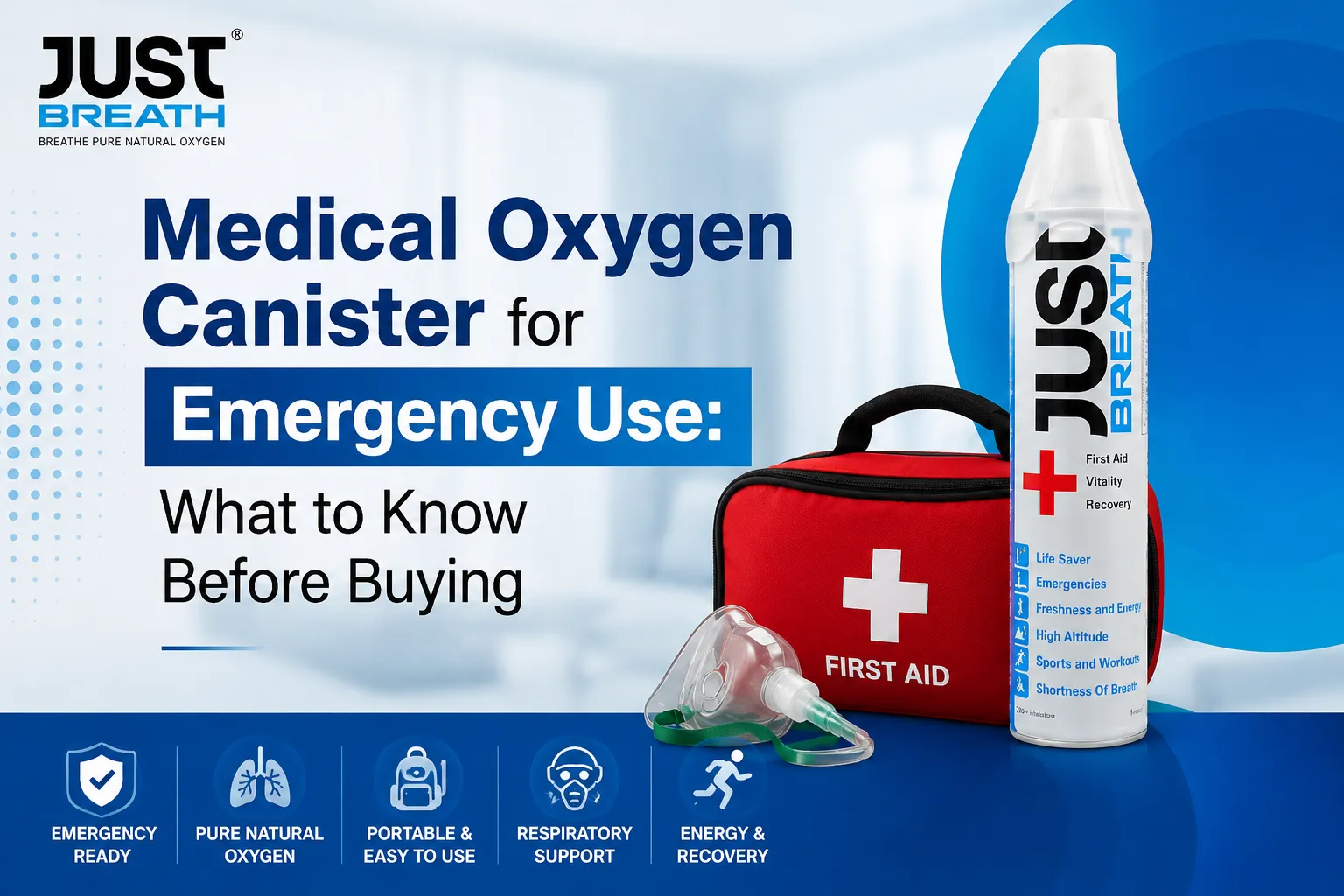
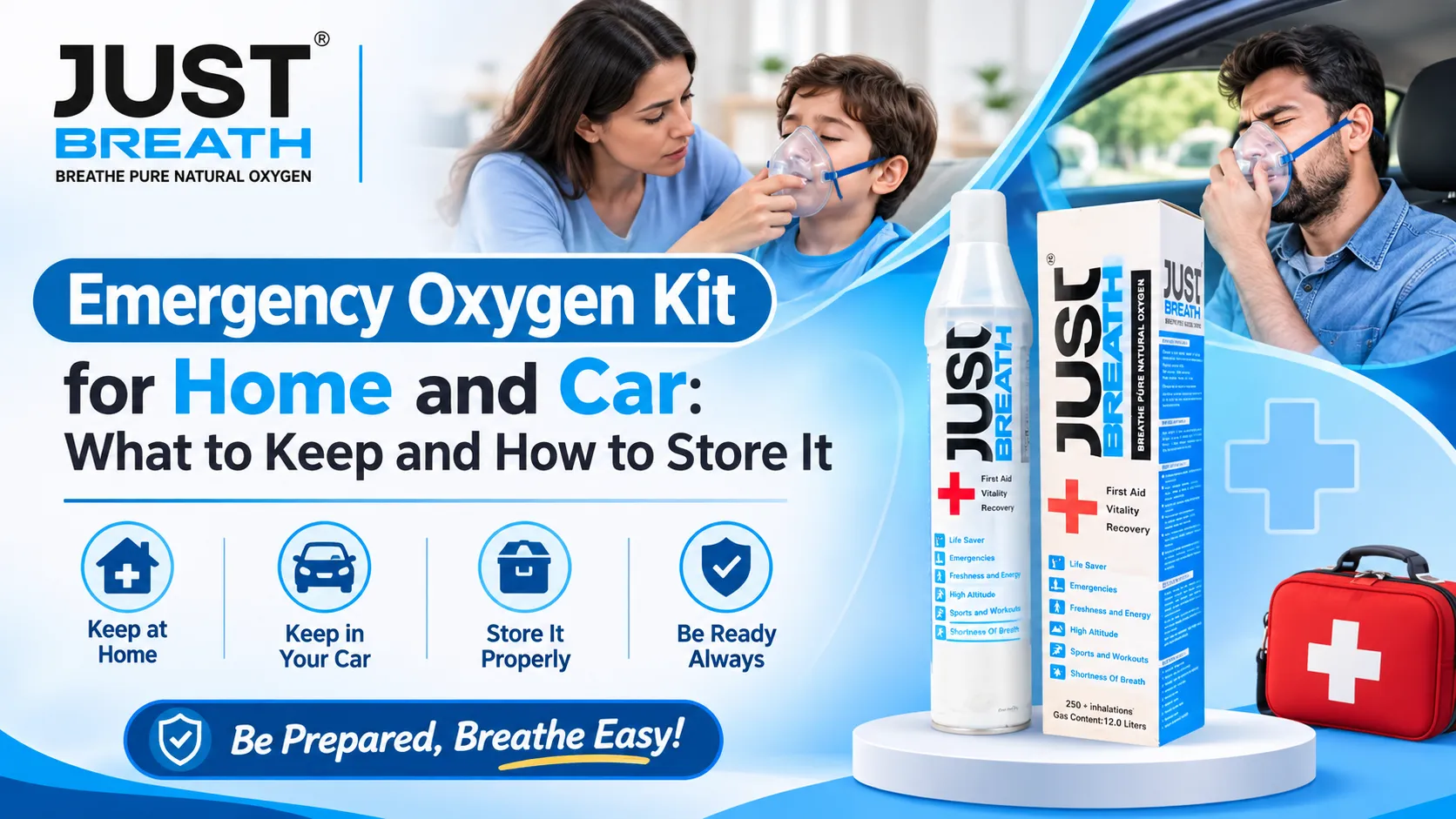
What Is an Emergency Oxygen Kit?
It’s a small, grab-and-go set that keeps an oxygen can, a mask, a way to check oxygen levels and clear instructions together in one place. The whole point is that nobody has to dig through cupboards in a panic.How it’s different from a medical oxygen cylinder
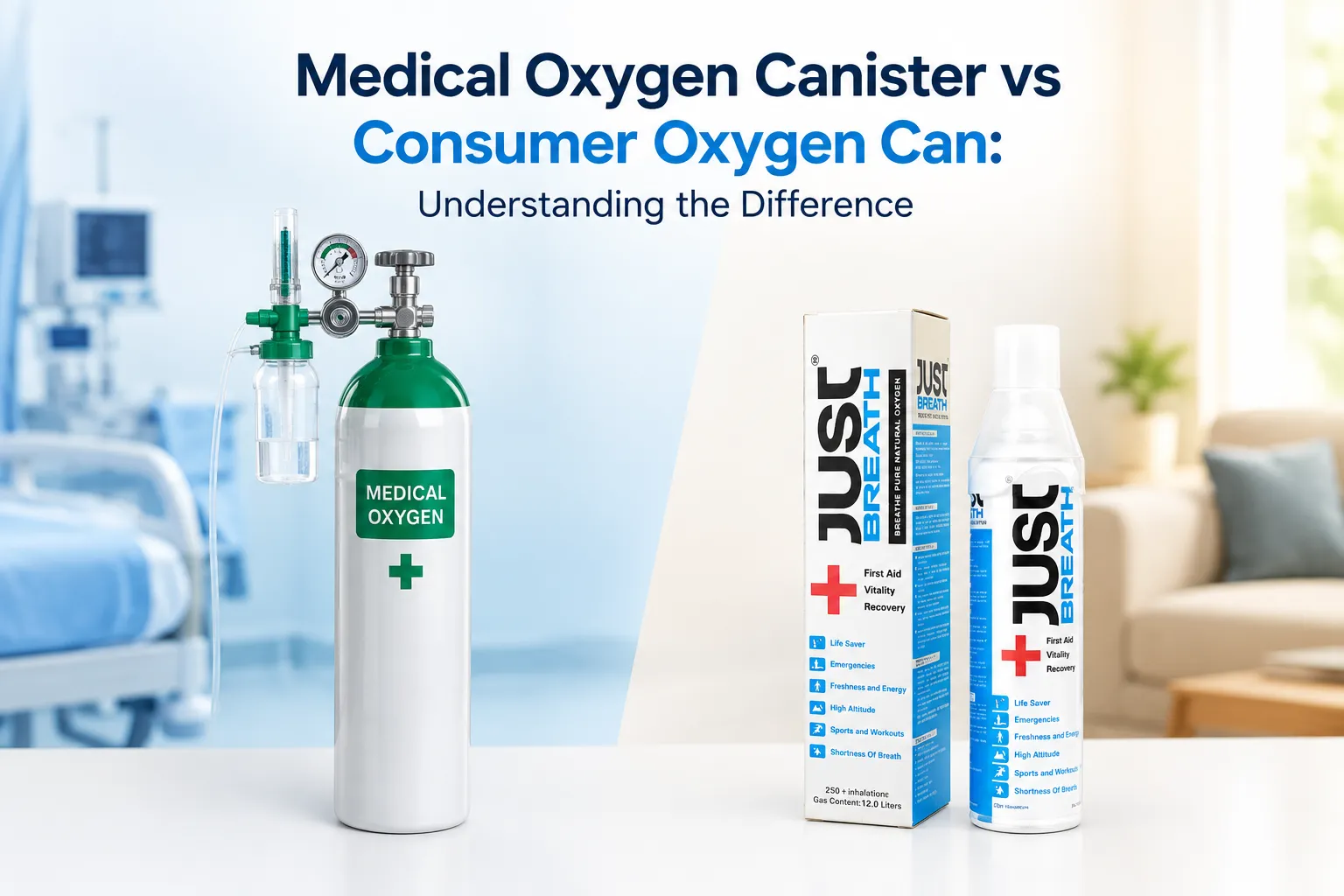
A hospital cylinder or an oxygen concentrator gives a steady flow of oxygen at a rate a doctor sets. An emergency oxygen can gives short puffs from a limited supply. Our 12 litre can gives about 360 breaths. That’s good for temporary comfort, but it isn’t treatment.Who it’s for
Homes with elderly parents. Families who drive long highway stretches or head up to the hills. Offices, schools and small shops that want their first aid box to be a bit more complete. And anyone living in a city where the winter AQI regularly crosses 300.What Should Be Inside (Can, Mask, Oximeter, Instructions)
Keep it simple. Four things matter, and everything else is a bonus.The oxygen can
One or two cans per kit. For a car, one is usually enough. For a home with senior citizens, keep two, so you’re never stuck with an empty one at the wrong moment. Before buying, check the label for stated purity, capacity and expiry date.The mask
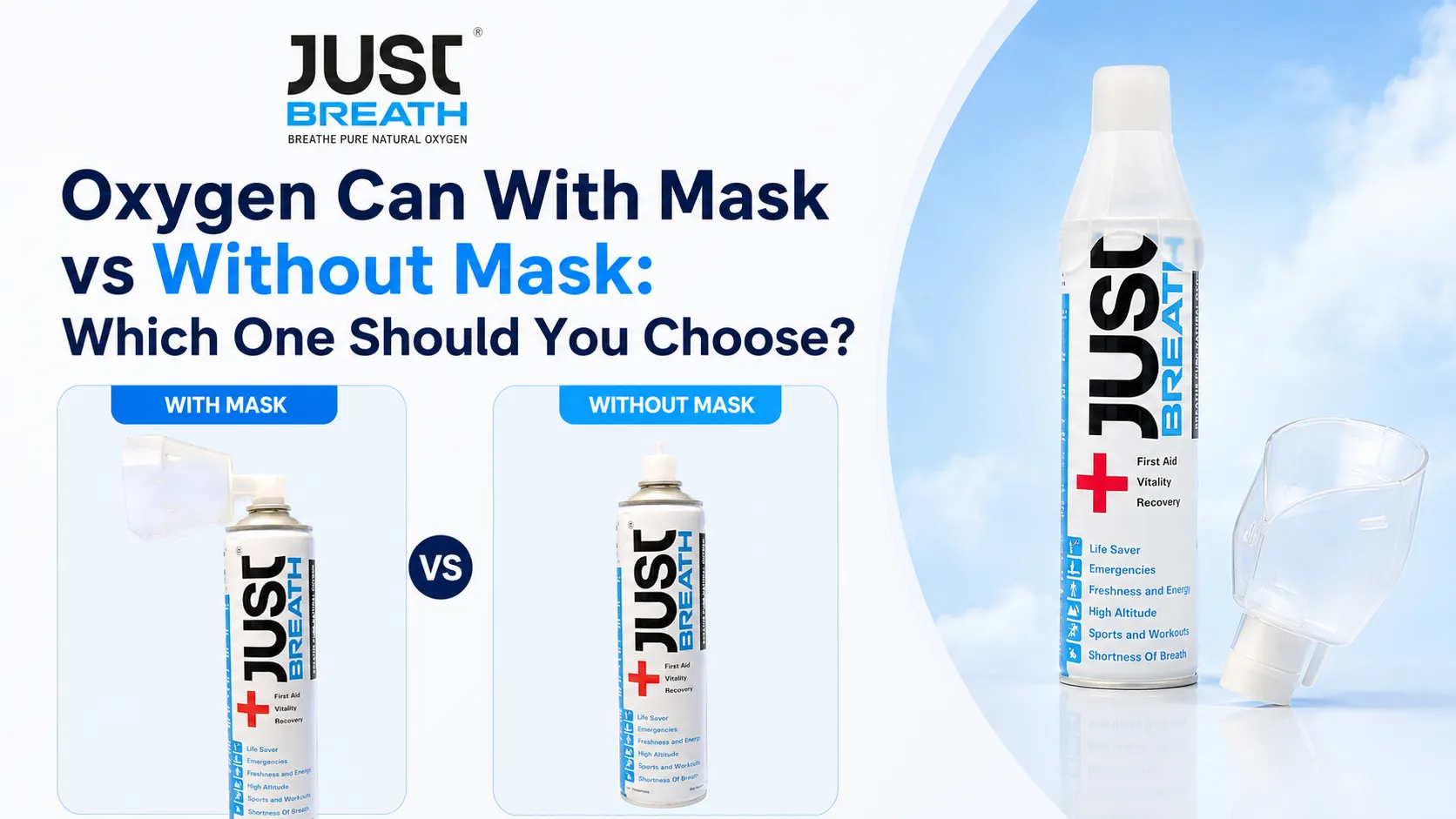
An oxygen can with mask already attached saves you precious seconds. Fiddling with a loose mask while someone is gasping is the last thing you want. Every Just Breath can comes with its mask fitted. If you keep a spare, store it in a clean zip pouch.A pulse oximeter
This little clip goes on a fingertip and shows oxygen saturation (SpO2) and pulse. Most of us bought one during COVID, and it’s probably lying in a drawer somewhere. Put it in the kit. In healthy adults, a reading of 95% or above is normal. If it stays below 94%, or the person looks unwell whatever the number says, call for help right away. Keep spare AAA batteries with it.Written instructions and phone numbers
Write it all on one card. How to use the can, your family doctor’s number, the nearest hospital, and 108 and 112 in big, bold letters. In a crisis, people forget things they know perfectly well. Add any allergies and regular medicines of elderly family members too.Nice to have
- A small torch, because power cuts never pick a good time
- A bottle of water
- A photocopy of health insurance or ABHA health ID cards
- A basic first aid box (more on that below)
Where to Keep It at Home and in the Car
A kit only helps if you can reach it in under a minute. Placement matters more than people think.At home
Pick a spot everyone knows, at waist or chest height, away from the kitchen stove and direct sunlight. A shelf near the main door or in your parents’ bedroom works well. Not locked in a steel almirah. Not behind the pressure cooker boxes. Show your house help and older children where it is.In the car
The glovebox or a seat-back pocket is better than the boot, where things roll around and heat up. Indian summers are the real problem. A car parked in Jaipur or Nagpur in May turns into an oven, and pressurised cans shouldn’t sit in that kind of heat. If you’re parking in the sun for hours, take the kit inside with you. Follow the storage temperature printed on the label.Keep it well away from fire
Oxygen makes things burn faster and hotter. Don’t store the kit next to the gas cylinder, diyas, agarbattis or anyone’s cigarettes, and never let someone smoke near a person using the can. With Diwali just around the corner, this one is worth saying twice.What an Emergency Kit Cannot Replace: Call 108/112
This is the most important part of this guide, so we’ll be blunt. An oxygen can does not treat a heart attack, a stroke, an asthma attack, choking or severe altitude sickness. If someone has chest pain, one side of the face drooping, blue lips, confusion, or can’t finish a sentence without gasping, call 108 for an ambulance or 112 for the national emergency line first. Use the kit while you wait. Never the other way round.The first few minutes
- Call 108 or 112. Give your address and a nearby landmark clearly.
- Help the person sit upright and loosen anything tight around the neck or chest.
- Check SpO2 and pulse on the oximeter, and note the numbers for the paramedics.
- If they’re conscious and breathing, a few slow puffs from the can may make them more comfortable.
- Stay with them and keep checking until help arrives.
People who should follow their doctor’s plan
Anyone with COPD, heart failure or a long-term lung condition, especially if they’re already on prescribed oxygen, should stick to what their doctor has advised. For some COPD patients, extra oxygen can actually cause problems. A portable can never replaces prescribed oxygen equipment.Checking Expiry and Condition Every 3 Months
A kit that’s been sitting untouched for two years isn’t really a kit. We suggest a quick check every three months. Tie it to something you already do, like paying a quarterly bill or the change of season, and it takes five minutes.Your 3-month checklist
- Expiry date on the can is still well in the future
- No dents, rust or bulging on the can
- Mask is clean, not cracked, and properly attached
- Oximeter switches on and batteries are fresh
- Phone numbers on the card are still correct
- Kit is still exactly where everyone thinks it is
When to replace the can
Replace it if it’s past expiry, damaged, or has been mostly used up. Don’t try to refill, puncture or burn an old can. Dispose of it the way the label tells you to.Building a Complete First-Aid + Oxygen Kit on a Budget
A home emergency kit India families can actually afford doesn’t need to cost a fortune. You also don’t need a pre-packed bundle with six cans you’ll never get through before they expire. Build it around what your home or car really needs. Here’s a rough idea of costs. Prices vary by city and brand, so treat them as approximate.| Item | Approx. cost (₹) |
| Just Breath 12 litre oxygen can with mask | 799 |
| Fingertip pulse oximeter | 800 – 1,500 |
| Basic first aid box (bandages, antiseptic, gauze, tape, scissors) | 300 – 600 |
| Spare batteries, torch and a zip pouch | 200 – 400 |
| Total | about 2,100 – 3,300 |
Saving money without cutting corners
- Use the oximeter you already have from 2021. Just make sure it still turns on and reads properly.
- If you’re setting up kits for both home and car, buy your cans together.
- Skip the fancy kit bags. A clear plastic box with a lid works fine, and you can see what’s inside at a glance.