Why Households Search for Home Oxygen
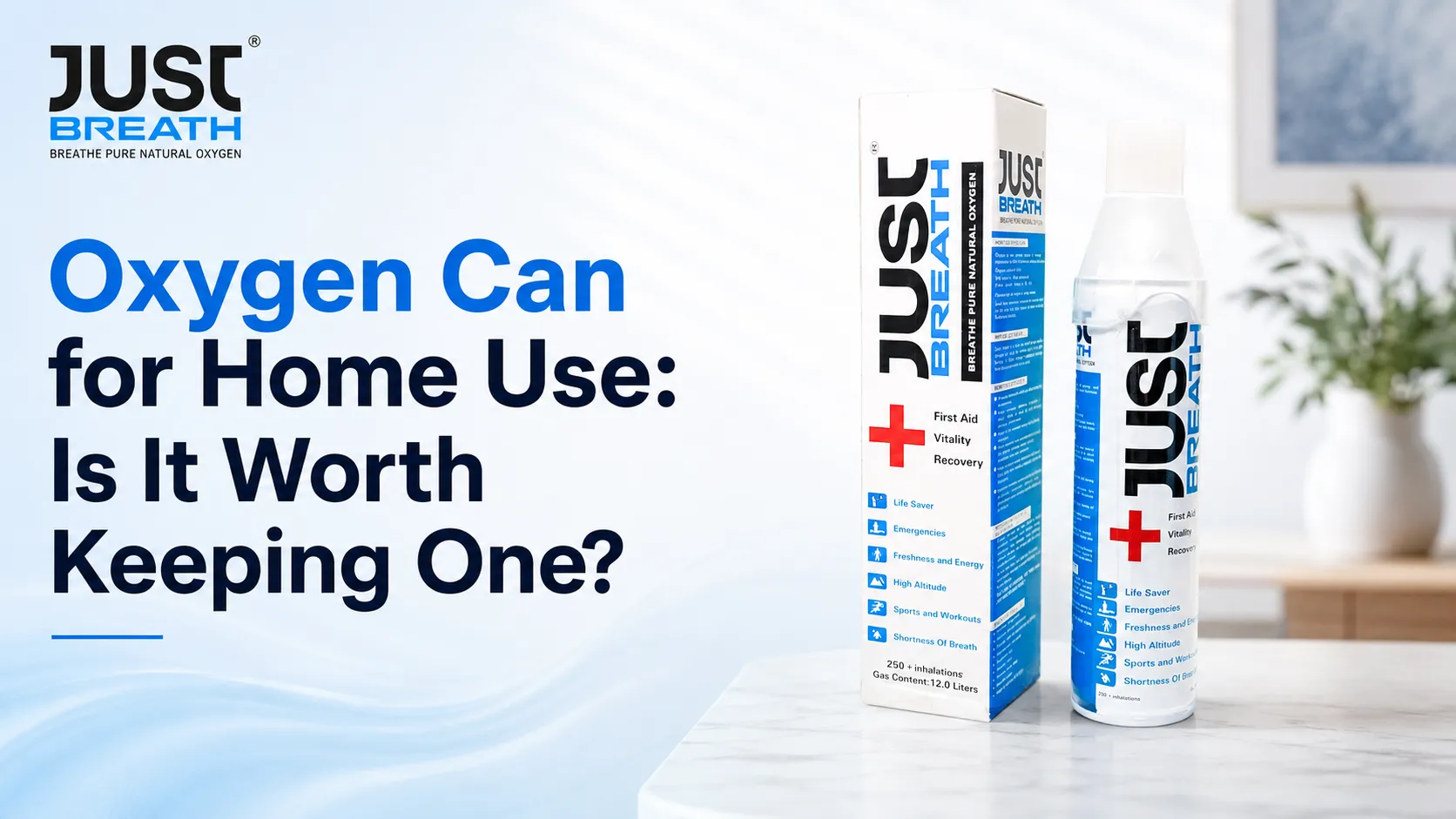
Searches for an oxygen tank for home use or an oxygen cylinder for home never really dropped after the pandemic. The reasons have changed, though. Today it is less about panic and more about being prepared for a home oxygen emergency.Benefits of Keeping an Oxygen Can for Home Use
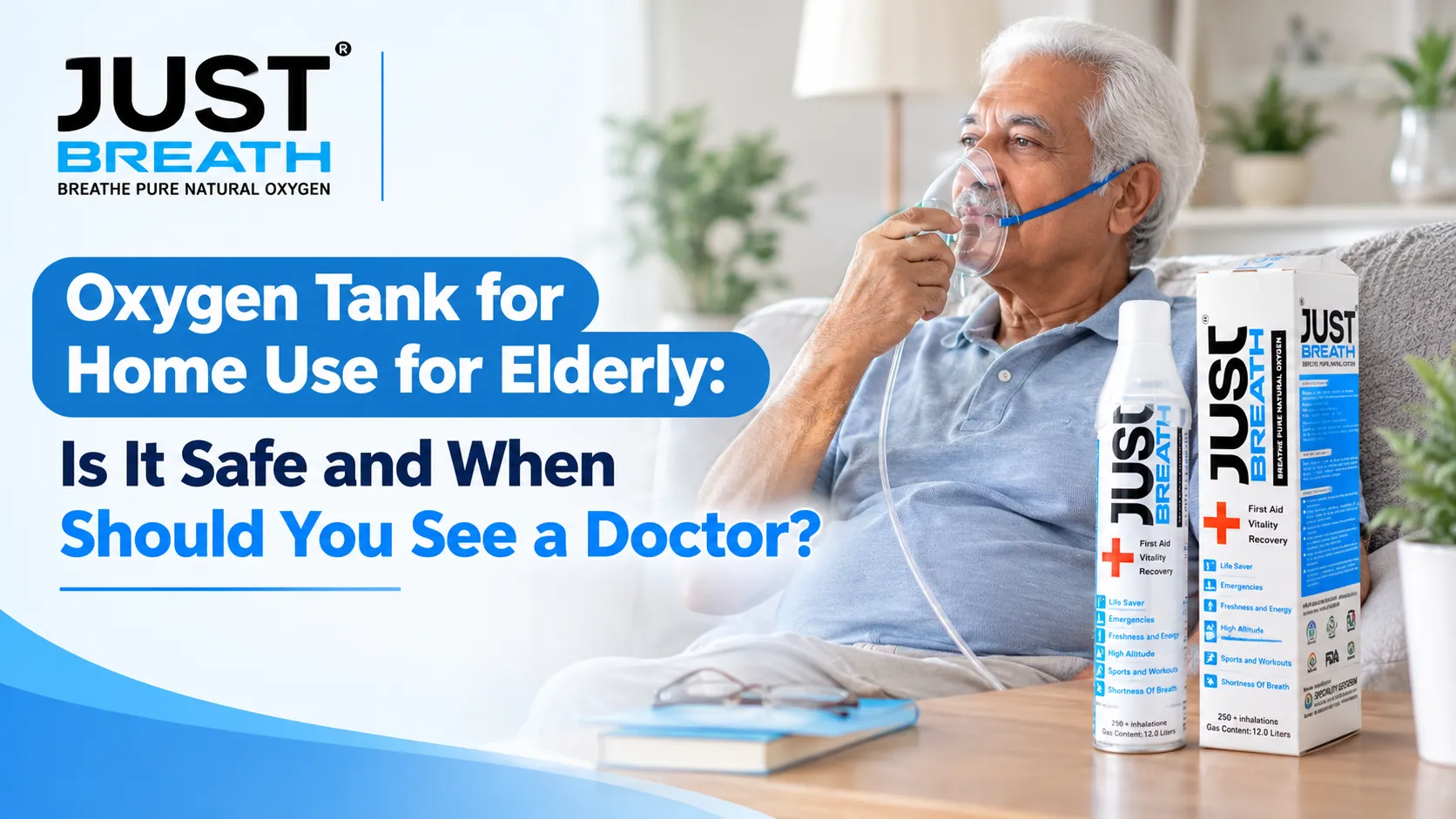
- Elderly parents living alone. A son in Bengaluru with parents in Lucknow wants something in the house for a bad night.
- Winter smog. In Delhi, Noida, Gurugram and much of north India, AQI crosses 400 for days. People feel heavy and short of breath even indoors.
- Slow ambulance access. In tier-2 and tier-3 towns, or in peak-hour traffic in Mumbai and Kolkata, help can take 30 minutes or more. Arranging an oxygen cylinder for home at midnight is rarely possible.
- Travel and altitude. Families who drive to Ladakh, Spiti or Sikkim like to carry an oxygen can for home and travel.
- Peace of mind. Many simply want to keep oxygen can at home next to the first aid box.
Oxygen Can vs Concentrator vs Cylinder: Home Scenarios
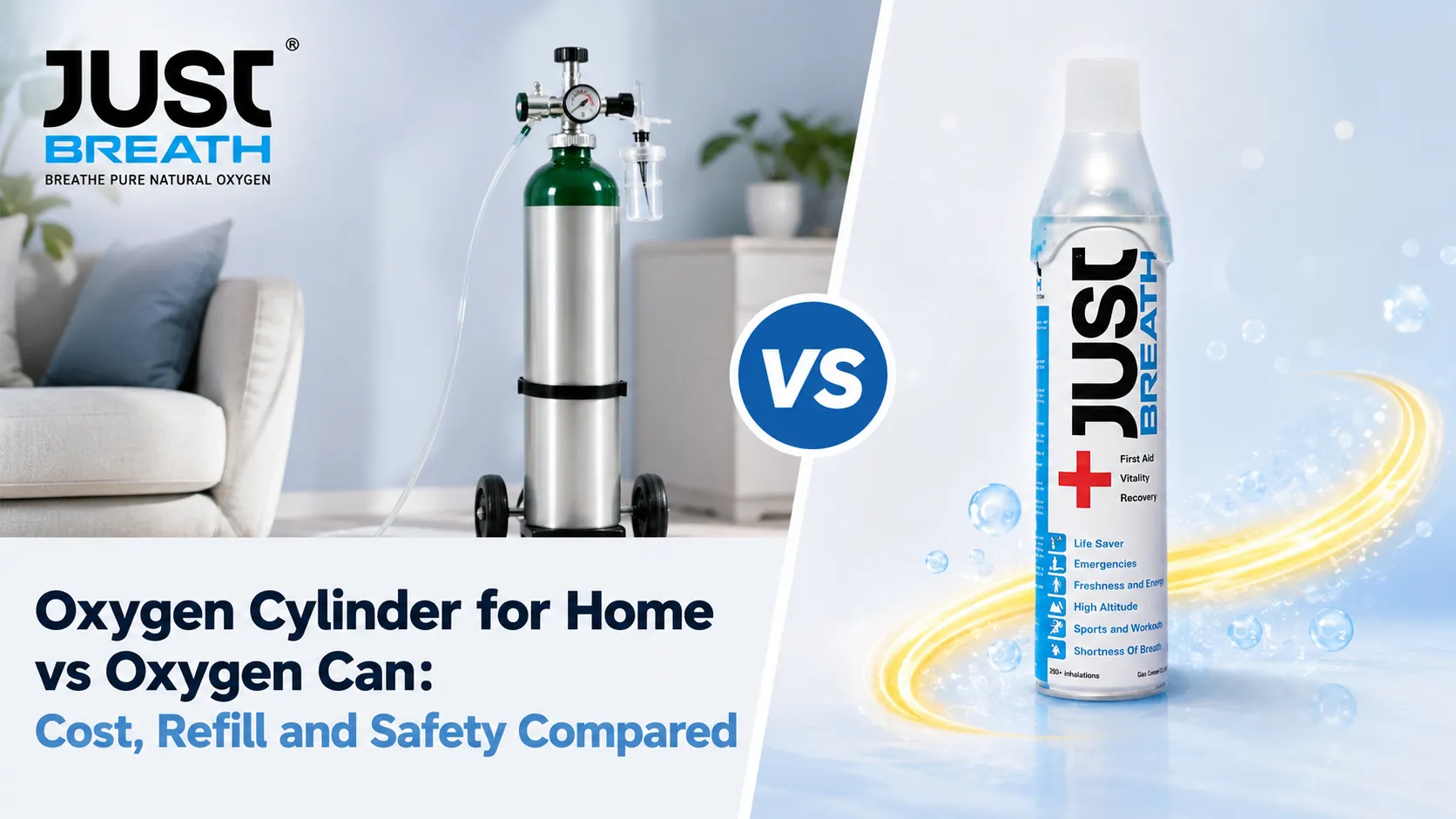
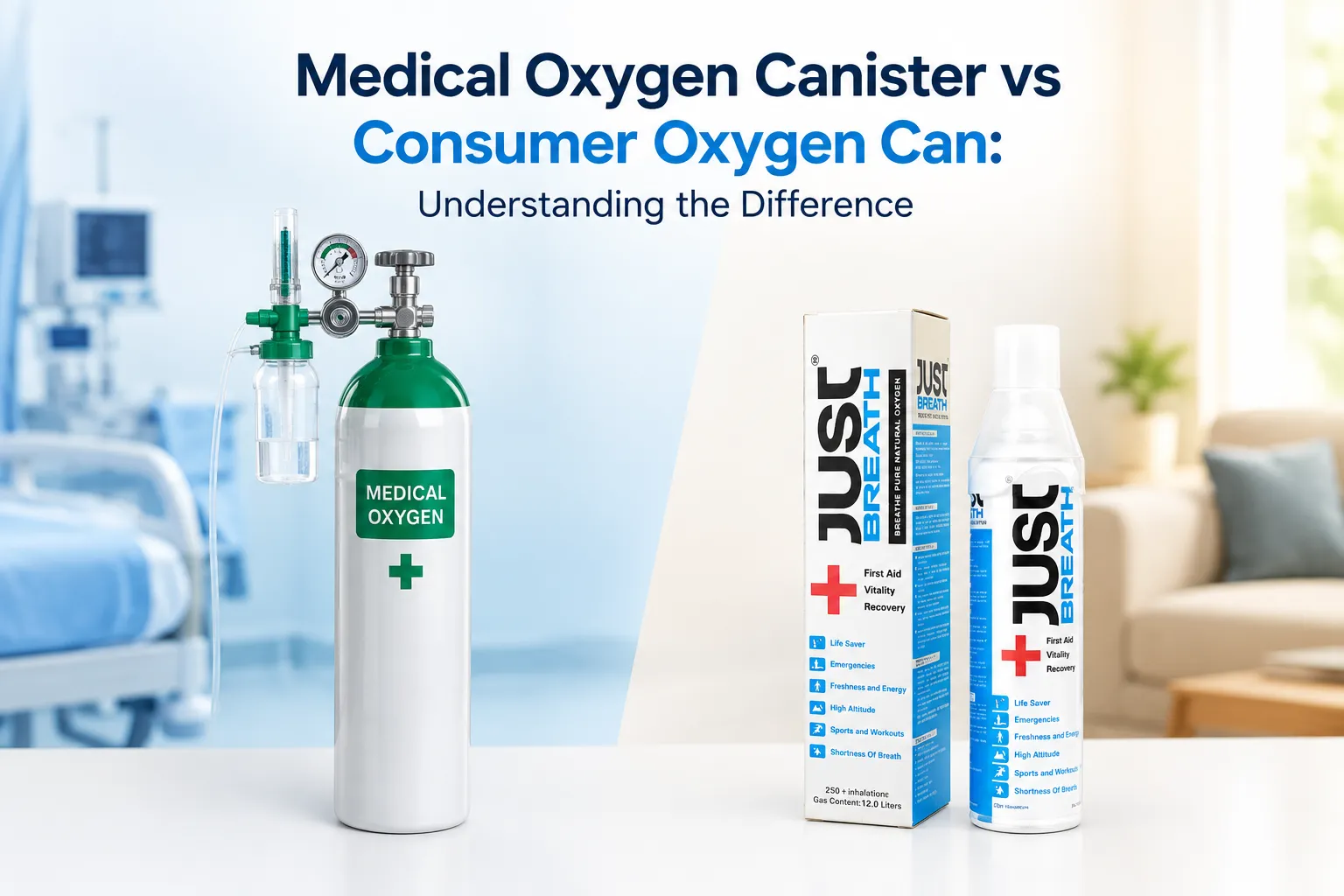
People often use “can”, “tank” and “cylinder” as if they mean the same thing. They do not. Someone searching for an oxygen tank for home use may actually need a concentrator, or just a can. Here is how they compare in real home situations.| Feature | Oxygen Can | Oxygen Concentrator | Oxygen Cylinder |
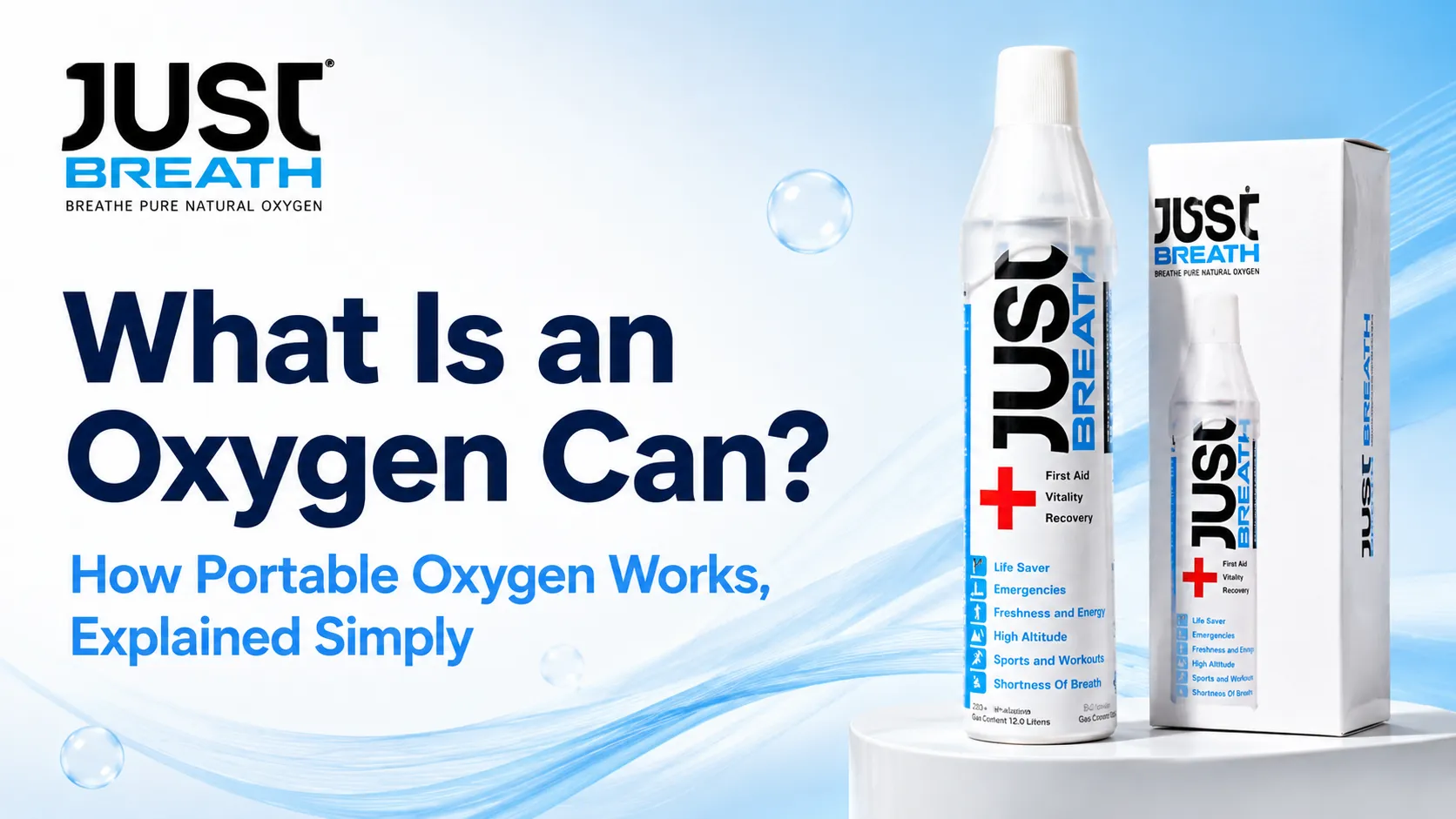
| What it is | Pressurised aluminium can with a mask | Machine that pulls oxygen from room air | Steel tank of compressed medical oxygen |
| Oxygen supply | About 12 litres, roughly 360 short breaths | Continuous, usually 5 to 10 litres per minute | Hundreds to thousands of litres, then refill |
| Needs electricity | No | Yes | No |
| Prescription needed | No | Usually advised | Yes, for medical oxygen |
| Best for | Short top-up breaths, first aid kit, travel | Long-term patients (COPD, post-COVID lungs) | Hospital-style backup, power cut areas |
| Typical cost | Low, per can | High upfront | Deposit plus refill charges |
A quick reality check
A concentrator set at 5 litres per minute would use up a 12-litre can in under three minutes. So an oxygen can for home is not a medical supply. It is short, on-the-spot support while you rest, recover or wait for help. If someone in the family has been prescribed oxygen by a doctor, an oxygen tank for home use or a concentrator is what they need. An oxygen can for home sits alongside that setup, not in place of it.Where a can makes sense
An oxygen can for home works best in moments like these:- Feeling breathless after climbing stairs on a smoggy day
- A tired, light-headed moment after a long drive
- Carrying something portable in the car or on a trek
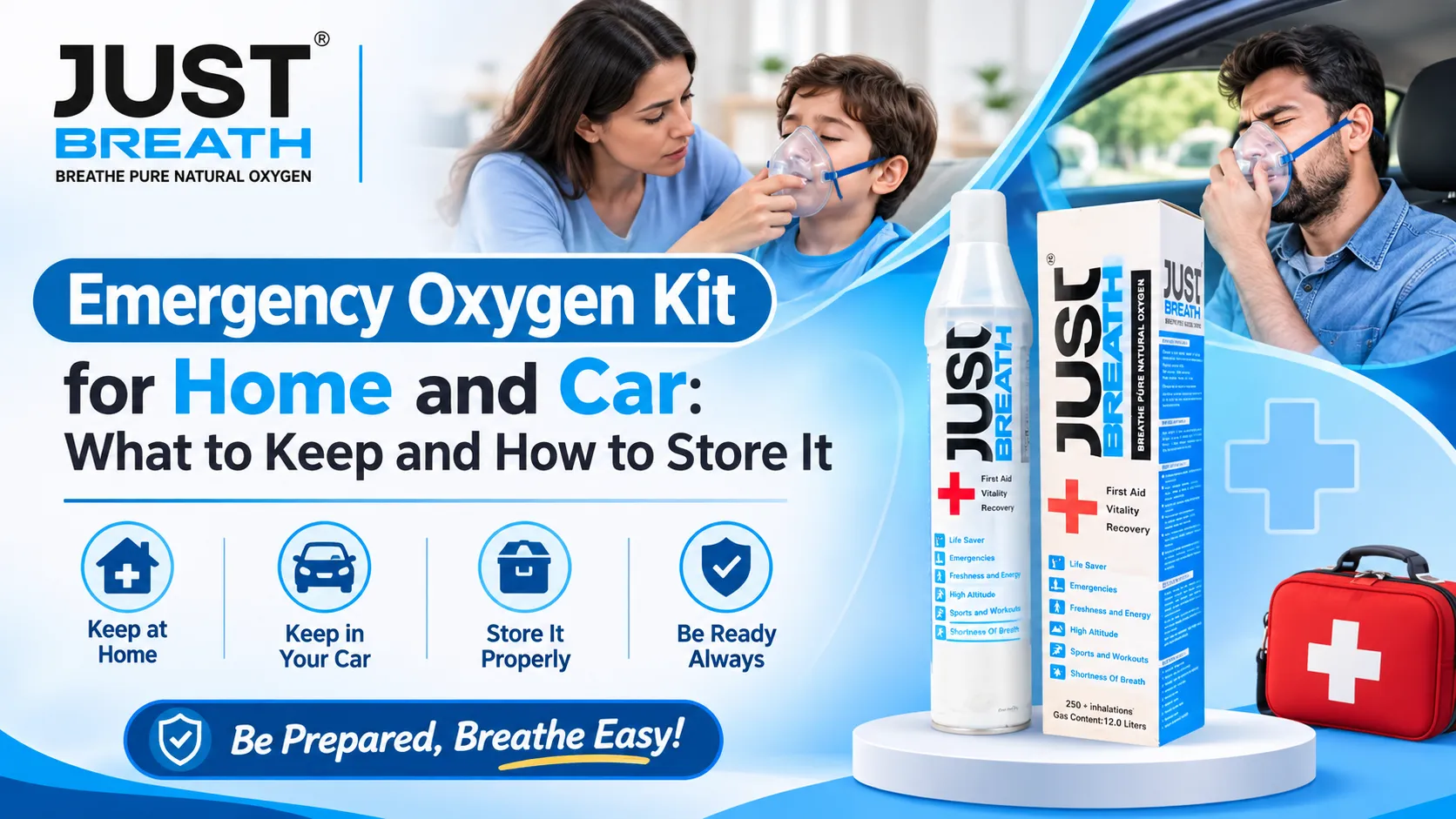
- Building a basic home oxygen emergency kit to use while waiting for an ambulance
Where a cylinder makes more sense
An oxygen cylinder for home is the better pick when someone needs steady oxygen for hours, and power cuts make a concentrator unreliable. Many people call this an oxygen tank for home use. Keep in mind that an oxygen cylinder for home needs a regulator, a trolley and a refill vendor nearby.Where and How to Store a Can Safely at Home
Oxygen itself does not burn, but it makes anything nearby burn much faster. So where you place your oxygen can for home matters as much as buying the right product.Simple storage rules
- Cool, dry place. A bedroom cupboard or the first aid shelf works well. Avoid spots that heat up above 50°C. Most people who keep oxygen can at home choose the bedroom.
- Away from flame. No gas stove, diya, agarbatti, heater or cigarette nearby.
- Out of direct sun. Do not leave it on a window sill or a car dashboard in May.
- Upright and away from children. Kids may treat it like a toy spray.
- Never puncture or burn the can, even when it is empty.
- Check the expiry date printed on the can every few months. An expired can is useless in a home oxygen emergency.
Who Should Not Rely on an Oxygen Can
This is the part most sellers skip. We would rather you hear it from us before you decide to keep oxygen can at home. An oxygen can for home has clear limits.Please do not depend on a can if
- A doctor has prescribed oxygen therapy at a fixed flow rate
- Someone has COPD, severe asthma, heart failure or a chronic lung condition
- Oxygen levels on the pulse oximeter stay low even at rest
- A person is unconscious, has chest pain or is struggling to speak
- The user is a young child (cans are designed for adults)
How Many Cans Does a Household Need?
There is no fixed rule for how many units of an oxygen can for home you need, but here is a practical way to think about it.A simple guide
- Single adult or young couple: 1 to 2 cans in the first aid kit
- Family with elderly parents: 2 to 3 cans, one kept in the parents’ room
- Homes in high-pollution cities: 2 to 4 cans across the winter months
- Frequent road trips or treks: 1 extra can that stays in the car bag
Emergency Plan: When to Call an Ambulance
An oxygen can for home is part of a plan. It is never the whole plan. Every household should know these steps before a home oxygen emergency happens.Call 108 or 112 immediately if
- Lips, face or fingertips look bluish or grey
- There is chest pain, confusion or fainting
- Breathing is very fast and the person cannot finish a sentence
- Pulse oximeter readings stay below 94% (or the level your doctor advised)
What to do while you wait
During a home oxygen emergency, stay calm and follow this order:- Sit the person upright and loosen tight clothing.
- Open windows if the air outside is clean.
- Give short breaths from the can if they are conscious and can hold the mask.
- Keep their medicine list and ID ready for the ambulance team.