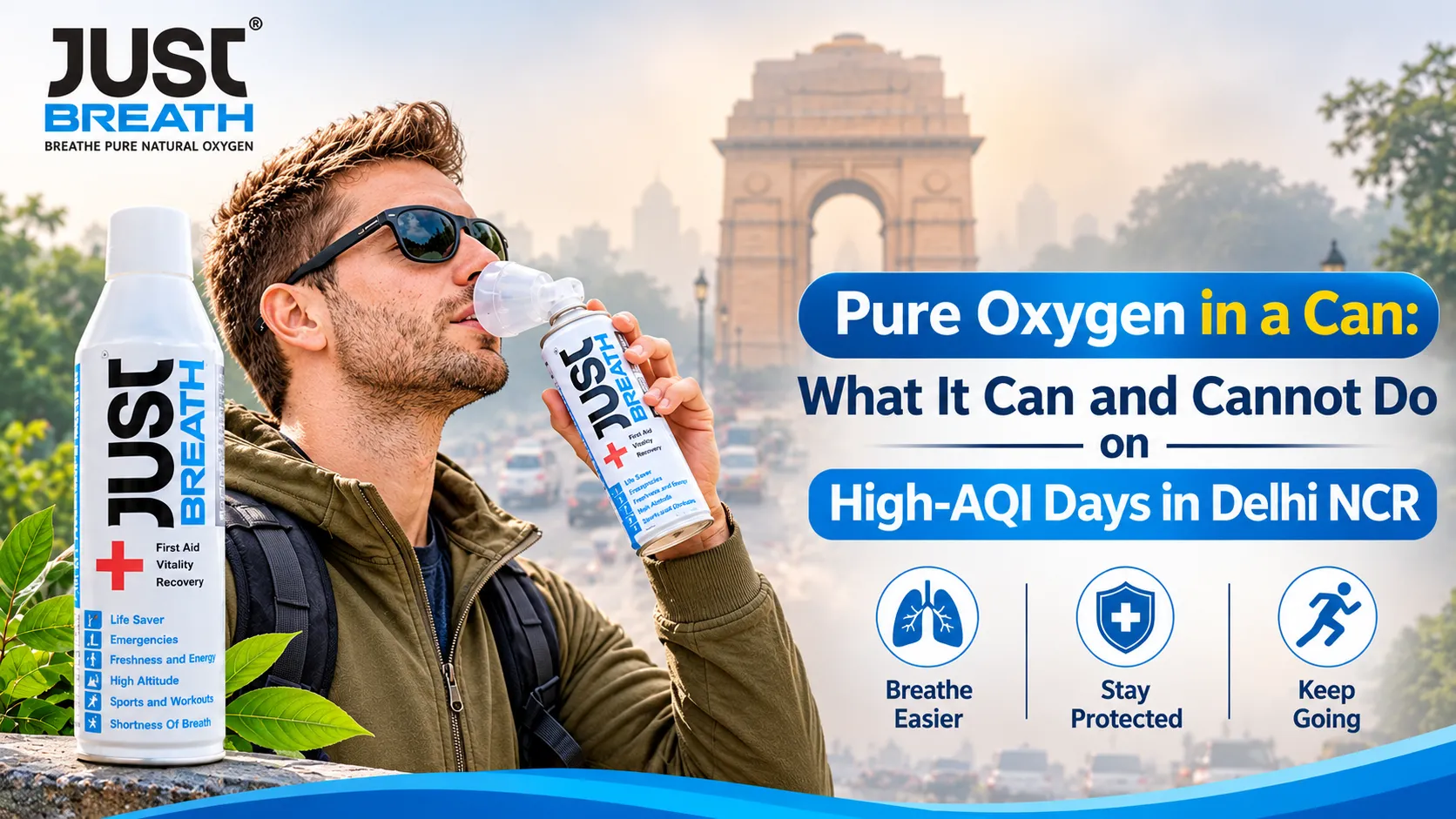
Pure oxygen in a can gives you a few short breaths of concentrated oxygen, and on a smoggy Delhi evening that can feel genuinely refreshing. But it does not filter polluted air or protect your lungs. An N95 mask, an air purifier and staying indoors matter far more. If you feel breathless, see a doctor.
You know the drill by now. Diwali passes, the stubble fires start up north, and one morning you open the curtains to a sky the colour of old chai. Your AQI app turns maroon. The family WhatsApp group fills up with forwards. And somebody asks, “Should we get an oxygen can for pollution?”
We get that question a lot. And since we actually sell pure oxygen in a can at Just Breath Oxygen, we think you deserve an honest answer, even if it’s not the one a salesperson would give you.
1. Can an Oxygen Can Protect You From Pollution?
No, it can’t.
What pure oxygen in a can actually contains
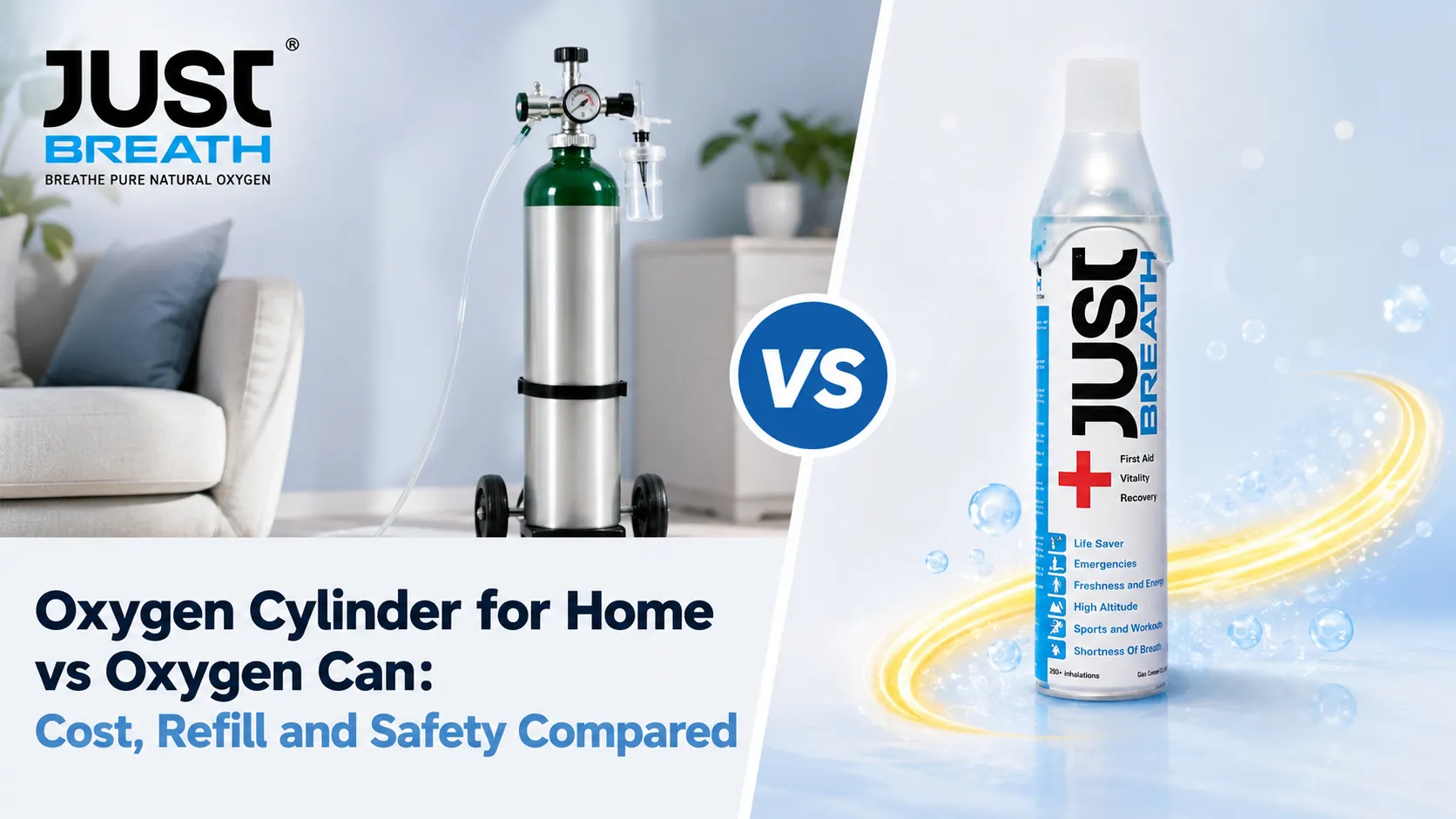
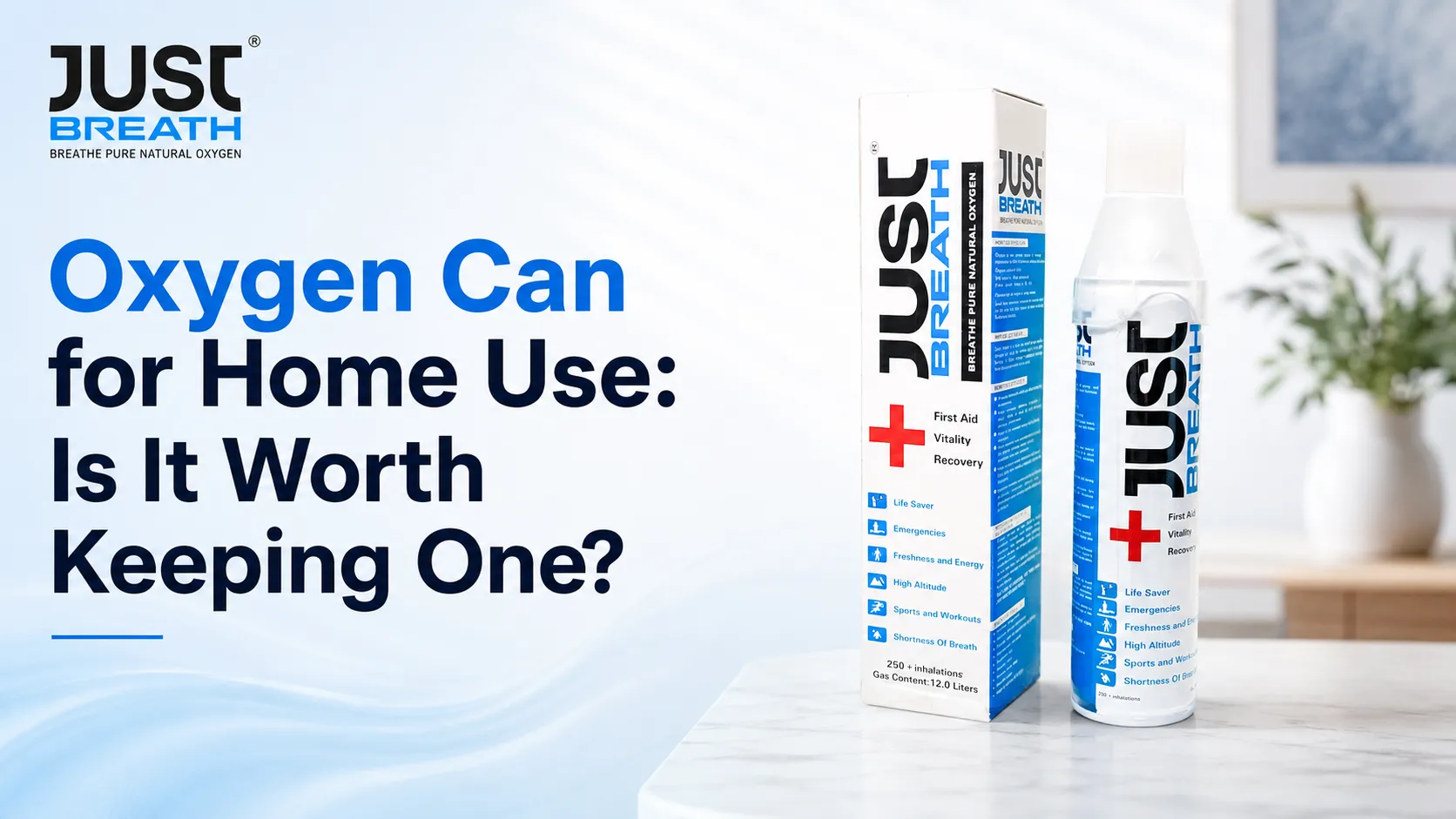
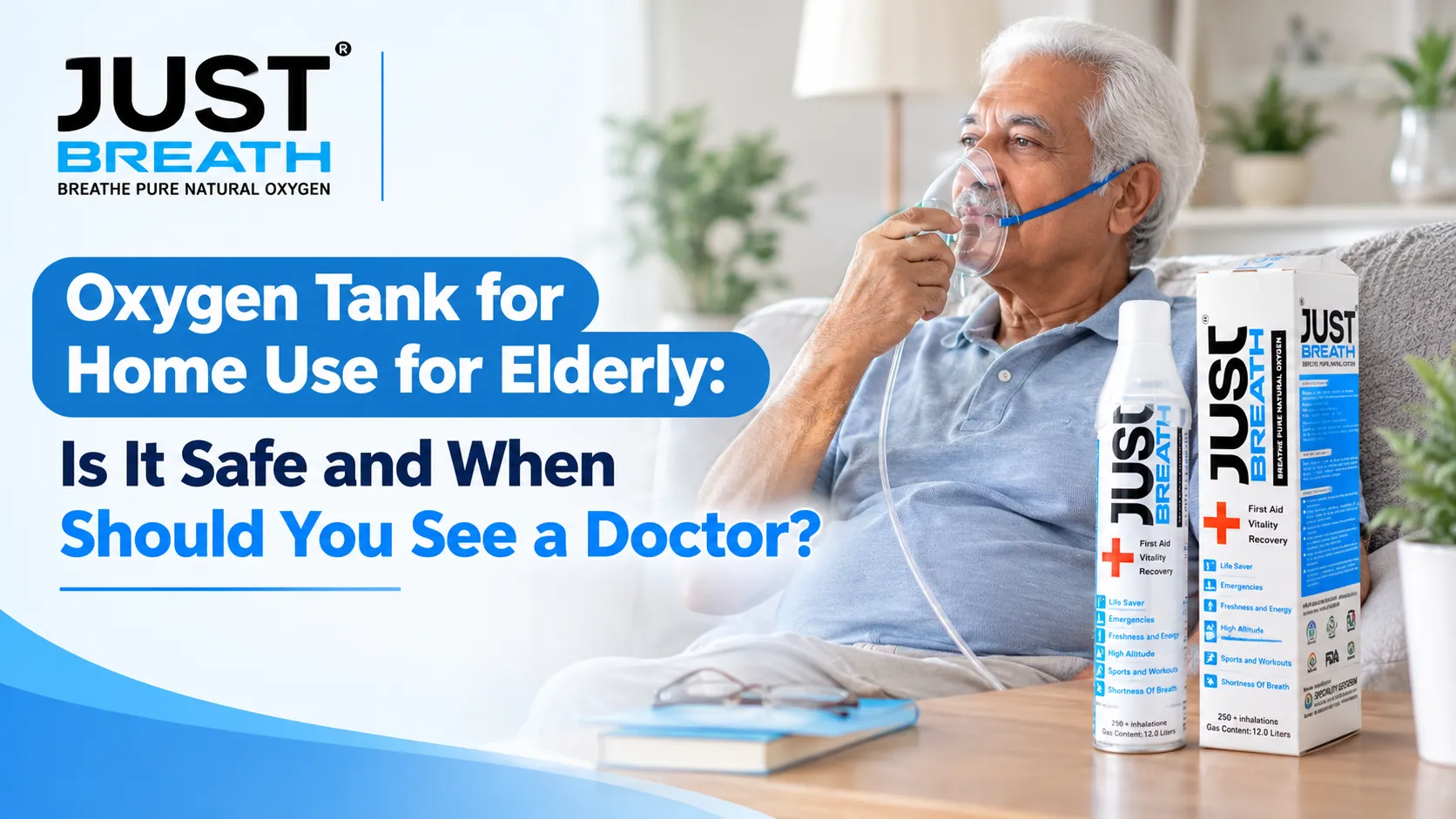
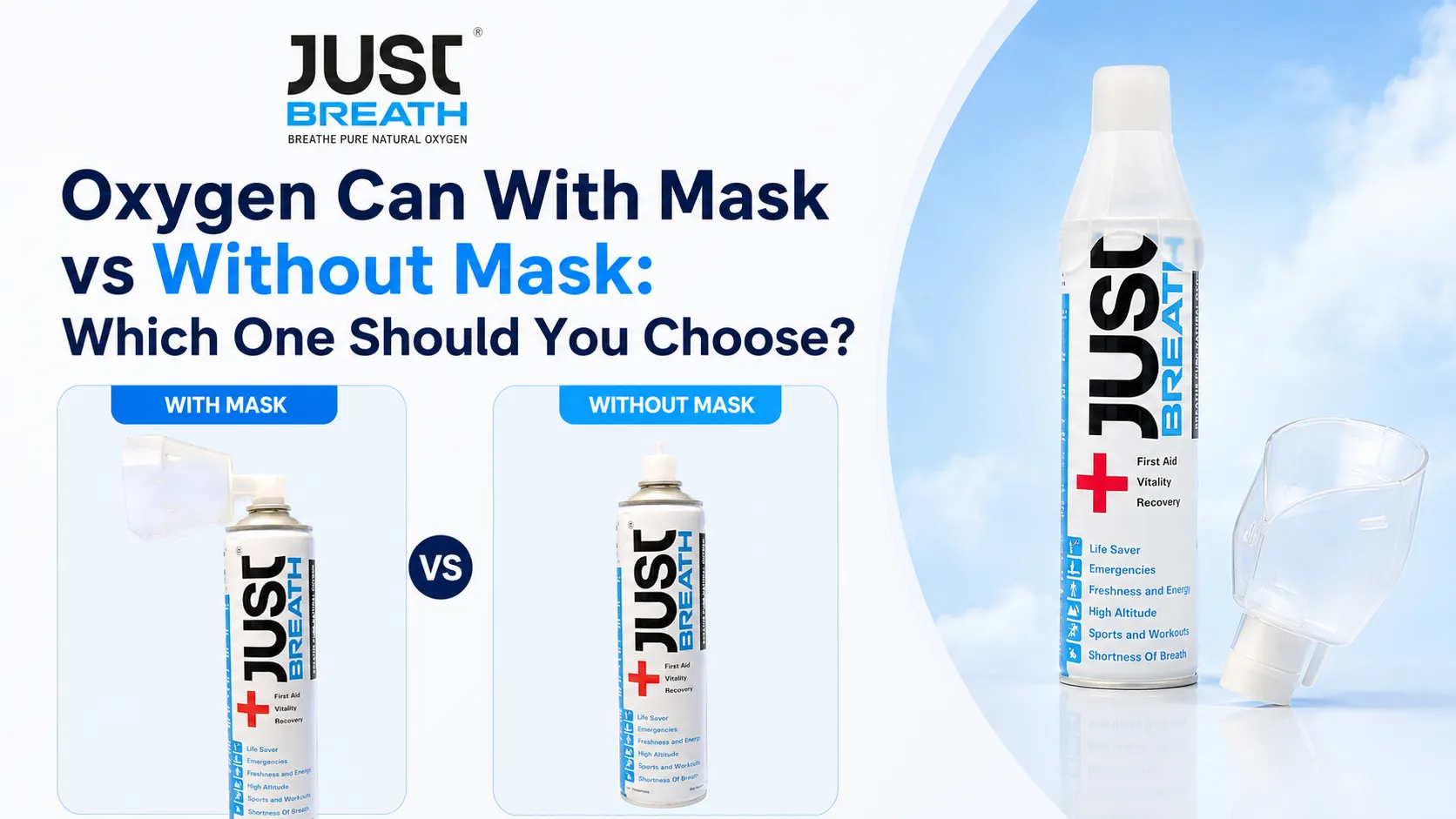
It’s simple, really. The can holds compressed, high-purity oxygen with a small mask on top. You press, you breathe in, and for a second or two you’re breathing oxygen-rich air instead of normal room air (which is about 21% oxygen). That’s the whole product. There’s no filter in there. Nothing catches dust or smoke.
What smog does to your lungs
Here’s the thing most people miss. Delhi isn’t short of oxygen in November. Our air has roughly the same amount of oxygen as the air in Manali. The trouble is everything else floating in it: PM2.5 and PM10, which is basically dust, smoke and soot from crop burning, traffic, construction and firecrackers.
Those tiny particles get deep into your airways and irritate them. A puff of pure oxygen in a can won’t pull them out of your lungs, and it won’t clean the air you breathe for the rest of the day. So if anyone promises a can will “detox” your lungs, smile politely and walk away.
2. What Actually Helps on High-AQI Days (Table: Mask vs Purifier vs Oxygen Can)
Once the CPCB number crosses 300 (“very poor”) or 400 (“severe”), you have one job: breathe in less of that stuff. Here’s how pure oxygen in a can compares with the two things that really filter air.
| N95 / FFP2 Mask | Air Purifier (HEPA) | Oxygen Can | |
| What it does | Filters fine particles from the air you inhale outdoors | Cleans indoor air in one room over time | Gives a few short breaths of concentrated oxygen |
| Removes PM2.5? | Yes, if it fits snugly | Yes, inside a closed room | No |
| Where it helps | Commutes, markets, errands you can’t skip | Bedroom, kids’ room, work-from-home desk | A short pause after a stuffy commute or long drive |
| Protection over a full day | Good while worn | Good while you stay in that room | None |
| Main limitation | Gaps around the nose, beards, loose fit | Needs doors and windows shut, right room size | Limited supply; not a filter or a medicine |
| Best used as | First line of defence outside | First line of defence inside | An optional comfort add-on |
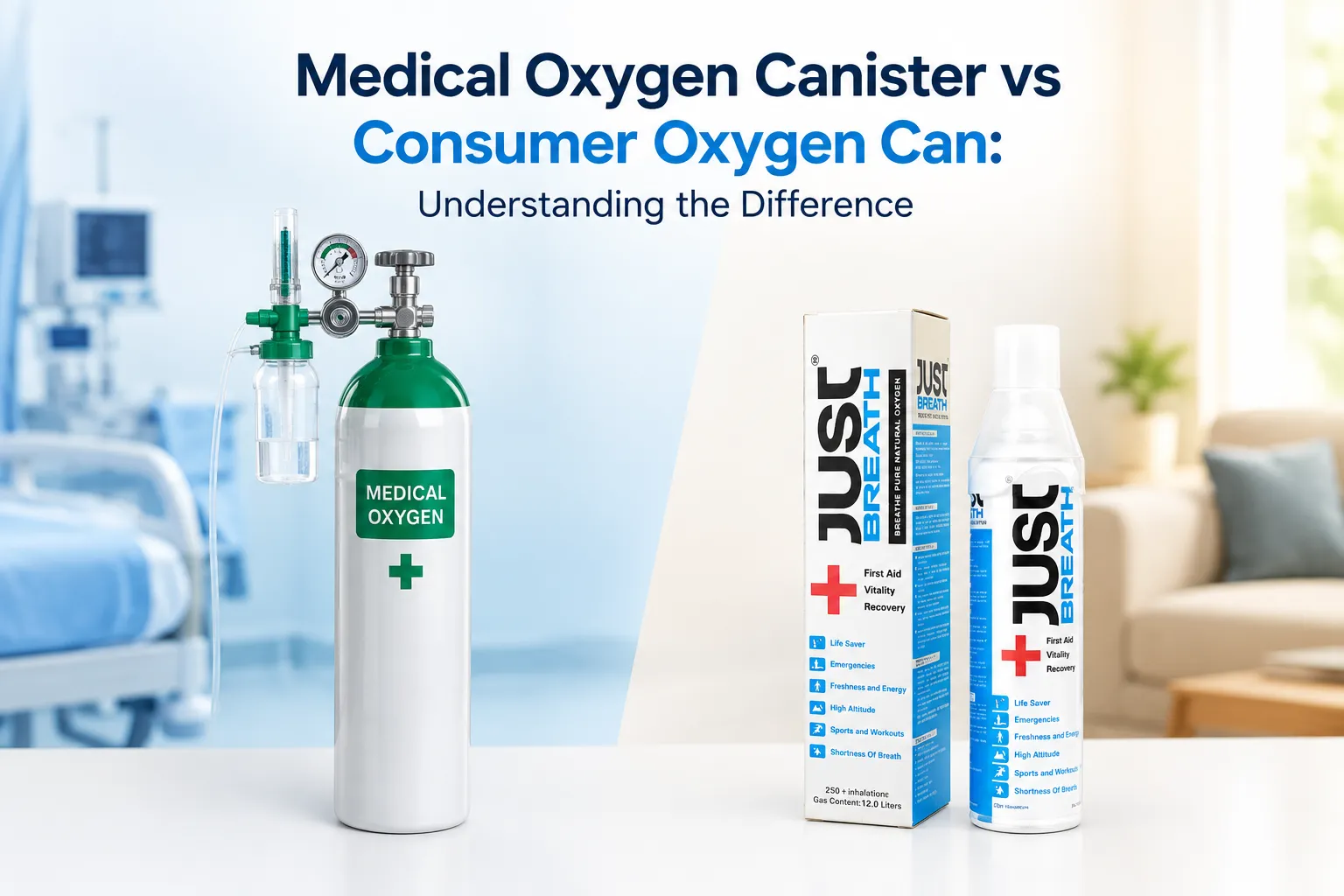
Yes, pure oxygen in a can, the product we sell, is in last place. We put it there ourselves.
Your “what to do” checklist for smog days
- Check the AQI twice a day. In winter, it’s usually worst late at night and early in the morning.
- Above 300? Skip the morning walk in the park. Do yoga at home instead.
- Wear a proper N95 or FFP2 outdoors. Cloth and surgical masks barely touch PM2.5.
- Run an air purifier in the bedroom, with the door and windows shut.
- In traffic, keep the car windows up and the AC on recirculate.
- Go easy on agarbatti, mosquito coils and anything else that burns indoors.
- Keep asthma or COPD medicines handy and take them as prescribed.
- Think of an oxygen can for home as a nice extra, not your main plan.
3. When a Few Breaths of Oxygen Can Feel Useful
Okay, so pure oxygen in a can is not a shield. Is it useless then? Not quite.
After a long commute or a stuffy day
A lot of our customers in Gurugram and Noida keep a can in the car or on their office desk. You know that feeling after an hour crawling along NH-48, windows up, head heavy? Two or three slow breaths of pure oxygen in a can and it feels a bit like stepping out onto a balcony. Not magic. Just a small reset, like splashing cold water on your face.
During travel, workouts and late nights
People also carry O2 in a can on long road trips, up to the hills, or to the gym. Students use pure oxygen in a can during late-night study sessions, and some people grab a puff before a big presentation. Honestly, part of the lift comes from simply stopping to take a few deep breaths. Nothing wrong with that, as long as you know what you’re buying.
What it won’t do
It won’t cut your pollution exposure. It won’t fix a cough or treat asthma. And it is nowhere close to medical oxygen. If you find yourself grabbing an oxygen can for pollution because you genuinely can’t breathe properly, put it down and call a doctor.
4. Who Should See a Doctor Instead
If you read just one section, make it this one. Pure oxygen in a can is a wellness product. It isn’t a medical device, and it isn’t meant to treat anything.
Warning signs you should not ignore
Go to a doctor, or straight to the nearest emergency, if you or anyone at home has:
- Breathlessness while resting, or breathlessness that keeps getting worse
- Chest pain, tightness or a racing heartbeat
- Wheezing that your usual inhaler isn’t settling
- Bluish lips or fingertips, confusion or unusual sleepiness
- A pulse oximeter reading lower than normal, especially under 94%
- A cough with fever, or any blood when you cough
People who need extra care during smog season
Kids, grandparents, pregnant women, and anyone with asthma, COPD or a heart condition feel bad air faster and worse than the rest of us. For them, a proper plan from their doctor matters far more than any oxygen can for pollution. And if a doctor has already prescribed medical oxygen, stick to that cylinder or concentrator at the flow they set. Pure oxygen in a can doesn’t replace it. Ever.
5. How to Keep an Oxygen Can at Home Safely
If you do keep an oxygen can for home, a few simple habits keep everyone safe. Pure oxygen in a can is still a pressurised container. Oxygen itself doesn’t catch fire, but it makes anything nearby burn faster and hotter.
Storage rules
- Keep it well away from gas stoves, diyas, candles, heaters and cigarettes. Never use it near someone who’s smoking.
- Store it standing up in a cool, dry spot, out of direct sun. The car dashboard is a bad idea.
- Don’t puncture it, crush it or throw it in a fire, even when it feels empty.
- Keep it out of reach of small children. It isn’t a toy.
Using it the right way
Read the label first, because each brand of pure oxygen in a can works a little differently. Usually you press for a second or two while breathing in slowly through the mask, take a few breaths like that, and then go back to normal breathing. Don’t keep it going nonstop, and wipe the mouthpiece before passing it to someone else. Feeling dizzy? Stop.
A good oxygen can for home comes with clear instructions and a proper mask. You can see our cans and how to use them on the Just Breath Oxygen home page.
Conclusion
Let’s be honest with each other. Nothing that fits in a can is going to fix Delhi’s winter air. Masks, purifiers, shut windows and fewer hours outside are what actually protect your lungs. Pure oxygen in a can has a smaller job: a few clean, refreshing breaths when you need a pause. Use it for that, store it safely, and if breathing ever starts to feel like hard work, skip the can and call your doctor.
Looking for pure oxygen in a can for the car or the house this winter? Have a look at Just Breath Oxygen.