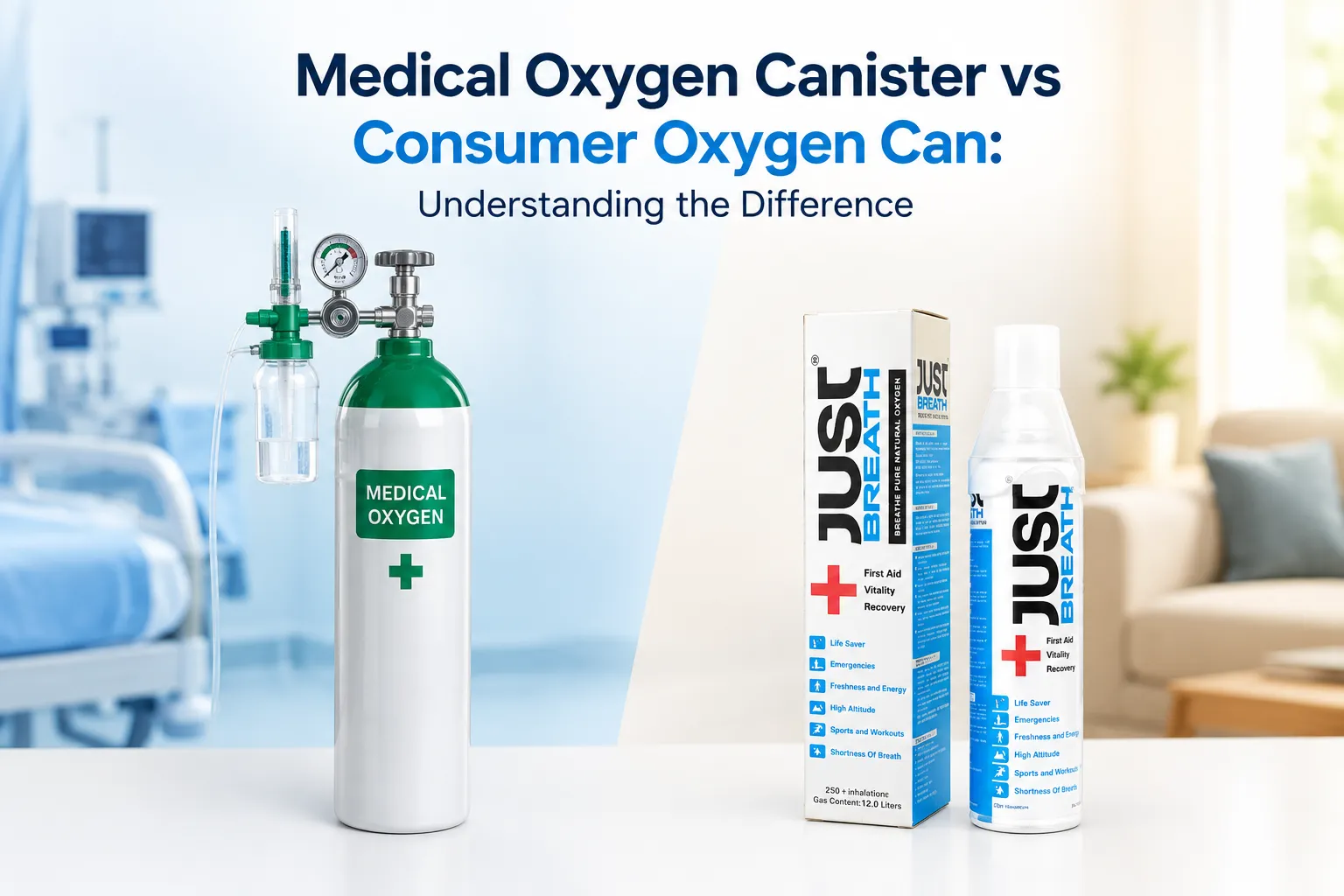
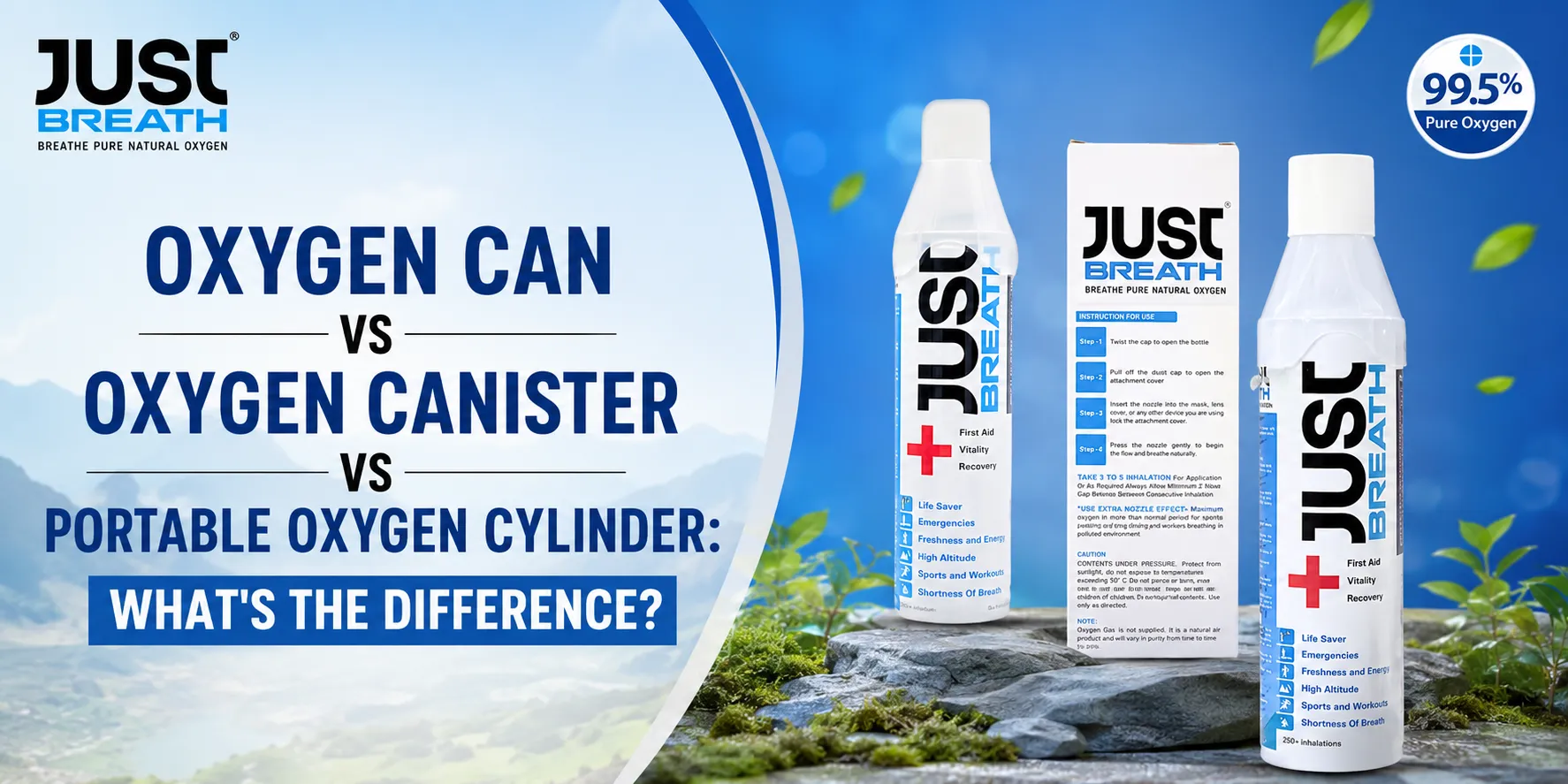
| Quick look | Oxygen can / oxygen canister | Portable oxygen cylinder |
| What it is | Single-use consumer can | Refillable medical device |
| Pressure | Low | High (around 150 bar) |
| Regulator needed? | No, built-in valve and mask | Yes |
| Prescription? | No | Yes, a doctor sets the flow |
1. Are Oxygen Can and Oxygen Canister the Same?
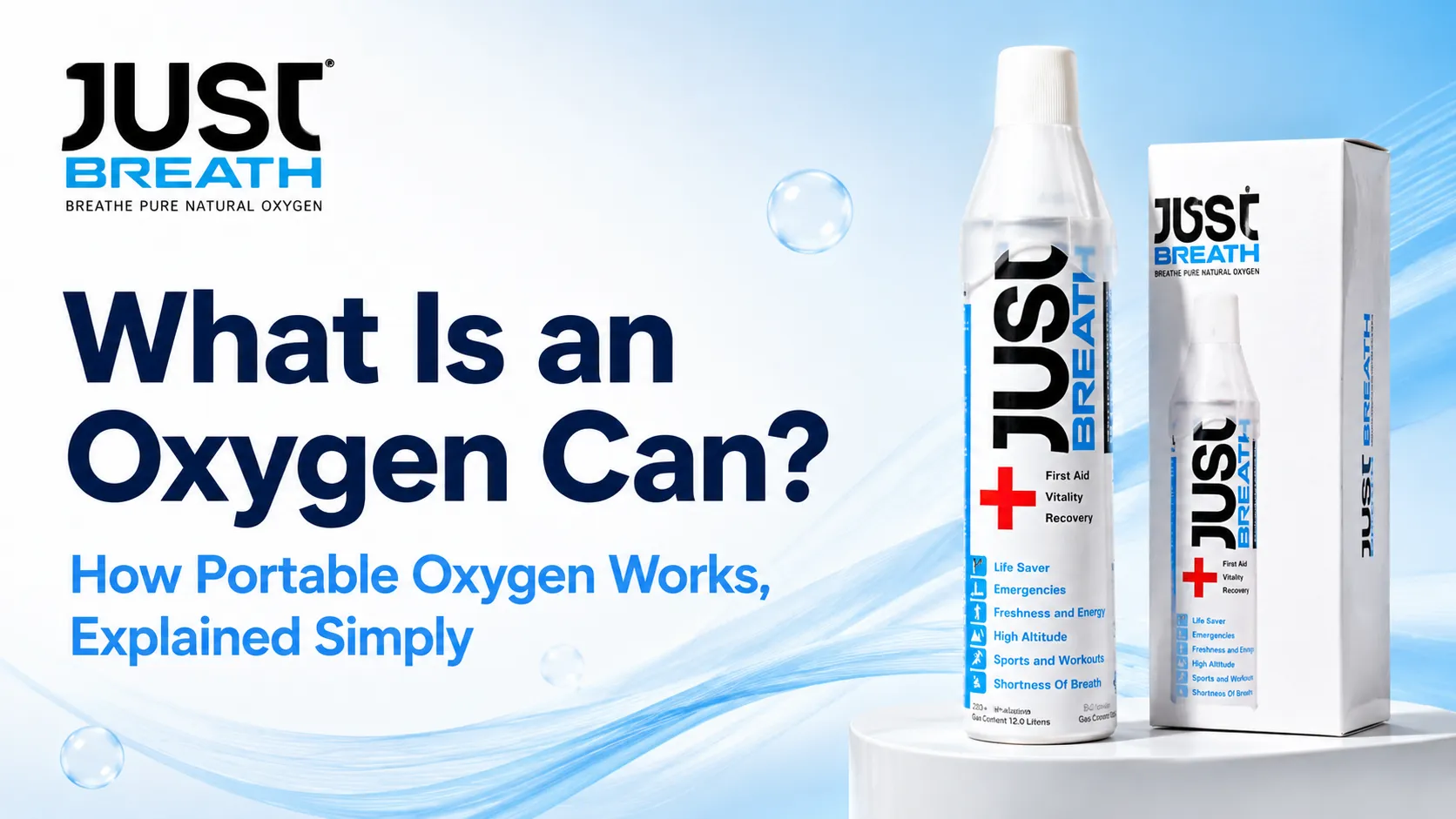
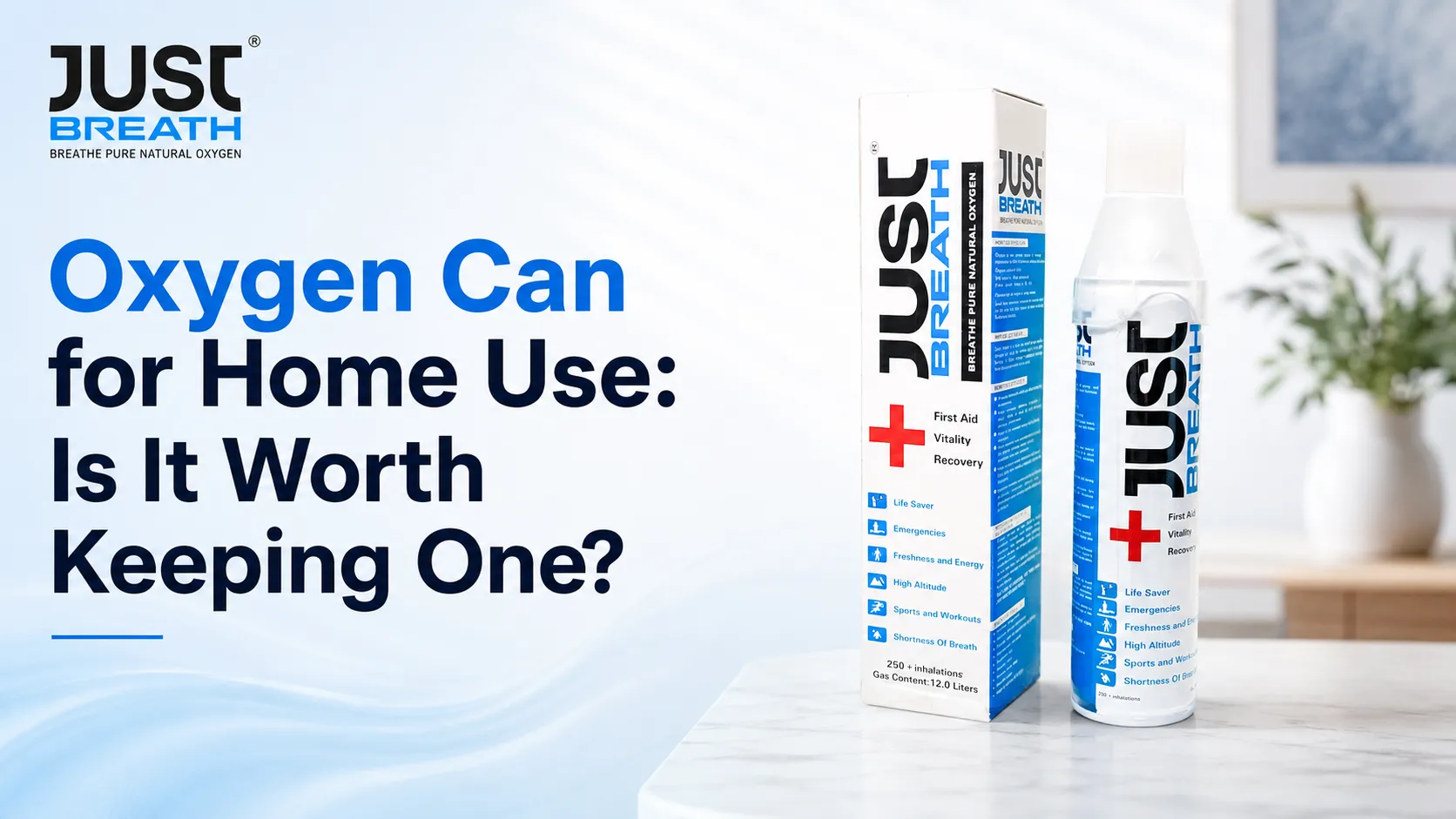
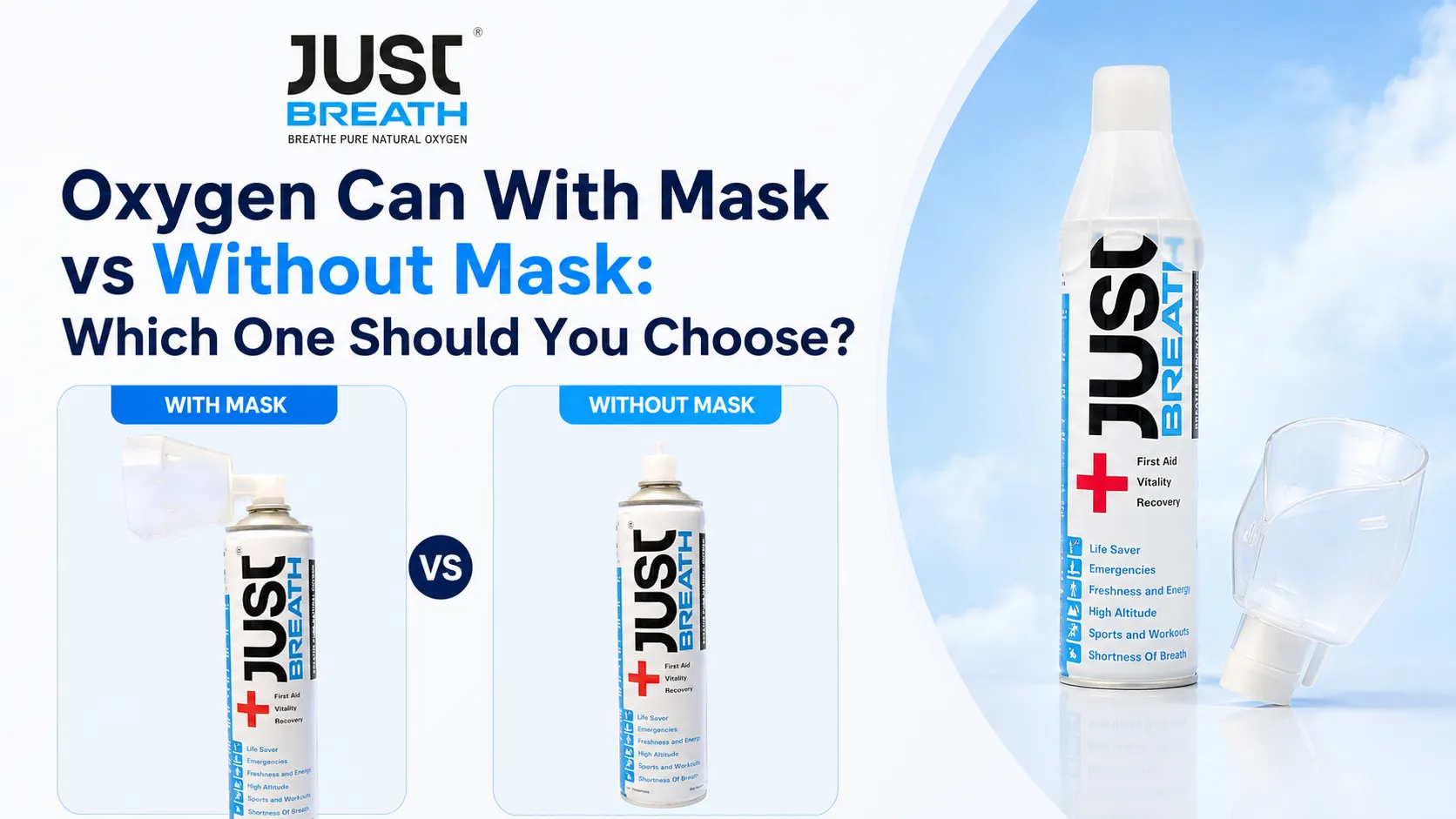
Yes, in almost every case. “Oxygen can” is the everyday word. “Oxygen canister” is the slightly formal one that sellers and search results use. Both mean an aluminium can, a bit like a deodorant can, filled with concentrated oxygen at low pressure, with a push valve and a small mask on top.What’s inside an oxygen canister
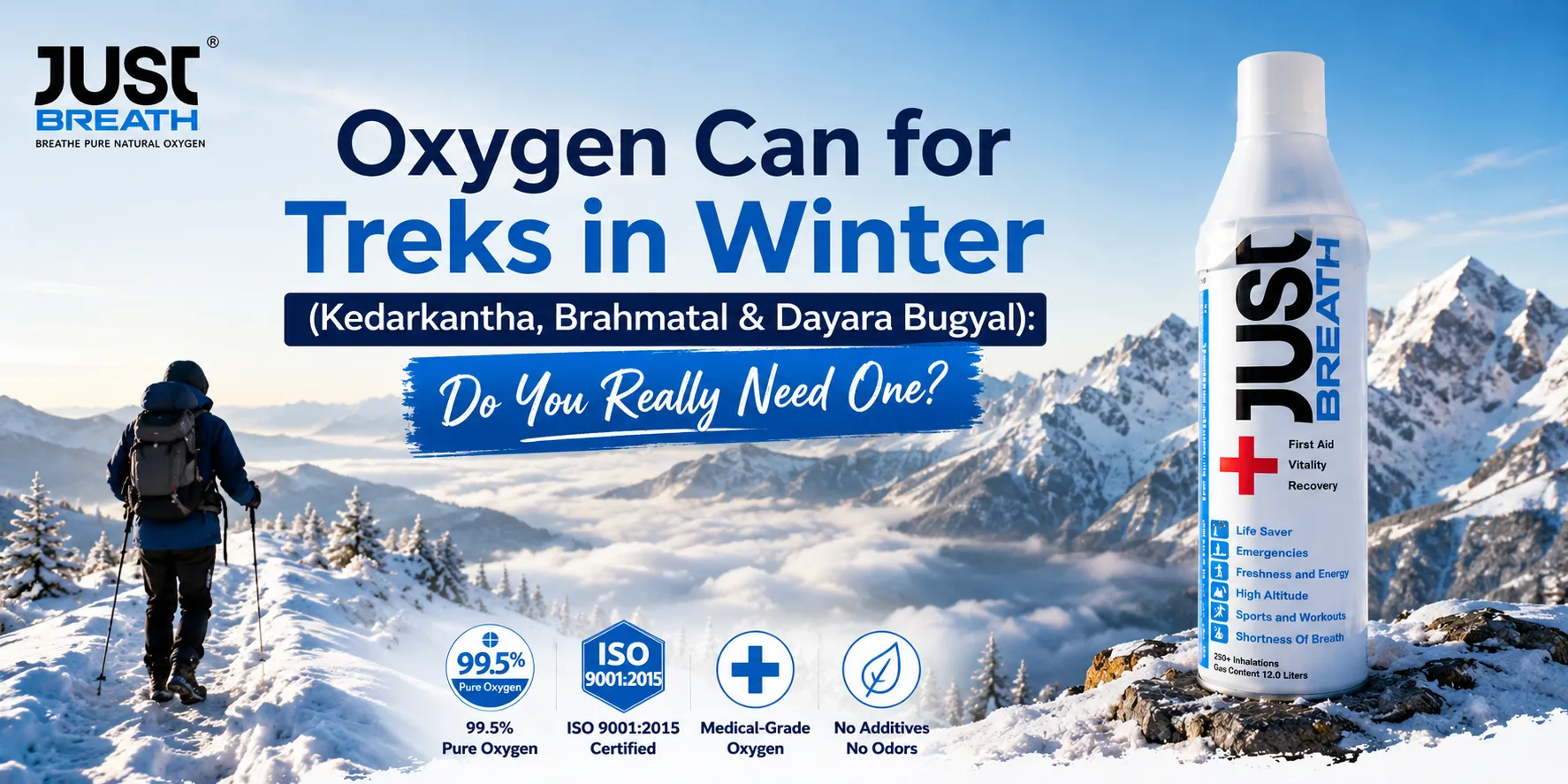
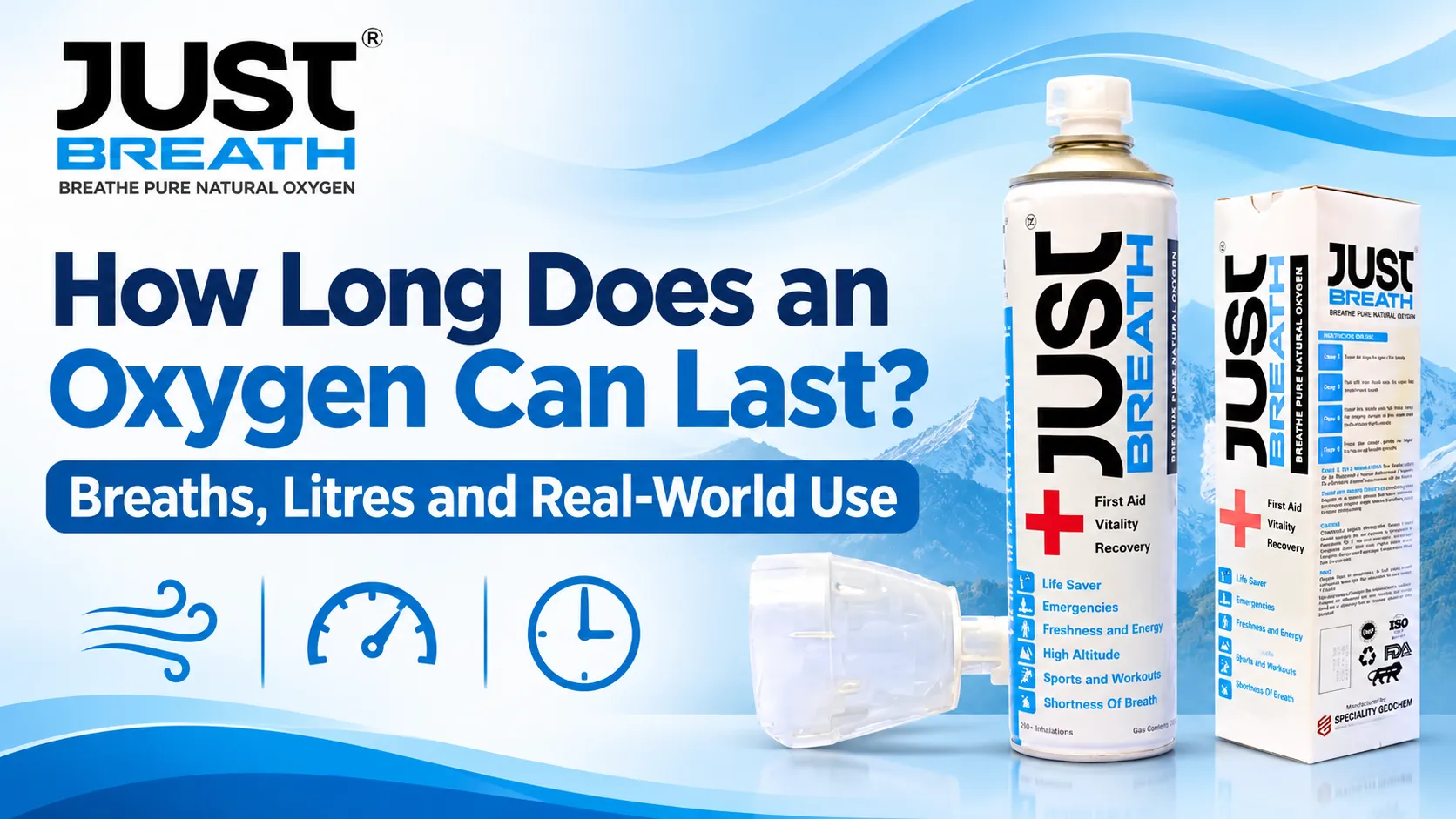
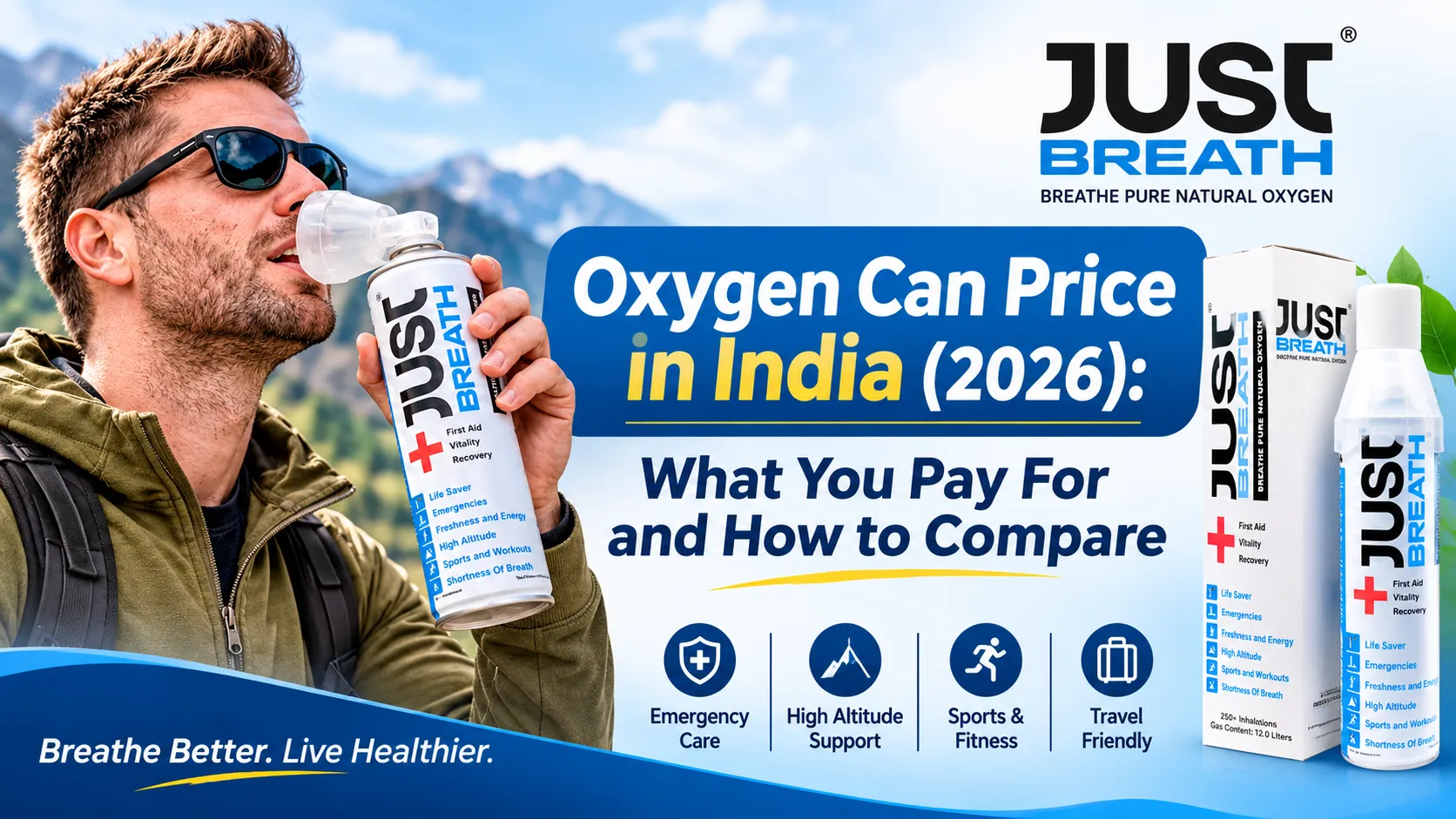
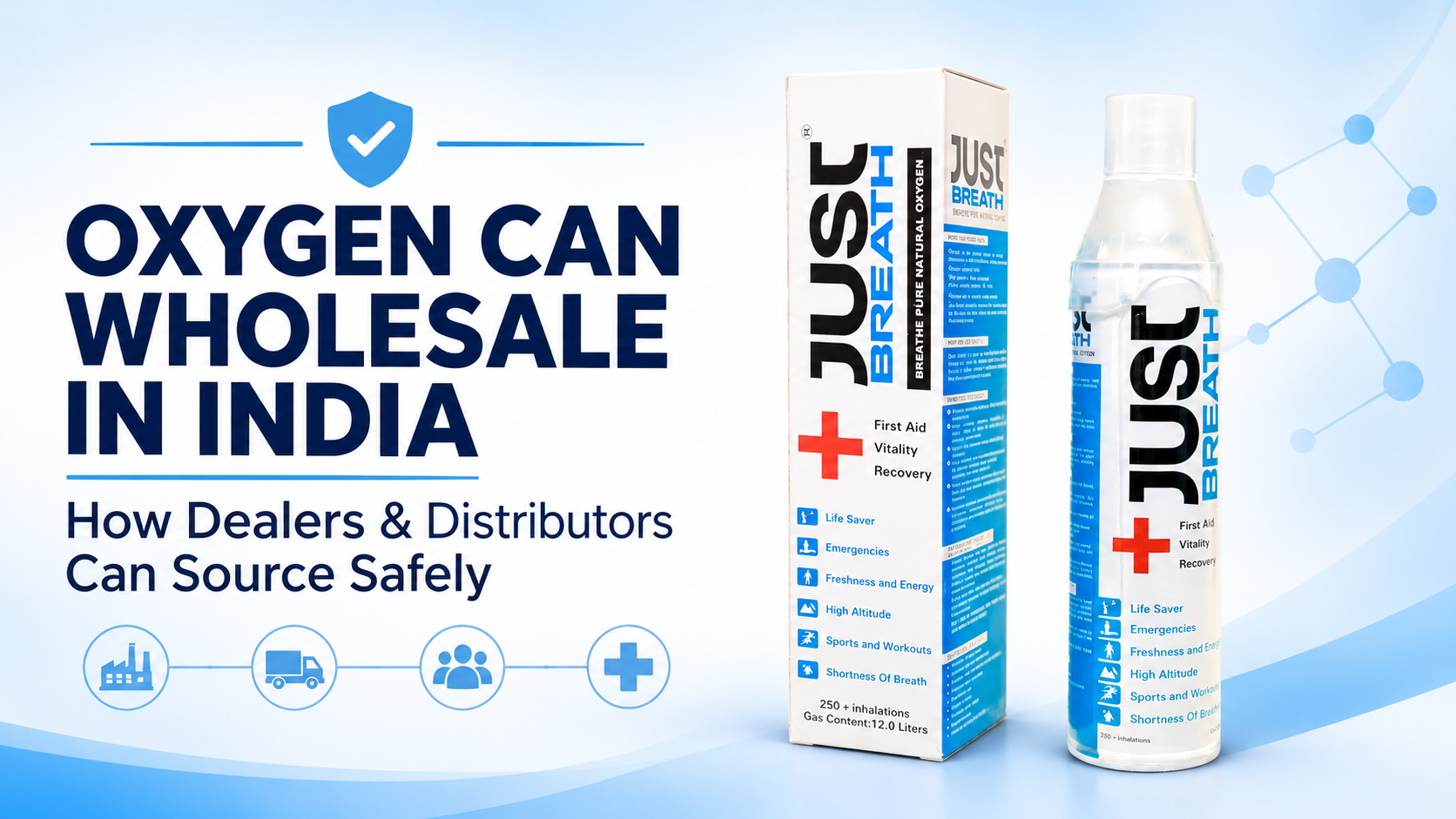
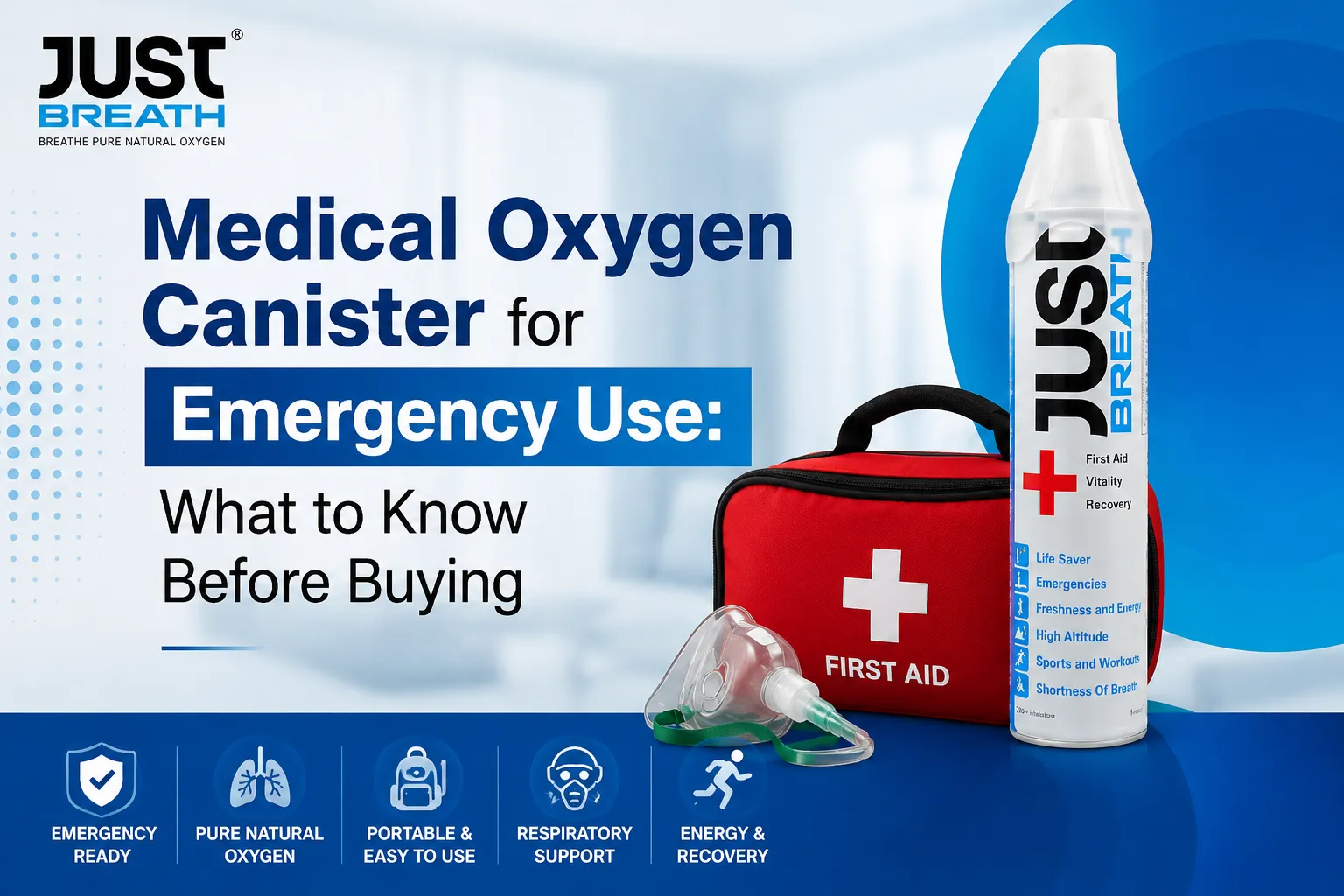
Most cans sold in India hold 5 to 15 litres. Our Just Breath portable oxygen canister holds 12 litres of up to 99% pure oxygen, which works out to roughly 360 short breaths. You hold the mask over your nose and mouth, press the valve for a second or two, and breathe in slowly. No setup, no refills, no gauge to read.Why you’ll see “small oxygen canister” and “portable oxygen canister”
These words just describe size and use. A small oxygen canister fits in a handbag or car glovebox and weighs a few hundred grams. “Portable oxygen canister” tells you it’s built to be carried. Neither term makes it a medical device, and that’s the line worth remembering.What an oxygen can is not
It’s meant for short, occasional top-ups: feeling drained after a long drive, a stuffy room on a bad-AQI day, a breather after a workout. It is not a treatment, and it does not replace prescribed oxygen for anyone with COPD, a severe asthma attack or a low SpO2 reading.2. Portable Oxygen Cylinder: What It Is
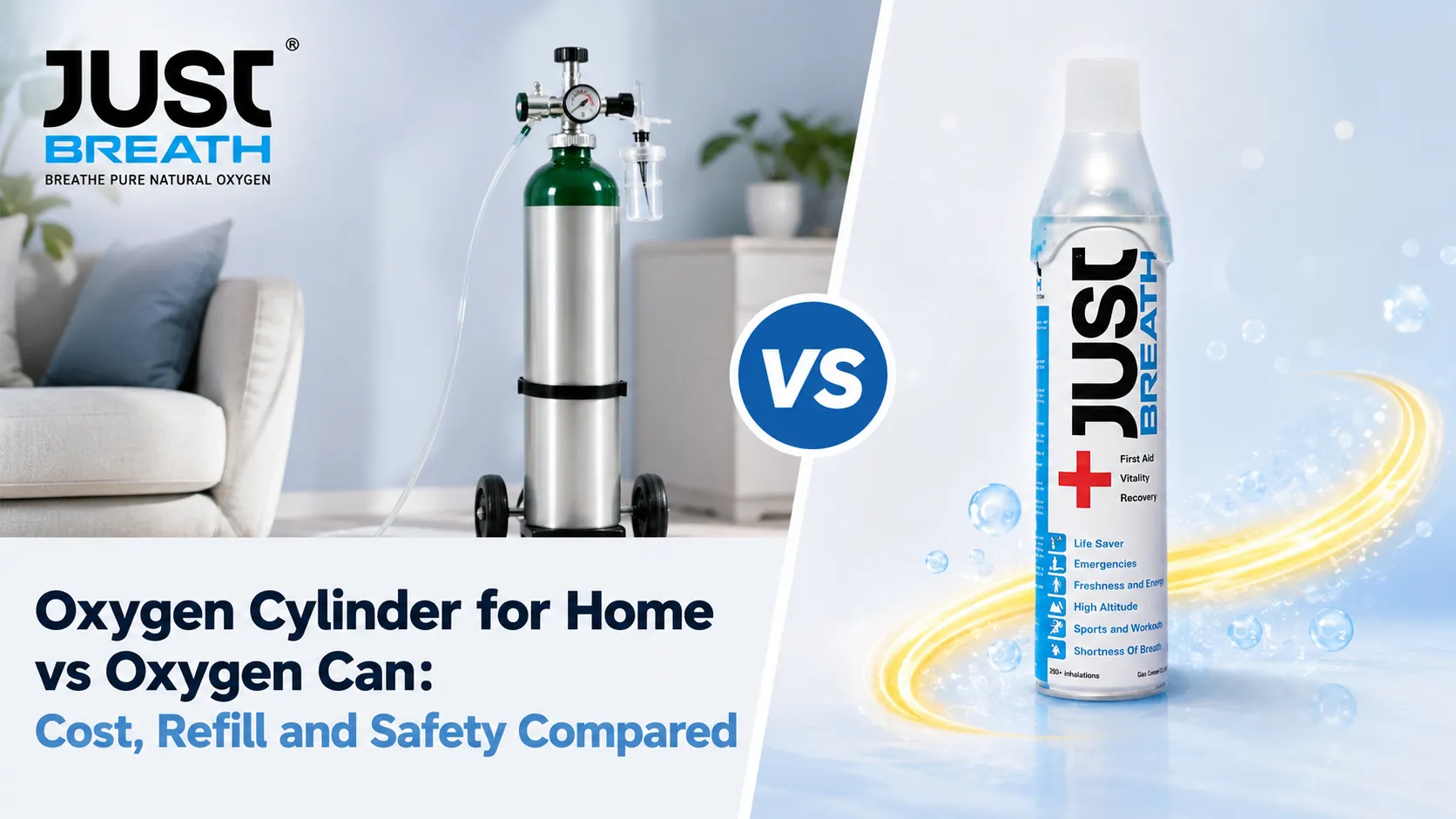
A portable oxygen cylinder is a smaller version of the hospital cylinder. It’s made of steel or aluminium, holds medical oxygen at high pressure (often around 150 bar, over 2,000 psi), and gets refilled again and again at an authorised gas supplier.How a portable oxygen cylinder works
The cylinder does nothing on its own. You fit a regulator with a flowmeter, set the flow your doctor advised (often 1 to 5 litres per minute), and breathe through a nasal cannula or mask. A small cylinder holds a few hundred litres, usually enough for a few hours at low flow.Who actually needs one
It’s for patients: someone recovering at home after a hospital stay, an elderly parent with a chronic lung or heart condition, or anyone prescribed oxygen therapy. Flow rate and hours of use are medical decisions, not guesses.The trade-offs
It weighs 3 to 8 kg with the regulator, needs a refill shop nearby, and the kit costs many times more than a single can.3. Comparison Table: Weight, Pressure, Refill, Use, Price
| Feature | Oxygen can / oxygen canister | Portable oxygen cylinder |
| Other names | Portable oxygen canister, small oxygen canister, oxygen spray | Medical oxygen cylinder, mini cylinder, B-type cylinder |
| Category | Consumer wellness product | Medical device |
| Typical weight | 150–400 g | 3–8 kg with regulator |
| Oxygen inside | 5–15 litres (Just Breath: 12 L) | Roughly 200–700 litres, by size |
| Pressure | Low, aerosol-style | High, about 150 bar |
| Refillable? | No, single-use | Yes, at a licensed refiller |
| Regulator needed? | No, built-in valve and mask | Yes, regulator plus flowmeter |
| Prescription | Not needed | Needed; doctor sets the flow |
| How it’s used | A few short puffs when needed | Continuous flow for minutes to hours |
| How long it lasts | Around 300–400 short breaths, over days or weeks | A few hours at 1–2 LPM per fill |
| Best for | Travel, bad-AQI days, fatigue, workouts, treks | Home oxygen therapy, patients, clinics |
| Approx. price in India | ₹500–₹1,000 per can | ₹5,000–₹15,000 for a kit, plus refills |
| Storage | Cool, dry shelf, away from heat | Upright, secured, ventilated room, no oil on valve |
| On flights | Usually not allowed; check with airline | Not allowed as baggage; airline arranges medical oxygen on request |
4. Which One for Travel, Home, Clinic or Trek?
For road trips and train travel
A small oxygen canister is the easy pick. It slips into a backpack and needs no accessories. For flights, most airlines don’t permit personal oxygen cans or cylinders, so ask before you pack. Passengers who need medical oxygen on board must request it in advance.For home use
If everyone at home is healthy and you just want relief on smoggy evenings, keep a portable oxygen canister in a drawer. If someone has been prescribed oxygen, you need a portable oxygen cylinder or concentrator, set up as the doctor advises.For clinics, gyms and offices
Clinics, nursing homes and ambulances run on cylinders, full stop. Gyms, hotels and offices sometimes keep a small oxygen canister at the front desk for people who feel tired or light-headed, as a comfort item, not emergency equipment.For treks and high-altitude trips
On routes like Ladakh, Spiti or Kedarnath, many trekkers carry a portable oxygen canister for a breather on steep stretches. It can make a climb feel easier for a moment. It will not prevent or treat altitude sickness. With a pounding headache, nausea or breathlessness at rest, descend and get medical help. Trek operators carry a proper cylinder for exactly this reason.5. Safety and Storage Differences
Storing an oxygen can
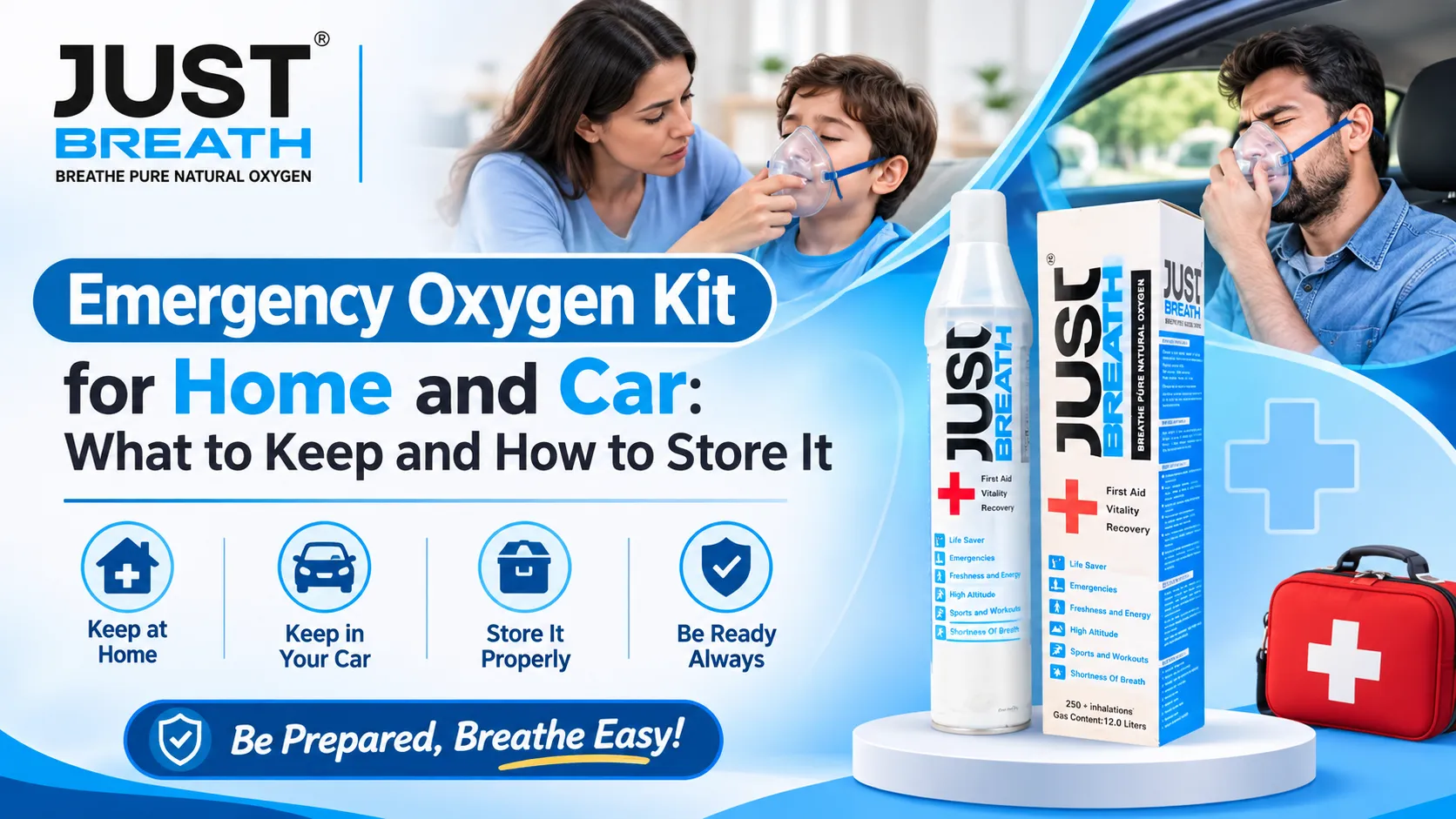
Keep a small oxygen canister in a cool, dry place, away from direct sun and flame. Don’t leave it on a parked car’s dashboard in summer. Never puncture or burn it, even when empty. Keep it away from children, gas stoves, diyas, candles and cigarettes.Storing a portable oxygen cylinder
High-pressure oxygen needs more care. Keep the cylinder upright and secured so it can’t tip over, in a ventilated room. Never let oil, grease or hand cream touch the valve, because oil and pressurised oxygen together are a real fire risk. Close the valve after use, watch the gauge, and refill only through a licensed supplier.The rule both share
Oxygen doesn’t burn by itself, but it makes everything around it burn faster. No smoking, no open flame, no “just this once.”6. How to Choose: A 3-Question Check
- Has a doctor prescribed oxygen? Then you need a portable oxygen cylinder or concentrator. Stop here.
- Do you want short top-ups, not continuous flow? An oxygen canister is enough.
- Will you carry it daily? Pick a small oxygen canister that fits your bag.