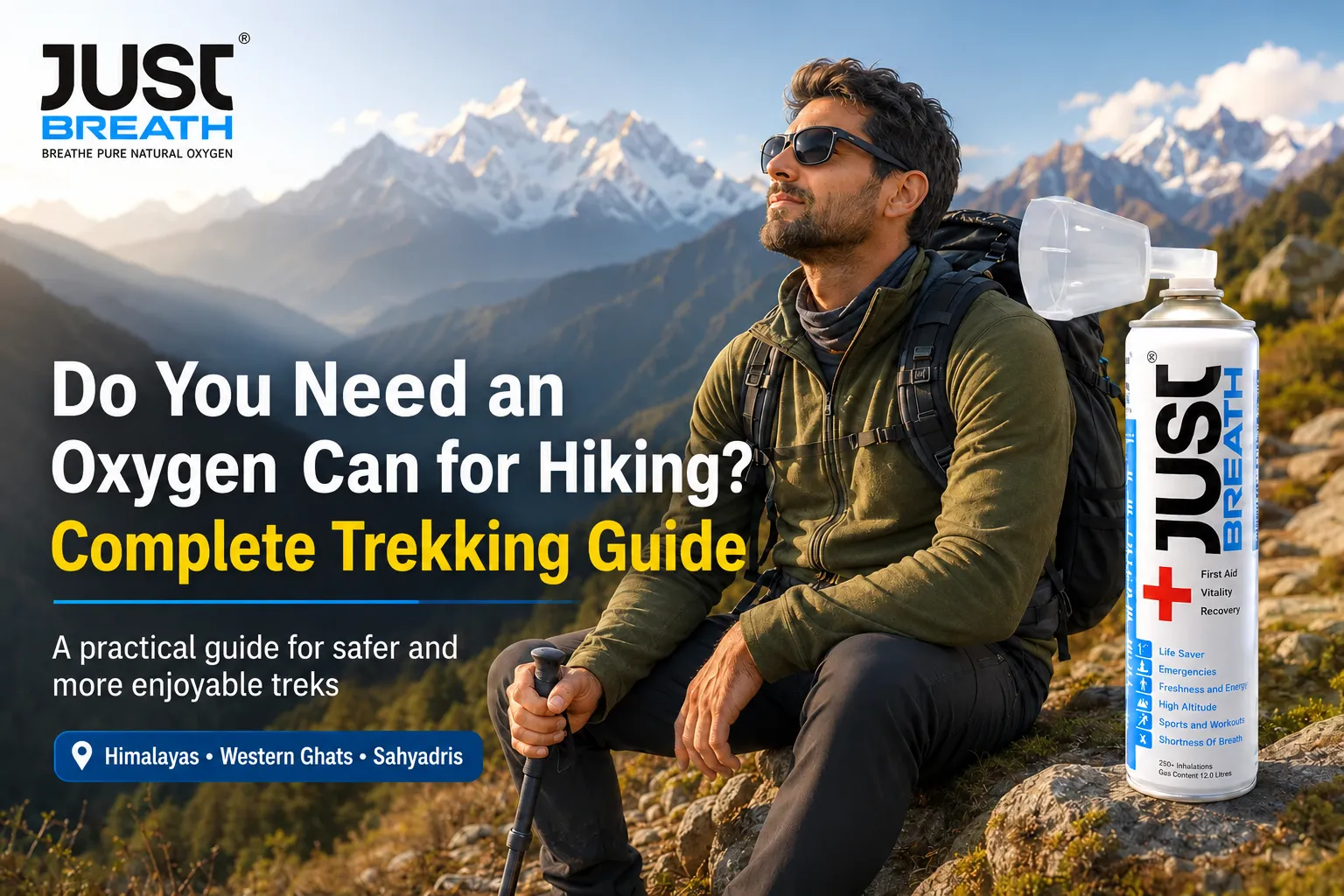
If you’re fit and you acclimatise properly, you most likely won’t need oxygen on 3,600–3,800 m winter treks like Kedarkantha, Brahmatal or Dayara Bugyal. An oxygen can for trekking is a small back-up for short relief. It won’t fix altitude sickness. And if your symptoms keep getting worse, the answer is to go down.
Every December, trekking groups fill up with the same question: “Should I carry an oxygen can for trekking, or is it just extra weight?”
Here’s an honest look at the altitudes, what a portable oxygen can can and can’t do, and when to turn back.
1. Do You Need an Oxygen Can for Treks Like Kedarkantha or Brahmatal?
Honestly, for most healthy trekkers, an oxygen can for Kedarkantha trek is a nice-to-have, not a must-have.
These treks top out around 3,600–3,800 m. Up there, every breath gives you roughly 35–40% less oxygen than it would at sea level. You’ll huff and puff on the climbs, and that’s normal.
What actually keeps you safe isn’t an oxygen can for trekking. It’s the boring stuff: climbing slowly, drinking water, eating well and resting. A good operator plans for this, with sensible camps and an oxygen cylinder for trekking emergencies kept with the group.
So where does an oxygen can for Kedarkantha trek fit in? Think of it like a first-aid kit. You probably won’t need it, but on a steep summit push or a sudden bout of breathlessness, you’ll be glad it’s there. Packing an oxygen can for trekking for peace of mind makes sense. Just don’t let it replace acclimatisation.
If you have asthma, a heart condition or high BP, or you’ve had altitude sickness before, speak to your doctor before you book. And keep oxygen for winter trek emergencies in your daypack, not at the bottom of your rucksack.
2. Altitude of Popular Winter Treks (Table)
Roughly how high India’s favourite winter treks go (operators quote slightly different numbers), useful if you’re deciding whether to carry oxygen for winter trek routes.
| Winter trek | State | Highest point (approx.) | Difficulty | Best months |
| Kedarkantha | Uttarakhand | 3,800 m (12,500 ft) | Easy–moderate | Dec–Feb |
| Brahmatal | Uttarakhand | 3,734 m (12,250 ft) | Easy–moderate | Dec–Mar |
| Dayara Bugyal | Uttarakhand | 3,640 m (11,950 ft) | Easy | Dec–Mar |
| Kuari Pass | Uttarakhand | 3,800 m (12,500 ft) | Moderate | Dec–Mar |
| Har Ki Dun | Uttarakhand | 3,566 m (11,700 ft) | Easy–moderate | Oct–Mar |
| Sandakphu | West Bengal | 3,636 m (11,930 ft) | Moderate | Oct–Mar |
None of these cross 4,000 m. But altitude sickness can still hit, especially if you rush the first climb. An oxygen can for trekking these routes is a sensible add-on, but your pace matters much more.
3. Where an Oxygen Can Helps and Where It Doesn’t
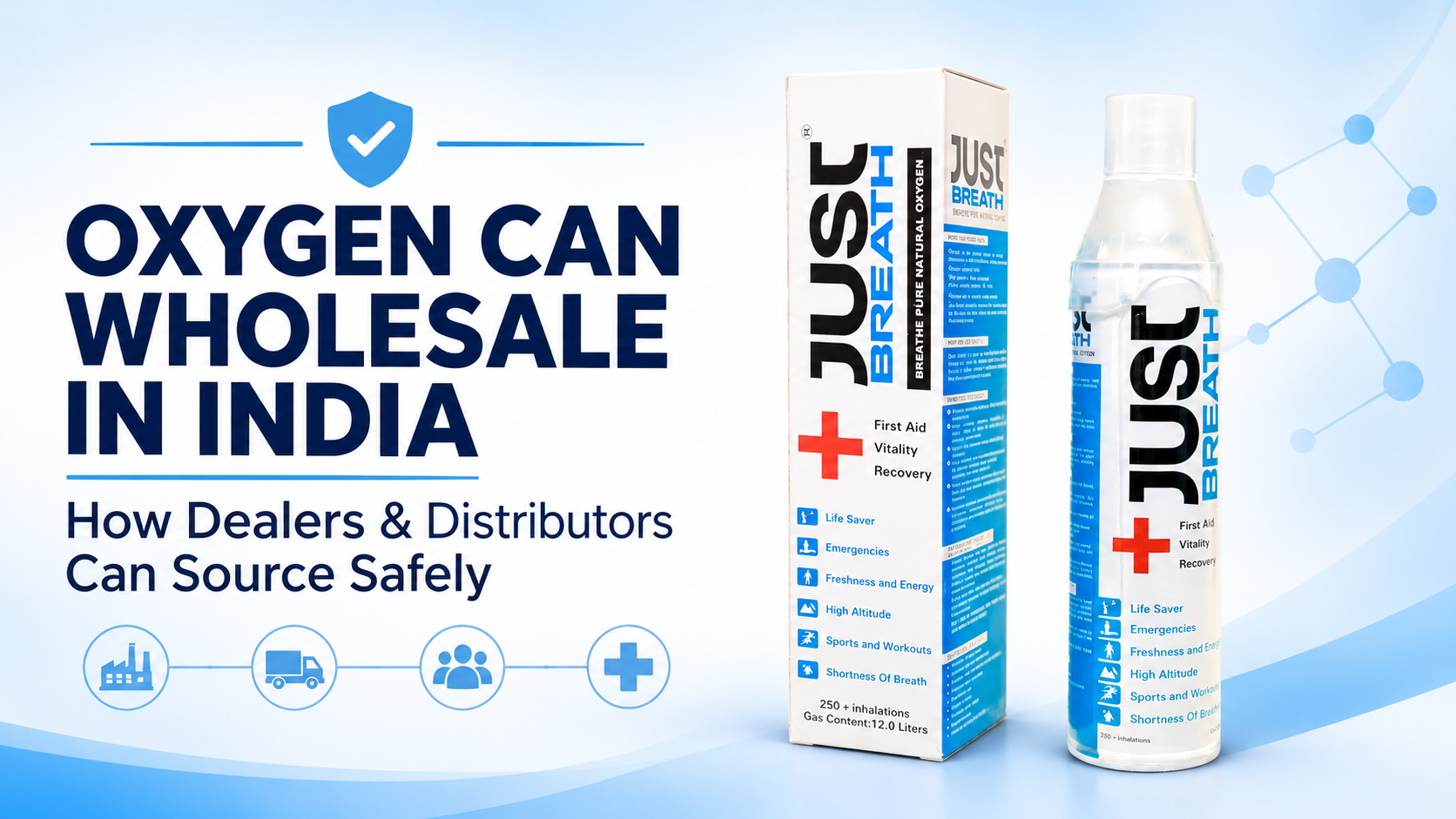
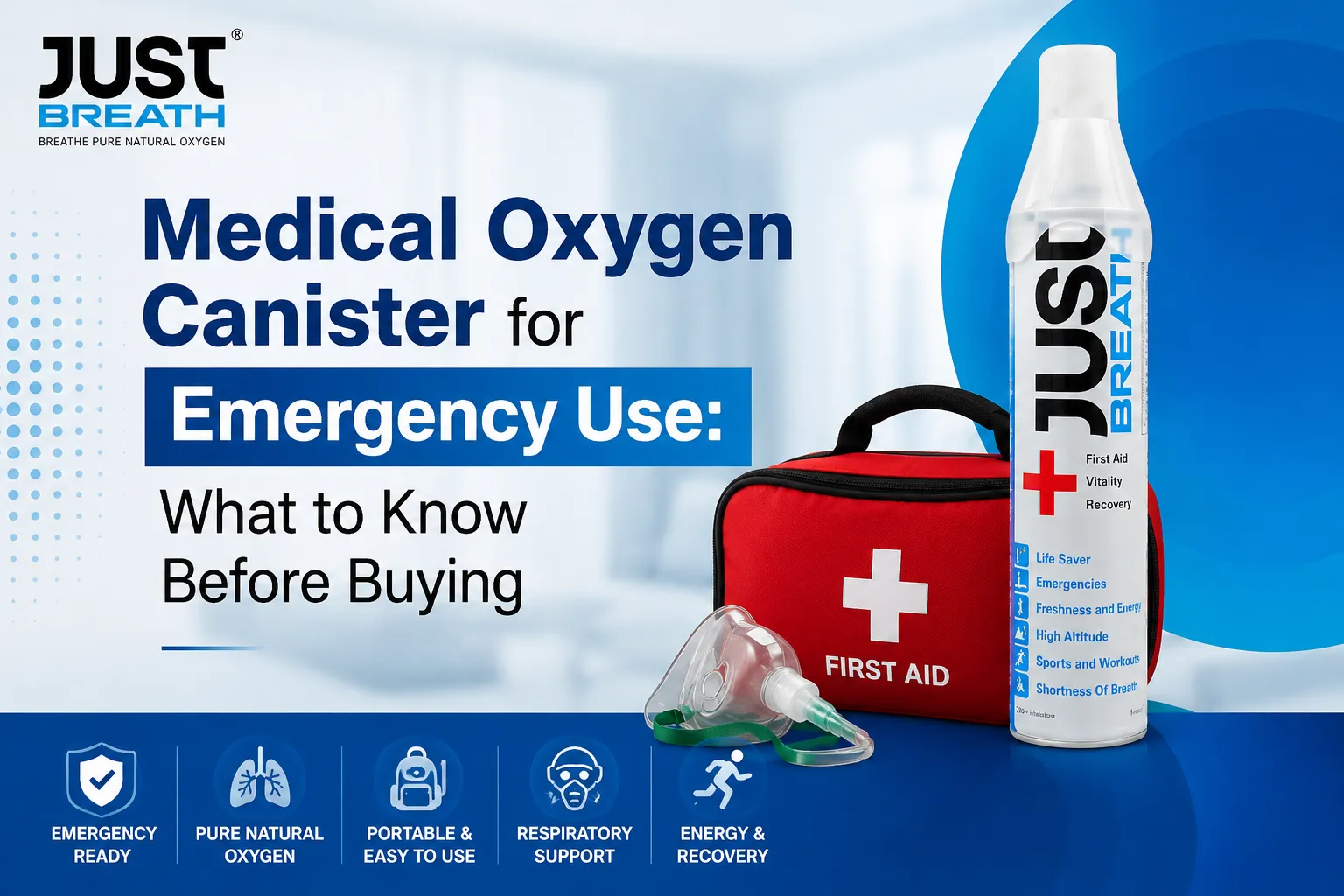
An oxygen can for trekking gives you a few seconds of concentrated oxygen with each puff through the mask. It’s light and easy to carry as oxygen for winter trek back-up. But it holds a limited amount.Portable oxygen cans are becoming a convenient backup option for high-altitude travellers. For more information about portable oxygen solutions, you can explore Speciality Geochem and its Just Breathe portable oxygen can range.
Where it helps:
- A bit of relief on a steep climb or the summit push
- Getting your breath back after hard effort, while you rest
- Calming someone who’s feeling panicky or tight in the chest
- Peace of mind for first-timers carrying oxygen for winter trek safety
Where it doesn’t:
- It won’t prevent or cure Acute Mountain Sickness (AMS)
- It can’t treat HAPE (fluid in the lungs) or HACE (swelling of the brain)
- It’s not a reason to skip rest days or climb faster
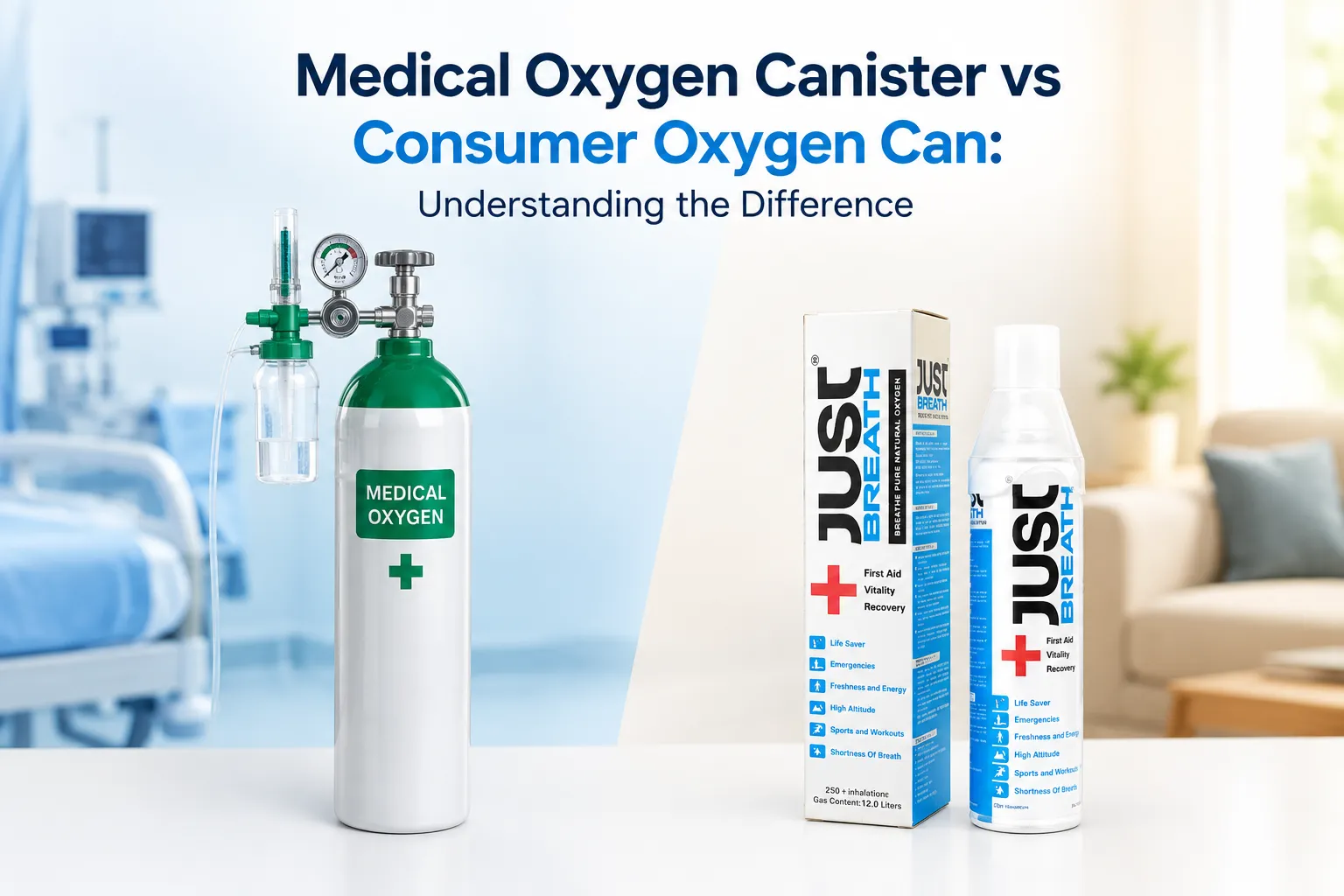
This is also why people search for an oxygen cylinder for trekking. A medical oxygen cylinder for trekking holds much more oxygen, and trained trek leaders use it in emergencies. It’s also heavy. Before you book, ask your trek company if they carry an oxygen cylinder for trekking and a pulse oximeter. Your own portable oxygen can for trekking is your personal back-up. It doesn’t replace the group’s safety kit.
4. Cold-Weather Tips: Keeping the Can Working in Snow
Summit night on Kedarkantha can drop well below zero, so it’s worth thinking about how you’ll keep your oxygen can for Kedarkantha trek warm. Cold lowers the pressure in anything pressurised. Your oxygen can for trekking will still work in the snow, but each puff may feel a little weaker. A few habits help:
- Keep it warm: Carry your oxygen can for trekking in your daypack, close to your back. At night, keep it inside your tent, not outside with your shoes.
- Warm it up first: If the oxygen can for trekking feels icy, tuck it inside your jacket for a few minutes before you use it.
- Protect the mask: Keep the cap on and the mask in a zip bag so snow and moisture don’t block it.
- Stay away from heat: Never keep it near a campfire, stove or heater.
- Check before you leave home: Look at the expiry date and find out how many puffs your oxygen can for trekking gives.
- Keep it on you: Porters and mules can be an hour ahead. Oxygen for winter trek use only helps if it’s actually with you.
5. When to Descend Immediately
An oxygen can for Kedarkantha trek, or any other trek, is never a reason to keep climbing when your body is clearly struggling. Tell your trek leader and start heading down if you or someone in your group has any of these:
- A headache that won’t go away with rest, water and a basic painkiller
- Vomiting again and again, or not being able to eat or drink
- Feeling breathless even while sitting still
- A wet, bubbling cough, sometimes with frothy or pink spit
- Confusion, unusual sleepiness or acting strangely
- Losing balance or not being able to walk in a straight line
- Bluish lips or fingertips
The rule is simple: if it’s getting worse, go down. Even 300–500 m of descent often helps a lot. A portable oxygen can for trekking can make the walk down more comfortable, but descent, the group’s oxygen cylinder for trekking and proper medical care are what actually treat it.
6. Winter Trek Packing Checklist (Breathing and Safety)
Use this checklist to pack your oxygen can for Kedarkantha trek and other winter routes, along with your operator’s gear list.
- 1–2 portable oxygen cans as oxygen for winter trek back-up (more if you’re trekking with elders or slower walkers)
- Pulse oximeter (and check that your group carries an oxygen cylinder for trekking)
- Your regular medicines and your doctor’s advice on altitude
- Two insulated water bottles
- ORS sachets, dry fruits and chocolate bars
- Thermals, fleece, down jacket and a windproof shell
- Balaclava or buff to cover your mouth in the cold air
- Waterproof gloves plus a spare inner pair
- UV sunglasses (the snow glare is no joke)
- Headlamp with spare batteries
- Microspikes and gaiters (most operators provide these)
- Zip bags for the oxygen can mask, medicines and phone
You can get the Just Breathe portable oxygen can for trekking on our home page, and there’s more on using it at altitude on our trekkers and high-altitude page.
Conclusion
So, do you really need an oxygen can for Kedarkantha trek, or for winter treks like Brahmatal and Dayara Bugyal? If you’re fit and you acclimatise well, probably not. These 3,600–3,800 m treks are very doable without extra oxygen. But a portable oxygen can for trekking is a light, smart back-up for that cold summit morning, a sudden bout of breathlessness, or a friend who needs a few easy breaths. Keep it warm, keep it handy, and never let it replace acclimatisation or the decision to turn back. Whether you want oxygen for winter trek peace of mind or just a safety back-up, pick up your Just Breathe can from justbreathoxygen.com and read our high-altitude trekking guide before the Dec–Feb season. Then go out and enjoy the snow, safely.